Waymo Secures $5 Billion Loan from Blackstone and PIMCO to Expand Robotaxi Network
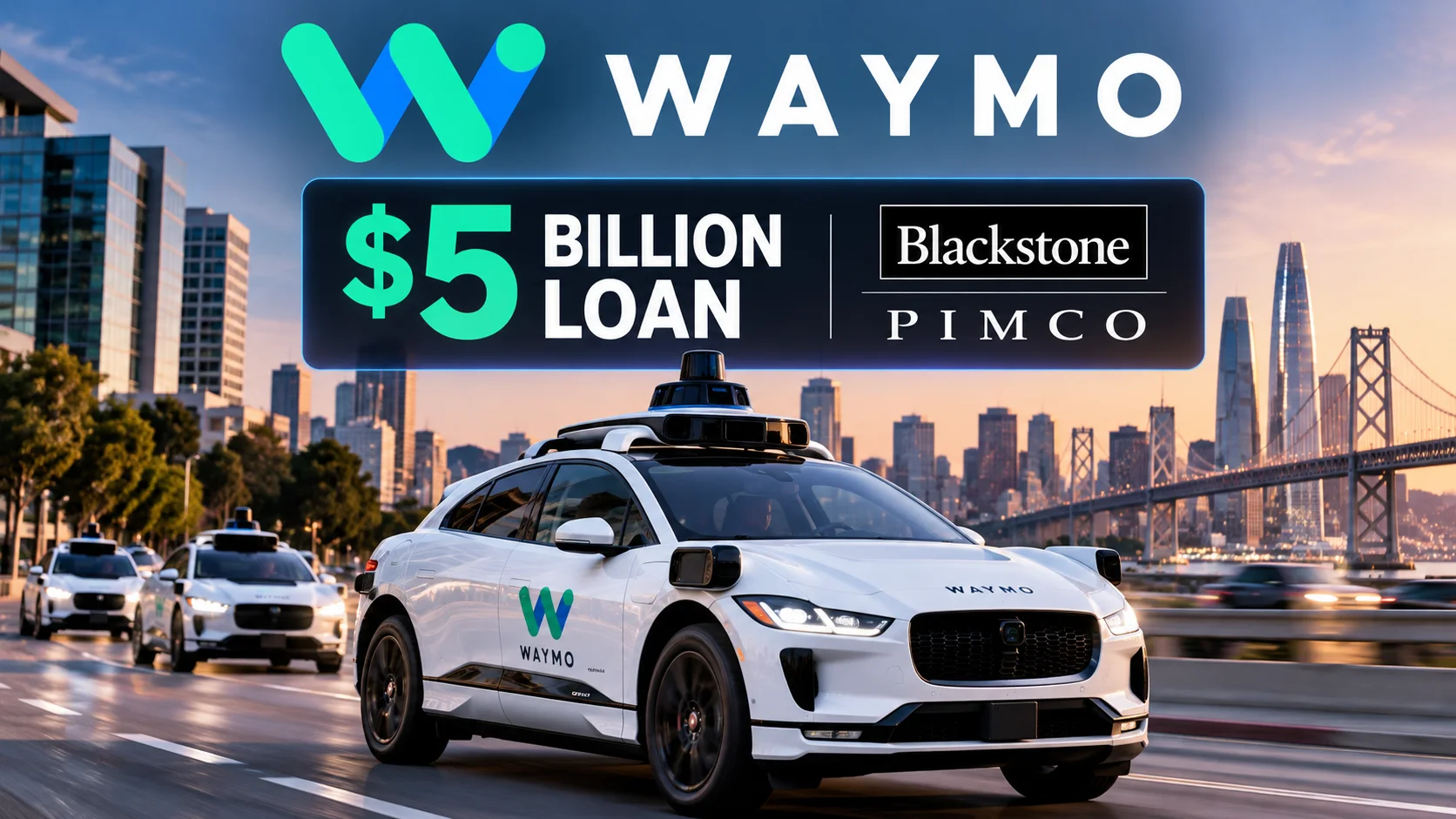
Waymo has secured a $5 billion loan from a group of lenders, including Blackstone and PIMCO, to fund the expansion of its robotaxi business. The financing gives the Alphabet-owned autonomous driving company additional resources as it works to increase the reach of its driverless ride-hailing service.
The deal comes as companies developing autonomous mobility systems face substantial costs associated with vehicle fleets, software development, testing, maintenance and operational infrastructure. For Waymo, access to large-scale financing could help support expansion without relying exclusively on fresh equity investment.
Financing Supports Robotaxi Expansion
Waymo operates commercial robotaxi services using autonomous vehicles equipped with sensors, cameras and self-driving software. Its system is designed to navigate roads and transport passengers without a human driver behind the wheel.
Expanding such a service requires more than deploying autonomous technology. Companies must build and maintain vehicle fleets, establish operational facilities, manage charging and servicing requirements, and ensure that their systems can function reliably across different urban environments.
The $5 billion loan is intended to help Waymo meet these capital demands as it seeks to grow its operations. Debt financing can provide substantial funding while allowing a company to avoid issuing additional shares, although it also creates repayment obligations.
Blackstone and PIMCO Join the Financing
Blackstone and PIMCO are among the lenders involved in the financing, according to October 10 reporting by TechCrunch. Their participation highlights the role institutional investors and private-credit markets can play in supporting capital-intensive technology businesses.
Autonomous mobility companies require significant investment before their services can reach broad commercial scale. Funding arrangements can help cover fleet deployment and expansion costs while allowing businesses to spread infrastructure spending over time.
However, borrowing at this scale also introduces financial risks. The ability to generate sufficient revenue from robotaxi operations, manage operating expenses and meet debt obligations will be important as Waymo expands.
Competition in Autonomous Mobility Intensifies
Waymo is competing in a market where technology companies and automakers are investing in autonomous driving systems and commercial deployment. Scaling a robotaxi service requires companies to demonstrate not only technical performance but also safety, regulatory compliance and consistent passenger demand.
The financing could strengthen Waymo’s ability to extend its service and invest in the infrastructure needed to support more rides. It also illustrates how the next phase of autonomous mobility may depend as much on access to capital as on advances in self-driving technology.
As the industry develops, the key test will be whether companies can turn costly autonomous systems into reliable services that operate at commercial scale and generate sustainable returns.