Agility Robotics Reports $1.8M Revenue Ahead of Humanoid SPAC Merger
Agility Robotics has reported $1.78 million in net sales for 2025 as the humanoid robot maker moves toward a proposed public listing through a merger with Churchill Capital Corp XI. The financial figures were disclosed in a Form S-4 registration statement filed with the U.S. Securities and Exchange Commission, offering one of the clearest views yet of the commercial and financial position of a major U.S. humanoid robotics company.
The filing shows that Agility remained heavily loss-making as it invested in robot development, manufacturing and deployment. The company recorded an operating loss of roughly $140 million in 2025 and a net loss of about $138.1 million. At the end of the year, it held around $103 million in cash.
Agility's Revenue Remains Small Compared With Its Valuation
The company's 2025 net sales were $1,781,967, with about $1.55 million coming from robot sales. Agility had recorded no robot sales in 2024, making 2025 the first year in which sales of its humanoids appeared as a meaningful revenue source. Deployment and professional services contributed another $213,349, while repair and maintenance generated $13,754.
Those figures are tiny compared with the proposed transaction's $2.5 billion equity value. That number represents the value of the stock consideration in the merger rather than the amount of new cash Agility is receiving. The transaction is expected to provide more than $620 million in gross proceeds, including approximately $421 million from Churchill's trust account, assuming no redemptions, and roughly $201 million from a PIPE financing.
Digit Has Logged More Than 65,000 Operating Hours
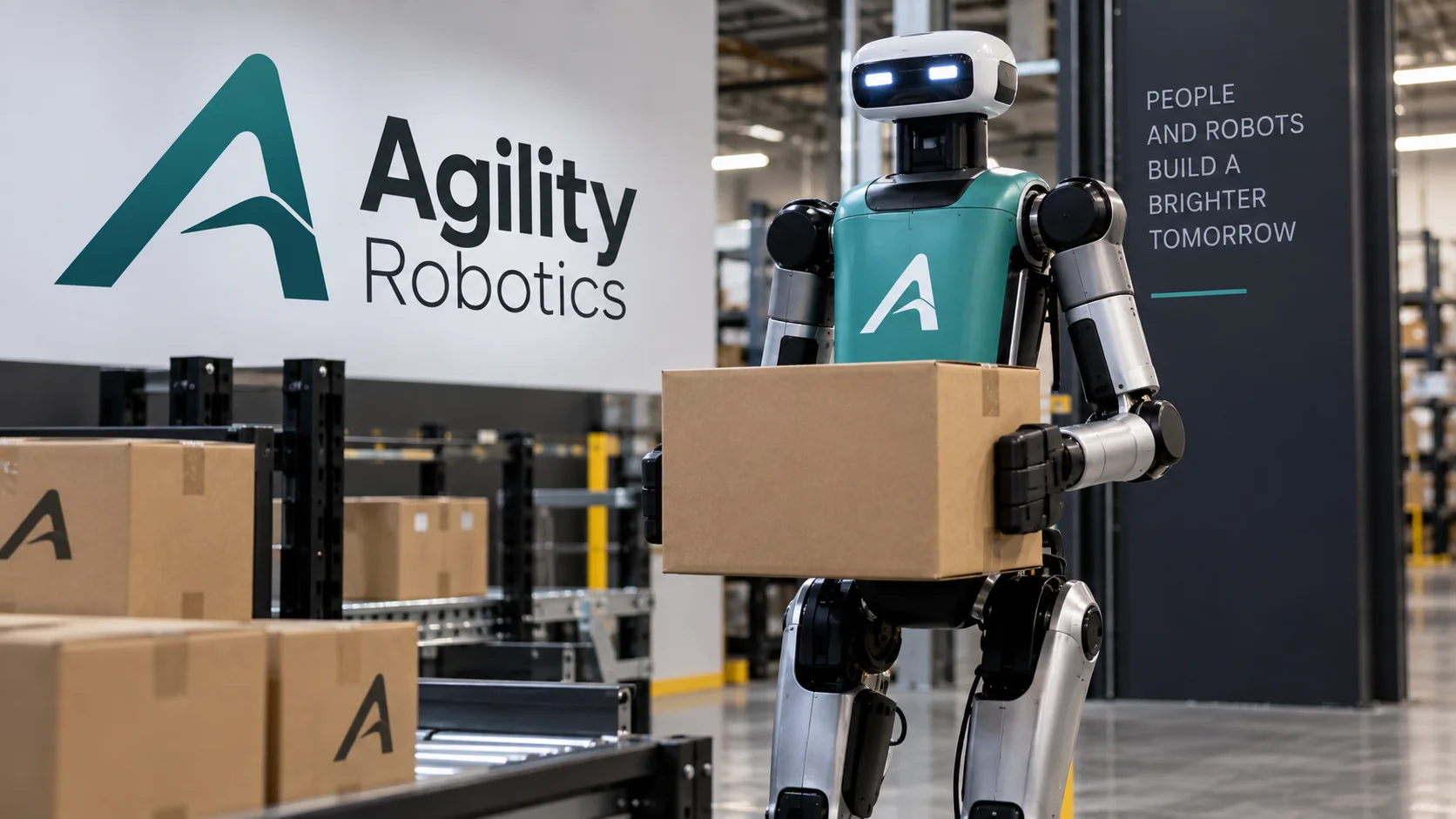
Agility's financial disclosure comes as its Digit humanoid moves from demonstrations toward commercial deployments. The company says Digit has accumulated more than 65,000 operating hours across nine customer sites, with deployments involving companies including Amazon, GXO, Schaeffler, Toyota Motor Manufacturing Canada and Mercado Libre.
The company is also preparing the next-generation Digit v5 for commercial launch. According to the filing, Agility has more than $300 million in multi-year Digit v5 orders from a single customer, although those orders have not yet translated into comparable recognized revenue. That gap between contracted demand and current sales is central to the company's plans for scaling the business.
The Business Is Betting on Large-Scale Deployment
Agility's proposed public-market strategy depends on moving beyond pilot deployments and producing humanoids at much larger volumes. The company operates its RoboFab manufacturing facility in Salem, Oregon, and plans to use the proceeds from the proposed transaction to fulfill customer orders, expand deployments and scale production of Digit v5.
The S-4 also provides investors with a closer look at the economics Agility expects from Digit. One model outlined in the filing estimates a direct purchase price of about $200,000 per robot, alongside approximately $36,000 a year for software and maintenance. A separate Robotics-as-a-Service model involves recurring payments rather than an outright purchase. These are illustrative figures from Agility's financial model, not fixed retail prices.
Public Listing Puts Humanoid Economics Under Scrutiny
Agility's proposed merger with Churchill Capital would create a publicly traded pure-play humanoid robotics company if the transaction closes. The deal remains subject to shareholder approval, SEC review, regulatory approvals and other customary closing conditions. Agility expects the transaction to close in 2026.
The company's financial disclosure arrives at a critical point for the humanoid robotics industry. Developers have attracted billions of dollars in private funding while commercial revenue remains relatively limited. Agility's filing gives investors a rare opportunity to compare the sector's ambitious deployment targets with audited financial results.
For Agility, the immediate challenge is turning its existing customer relationships, operating hours and order pipeline into recurring revenue at scale. The company's proposed public-market valuation rests heavily on that future growth rather than its current sales base. Whether Digit can move from early commercial deployments to thousands of deployed robots will therefore be one of the biggest tests of the company's strategy.