China’s AI Chipmakers Challenge Nvidia’s Grip on the Chinese Market
China’s domestic AI chip industry is gaining momentum as a group of fast-growing semiconductor companies works to reduce the country’s dependence on Nvidia’s processors. The latest sign is Shanghai-based Enflame Technology, whose planned $908 million Shanghai IPO attracted online investor orders more than 6,000 times the shares available.
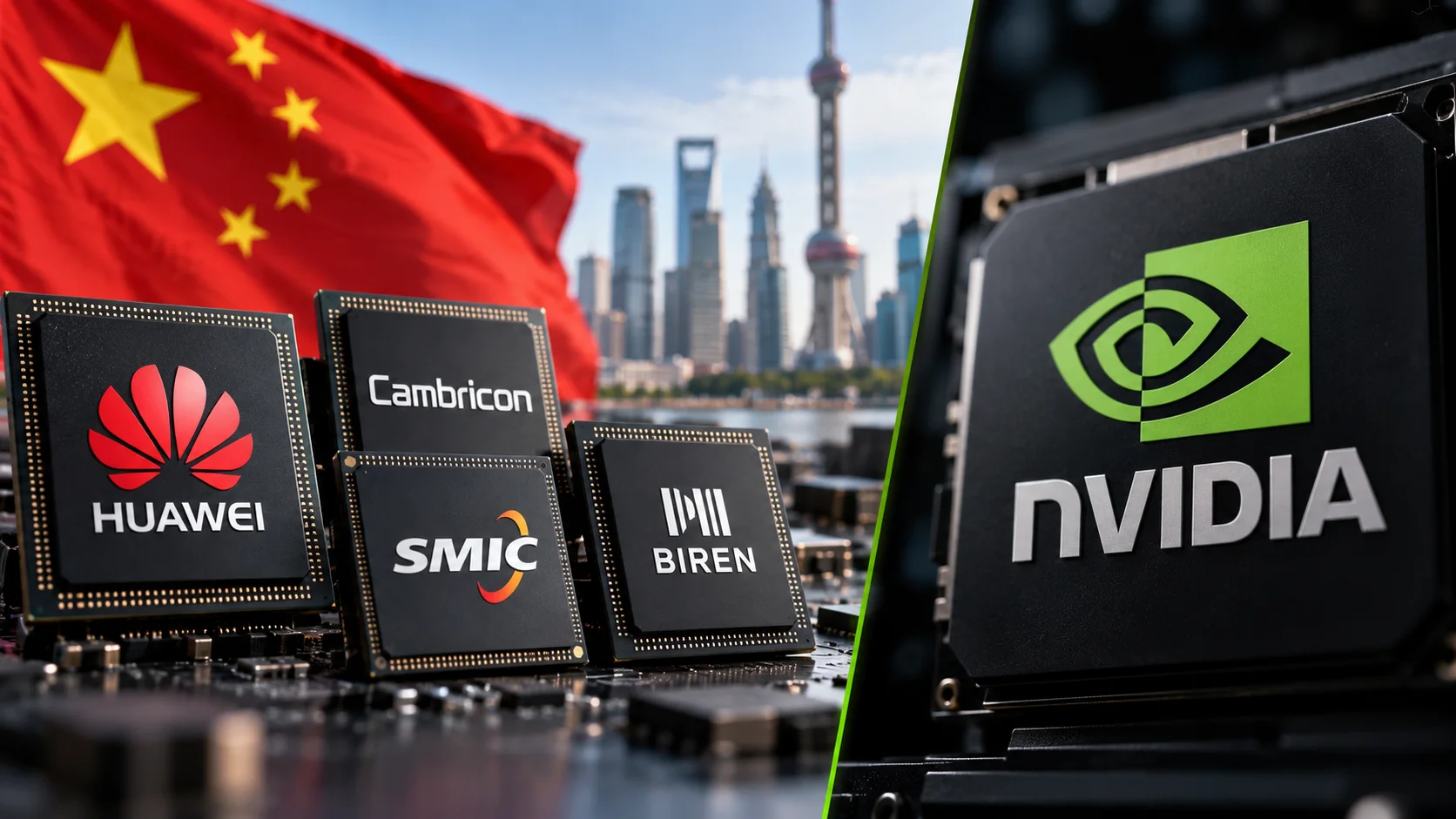
Enflame is one of the four Chinese AI chipmakers increasingly viewed as domestic alternatives to Nvidia. Alongside Moore Threads Technology, MetaX Integrated Circuits and Shanghai Biren Technology, the company is developing chips and software aimed at building a stronger local AI computing ecosystem. Huawei is also playing a major role in China’s effort to reduce reliance on U.S. chip technology.
Enflame’s IPO Highlights Investor Confidence
Enflame plans to raise about 6.1 billion yuan, or roughly $908 million, through its Shanghai listing. The company set its IPO price at 142.18 yuan per share, giving it a valuation of about 61 billion yuan, despite remaining unprofitable. Its online offering attracted orders equivalent to 6,109 times the shares available, reflecting strong investor appetite for Chinese AI-chip companies.
The company has also recorded sharp growth. Enflame's first-quarter sales increased 1,475% year on year, although its net loss widened by more than a third to 444 million yuan in the three months through March. Tencent, which owns about 20% of Enflame and is also its largest customer, provides the chipmaker with an important commercial relationship as it expands.
China’s Four AI Chip Dragons
The rise of Enflame comes after three other Chinese AI chip companies — Moore Threads, MetaX and Biren — entered public markets over the past year. Together, the four companies are becoming central to China's attempt to develop alternatives to Nvidia's GPUs.
Nvidia still holds an estimated 55% share of China’s AI semiconductor market, but that represents a significant decline from its near-monopoly position several years ago. The shift has been accelerated by U.S. restrictions on advanced semiconductor technology, which have made access to high-end AI hardware more difficult for Chinese companies.
The Battle Is Moving Beyond AI Chips
The challenge to Nvidia is not limited to processor performance. Software has long been one of Nvidia’s strongest competitive advantages, with its CUDA programming ecosystem deeply embedded in AI development.
Chinese chipmakers are therefore working to build their own software platforms and make it easier for developers to move existing AI workloads away from Nvidia hardware. Moore Threads, for example, has developed a system designed to help developers migrate code written for CUDA to its own programming environment. Enflame is pursuing a similar strategy with its own software platform.
Enflame is also taking a different hardware route by focusing heavily on specialised, power-efficient processors for AI inference. Inference is the stage where trained AI models process prompts and generate responses, and it can require different hardware characteristics from the systems used to train large models.
The shift toward inference could create additional opportunities for Chinese chipmakers even while Nvidia retains a strong position in general-purpose AI computing.
China’s AI semiconductor market is now becoming a competition between an established global leader and a growing group of domestic companies backed by substantial private and state-supported investment. Enflame’s IPO is the latest indication that China’s AI-chip ambitions are attracting both capital and customers, while the gradual decline in Nvidia’s market share shows that its dominance in the country is no longer as secure as it once was.