
China’s AMEC Unveils Six Chipmaking Machines to Boost Self-Reliance
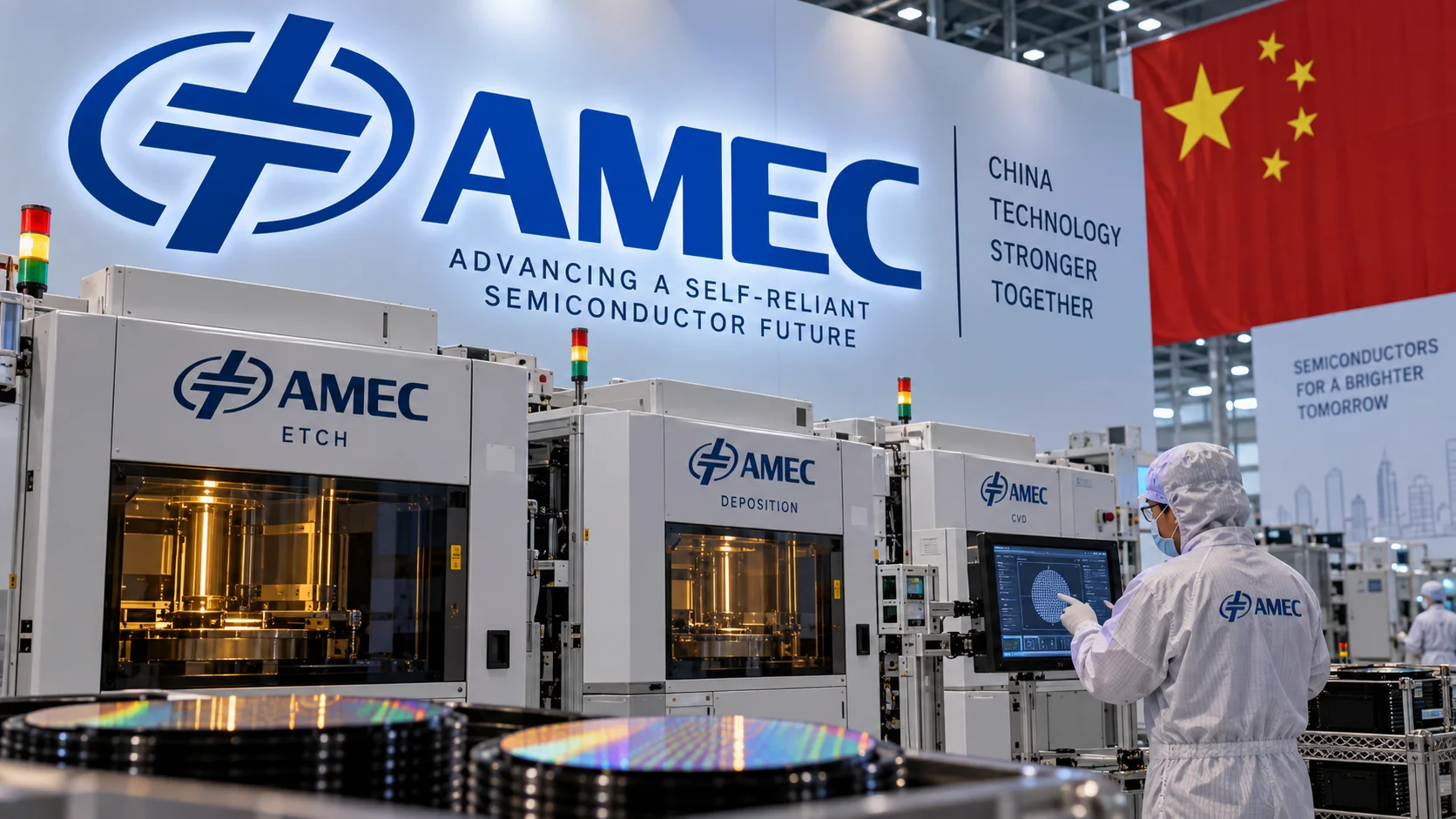
Chinese semiconductor equipment maker Advanced Micro-Fabrication Equipment (AMEC) has unveiled six new chipmaking machines as it expands beyond its traditional strength in etching equipment. The new systems cover several stages of semiconductor production, including etching, thin-film deposition and manufacturing equipment for silicon-carbide power chips.
The products were unveiled at an industry conference in Wuxi, China, on September 2. Four of the six machines are deposition tools, giving AMEC a broader presence in a market currently dominated by major US and Japanese equipment suppliers. The launch is part of AMEC’s push to develop a wider portfolio of semiconductor manufacturing equipment as Chinese chipmakers seek more domestic alternatives to imported tools.
AMEC expands beyond etching
AMEC is best known for its plasma etching equipment, which is used to remove precisely controlled layers of material from semiconductor wafers during chip production. Its latest product lineup takes the company further into deposition and power-semiconductor manufacturing. The new systems include equipment for advanced memory production, thin-film deposition and silicon-carbide epitaxy. Some of the technologies are aimed at applications involving 3D NAND, DRAM, advanced logic and power semiconductors.
One of the newly introduced systems, the Primo XD-RIE, is designed for high-aspect-ratio etching used in advanced memory structures. It supports aspect ratios ranging from 70:1 to 90:1, allowing it to work with the increasingly deep and narrow structures used in multilayer memory. Other new machines focus on depositing thin layers of materials onto wafers. Deposition is another critical stage in chip manufacturing, with companies such as Applied Materials, Lam Research and Tokyo Electron holding strong positions in the global market.
Faster product development
AMEC has been increasing its research and development spending as it works to shorten the time needed to bring new equipment to market. The company invested 2.04 billion yuan, or about $303.5 million, in research and development during the first half of 2026. That represented a 36.9% increase from the same period a year earlier and accounted for about 30.5% of its total revenue.
AMEC has said it has reduced its product development cycle from roughly three to five years to two years or less. It currently has more than 20 machines under development across six equipment categories. The latest launch follows another major product release in March, when AMEC introduced four additional machines at Semicon China.
China pushes for domestic chipmaking equipment
The expansion comes as China continues efforts to reduce its reliance on foreign semiconductor manufacturing equipment. Chipmaking requires a long chain of highly specialised machines, including equipment for lithography, etching, deposition, cleaning, inspection and packaging. While Chinese companies have made progress in several areas, some of the most advanced tools remain dominated by companies from the US, Japan and Europe.
AMEC's progress is particularly important in etching and deposition, two areas that are central to advanced semiconductor manufacturing. The company is also facing growing demand from Chinese chip manufacturers that are looking to increase the use of domestic equipment in their production lines. At the same time, restrictions on access to advanced foreign semiconductor technologies have increased pressure on Chinese suppliers to develop alternatives locally.
New equipment targets advanced applications
The new machines are not limited to conventional chip production. Several are designed for processes used in advanced memory and power semiconductor manufacturing. The silicon-carbide equipment is aimed at power electronics, where silicon-carbide devices are increasingly used in electric vehicles, charging infrastructure, renewable-energy systems and other high-power applications. AMEC's expansion into these areas gives it a broader opportunity to compete for equipment orders across different segments of the semiconductor industry.
However, unveiling a machine does not automatically mean it is ready for large-scale commercial deployment. Semiconductor equipment typically goes through lengthy testing and qualification processes at chip factories before being used in high-volume production. The six new systems are at different stages of commercialisation. For AMEC, the latest launch represents a broader effort to become a full-range semiconductor equipment supplier rather than remaining primarily an etching specialist. The company's ability to qualify these systems with major chipmakers will determine how quickly the new products can translate into wider commercial adoption.