
Danu Robotics Targets Recycling Challenges With AI Sorting Robot
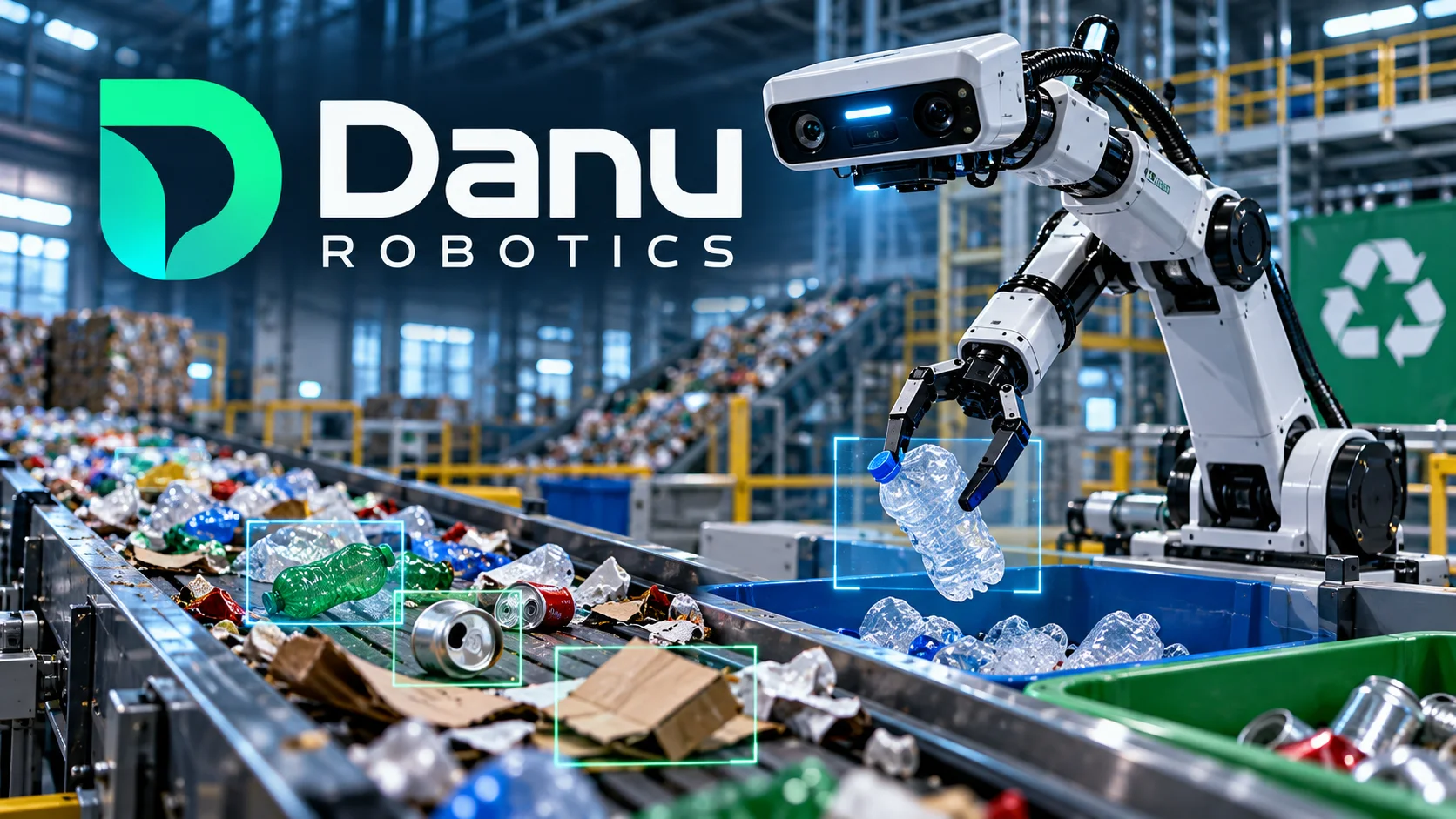
Danu Robotics, an Edinburgh-based robotics company, is bringing its H.E.R.O. recycling robot to market after six years of development. Founded by Amy Ma, the startup is using artificial intelligence and computer vision to automate the difficult task of separating recyclable materials from mixed waste.
The company’s approach addresses a persistent problem in waste management: recycling facilities often rely on people to sort materials by hand, a process that can be repetitive, labour-intensive and difficult to scale. Danu wants to make automated sorting more affordable by developing robots that can be installed in existing facilities without requiring major changes to their conveyor systems.
How Danu Robotics’ H.E.R.O. Robot Works
H.E.R.O. uses computer vision to identify recyclable items moving along a conveyor belt. Its robotic arm then picks up selected materials using a pincer-style gripper rather than the suction systems used by some competing machines.
Danu says the system is designed to fit into existing waste-sorting operations, with its Series 2 robot requiring less than a metre of conveyor space. This retrofit approach could help recycling operators introduce automation without rebuilding an entire facility around new equipment.
The robot’s software is another part of the company’s strategy. Danu uses AI to improve its sorting capabilities as it collects additional data, with the aim of making the system more effective across different waste streams. The company also tracks successful picks by recording an item only when it reaches the intended bin.
Why Automated Recycling Matters
Recycling facilities need to separate materials accurately because the recovered items can be sold for reuse. Poor sorting can reduce the value of recovered materials and leave recyclable waste in general rubbish streams.
Automated systems could help facilities process more material while reducing dependence on manual sorting. However, performance depends on the variety of waste, the accuracy of object recognition, the speed of the conveyor and the reliability of the robot’s handling system.
Danu’s approach is to make robotic sorting practical for existing facilities rather than requiring operators to make a large upfront investment in a completely new system. If the technology can deliver reliable performance at a competitive cost, it could make automation more accessible to smaller waste-management operations.
Danu Robotics Moves Towards Commercial Deployment
It's reported on that Danu had secured $500,000 in signed contracts, received letters of interest from two large customers and built a sales pipeline of more than 200 potential customers. The company had also raised $5 million in late-seed funding.
These figures indicate early commercial interest, but they represent different stages of customer engagement. A sales pipeline does not guarantee future orders, and signed contracts alone do not establish how many robots are operating at customer sites.
Danu is competing in an emerging market that includes other companies developing AI-powered recycling robots. Its ability to demonstrate consistent sorting performance, manageable maintenance costs and a clear return on investment will be important as it expands.
What Comes Next for Recycling Robotics
Danu wants to make its robots smaller, sturdier and more versatile. The company sees potential beyond dedicated recycling centres, including deployment at events, shopping centres, hospitals and airports, where waste could be sorted closer to where it is generated.
For now, the focus is on proving the technology in commercial settings. If Danu can demonstrate that its robots recover valuable materials reliably while keeping operating costs under control, automated sorting could become a more practical option for waste-management businesses.