
The Enterprise Attack Surface Is Expanding as AI Adoption Accelerates
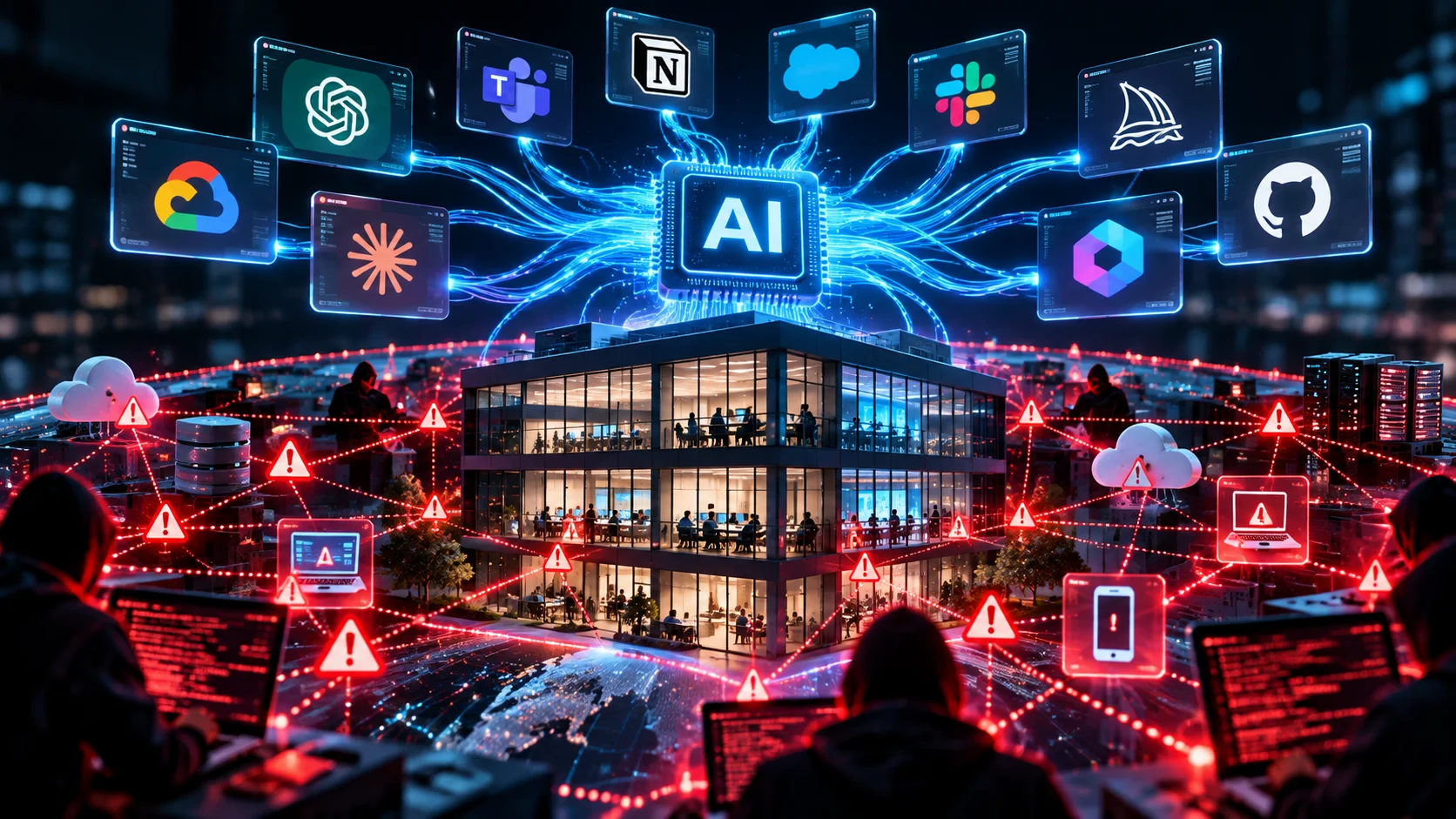
The enterprise attack surface is expanding as organisations adopt artificial intelligence, cloud platforms and connected business systems at an accelerating pace. While these technologies help companies automate workflows and improve productivity, they also introduce new points of exposure that security teams must identify and protect.
AI-generated code adds another layer to the challenge. Developers can now build applications and deploy features more quickly with AI assistance, but code that contains security weaknesses can enter production if it is not properly reviewed. At the same time, businesses are connecting AI tools to internal databases, software platforms and third-party services, increasing the number of systems that could be affected by a security incident.
Why the Enterprise Attack Surface Is Growing
An enterprise attack surface includes the applications, devices, accounts, networks and services that attackers could exploit to gain access to an organisation. Cloud adoption, remote access and software integrations have made these environments more interconnected.
AI agents can add complexity when they receive permission to access files, execute commands or interact with business applications. If an agent is misconfigured or manipulated through malicious inputs, its access could expose sensitive information or enable unintended actions.
The risk is not limited to AI systems themselves. Weak authentication, excessive permissions, unpatched software and poorly secured application programming interfaces (APIs) can provide routes into connected environments. A vulnerability in one component may also affect other systems when access controls are inadequate.
AI-Generated Code Creates New Security Challenges
AI coding assistants can help developers write, review and debug software faster. However, generated code still requires careful testing because it may contain insecure functions, flawed authentication logic or incorrect assumptions about how data should be handled.
The speed of development can also create pressure on security reviews. When teams release updates frequently, vulnerabilities may reach production before adequate checks are completed. Organisations that rely heavily on automated code generation need security controls that keep pace with development.
These measures include automated code scanning, dependency checks, testing in isolated environments and human review of sensitive changes. Security teams should also track which applications contain AI-generated code and ensure that established development standards continue to apply.
Cloud Platforms and Third-Party Access Add Risk
Modern businesses rarely operate through a single technology platform. They depend on cloud providers, software-as-a-service applications, external developers and integrations that allow information to move between systems.
Each connection can introduce additional risk if permissions are too broad or credentials are compromised. An attacker who gains access to a third-party service may be able to reach company data or connected applications without directly breaching the organisation's main network.
Companies can reduce this exposure by applying least-privilege access, enforcing multifactor authentication, reviewing third-party permissions and monitoring unusual activity. Maintaining an accurate inventory of applications, APIs, service accounts and cloud assets is also essential.
How Organisations Can Strengthen Security
Protecting an expanding enterprise attack surface requires continuous oversight rather than occasional security checks. Organisations need to understand which systems they operate, what information those systems can access and how their connections could be abused.
Security teams should prioritise vulnerabilities based on their severity, exposure and potential business impact. They should also establish clear rules for AI agents, restrict access to sensitive data and test automated workflows before allowing them to perform consequential actions.
AI adoption does not automatically make an organisation less secure. The challenge is ensuring that security practices evolve alongside the technology. Businesses that combine faster development with strong access controls, continuous monitoring and reliable testing will be better positioned to manage the risks of increasingly connected environments.