IQE Swings to Half-Year Profit as AI Data Centre Demand Surges
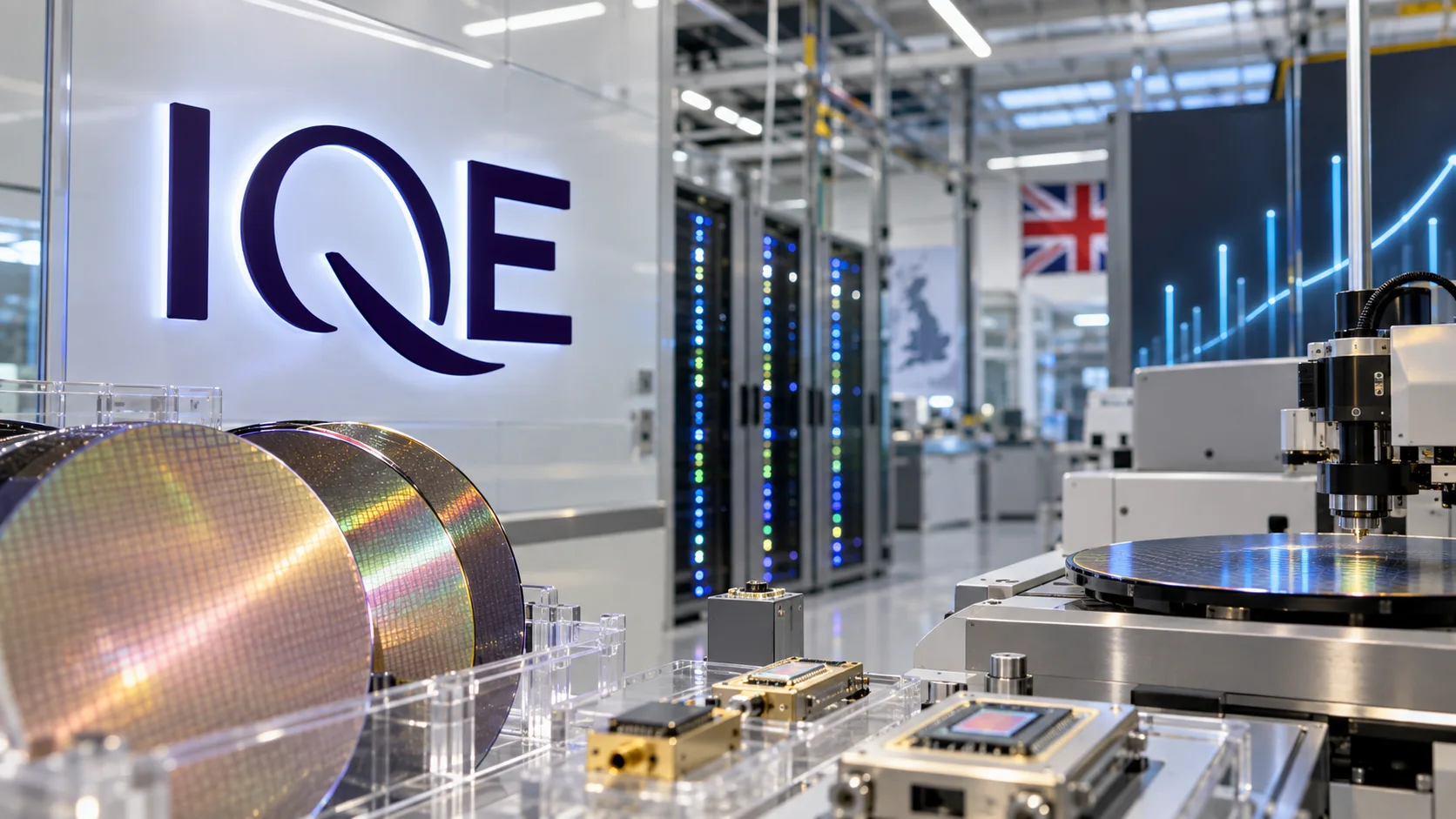
UK semiconductor materials company IQE has returned to profit in the first half of 2026, helped by rising demand for components used in artificial intelligence infrastructure and data centres. The company reported revenue of £64.6 million for the six months ended June 30, up 43% from a year earlier, while adjusted operating profit reached £6 million compared with a loss in the same period last year.
Adjusted EBITDA rose to £11 million, while the company ended the period with a debt-free balance sheet after completing an £81 million fundraising earlier in the year. IQE said strong demand across photonics, wireless, and aerospace and defence markets supported the improvement.
AI Infrastructure Drives Photonics Growth
Photonics was the strongest part of IQE’s growth during the first half. The company supplies advanced semiconductor materials used in optical communications, which are increasingly important as data centres handle growing volumes of AI-generated workloads.
IQE said demand for its indium phosphide (InP) products accelerated as customers expanded AI-compute and data-centre infrastructure. InP is a compound semiconductor material used in high-speed optical components that can transmit data efficiently across fibre-optic networks.
The company expects this market to remain a major growth driver as data-centre operators increase computing capacity and require faster connections between servers and networking equipment.
IQE's photonics revenue rose sharply during the period, while its wireless business also benefited from demand for products used in smartphones and other connected devices.
Revenue Growth Improves Profitability
The jump in revenue has produced a substantial improvement in IQE's financial performance.
Adjusted EBITDA increased to £11 million, compared with £1.1 million in the first half of 2025. Adjusted operating profit reached £6 million, reversing the £4.6 million adjusted operating loss recorded a year earlier.
The company also reported an adjusted net cash position of £6.7 million at the end of June, compared with net debt of £31.5 million at the end of 2025.
The improved balance sheet follows an £81 million fundraising completed earlier this year. IQE has been using the additional capital to strengthen its financial position and support investment in areas where demand is increasing.
AI Is Expanding the Need for Optical Connectivity
The company's results provide another indication of how AI infrastructure spending is spreading beyond processors and servers.
Large AI data centres require enormous volumes of data to move between computing systems. Optical communications technology provides the high-speed links needed to connect those systems, creating demand for semiconductor materials used in lasers and other photonic components.
IQE supplies epitaxial wafers, or engineered semiconductor layers grown onto wafer substrates, to manufacturers that produce these components. Its position in the supply chain means it can benefit from rising demand for AI networking without directly manufacturing AI processors.
The company has already secured a multi-year indium phosphide epiwafer supply agreement with Tower Semiconductor, supporting planned growth in silicon photonics applications.
IQE Raises 2026 Growth Expectations
Following the strong first-half performance, IQE expects full-year 2026 revenue growth to exceed 30% year on year. The company had previously expected growth of more than 20%.
Management said it has strong order-book visibility for the second half and expects demand across AI-compute, data centres, wireless, and defence markets to remain supportive.
The company is also planning to move from London's AIM market to the Main Market of the London Stock Exchange, subject to the necessary approvals. IQE said the proposed move is intended to broaden its investor base and improve access to capital markets.
Semiconductor Demand Extends Beyond AI
Although AI infrastructure is now one of IQE's most important growth areas, the company is not relying on a single market.
Its products also support wireless communications, consumer electronics, aerospace and defence applications. Demand from defence programmes contributed to stronger trading momentum, while wireless products benefited from new smartphone introductions.
That diversification gives IQE exposure to several semiconductor growth markets while its photonics business increasingly benefits from the expansion of AI data centres.
The first-half results represent a significant turnaround from the company's weaker performance a year earlier. With revenue growth accelerating, profitability improving and AI-related demand continuing to build, IQE is entering the second half of 2026 with a stronger financial position and higher expectations for the full year.