
Kodiak and Charger Launch Autonomous Trucking Route Between Dallas and Laredo
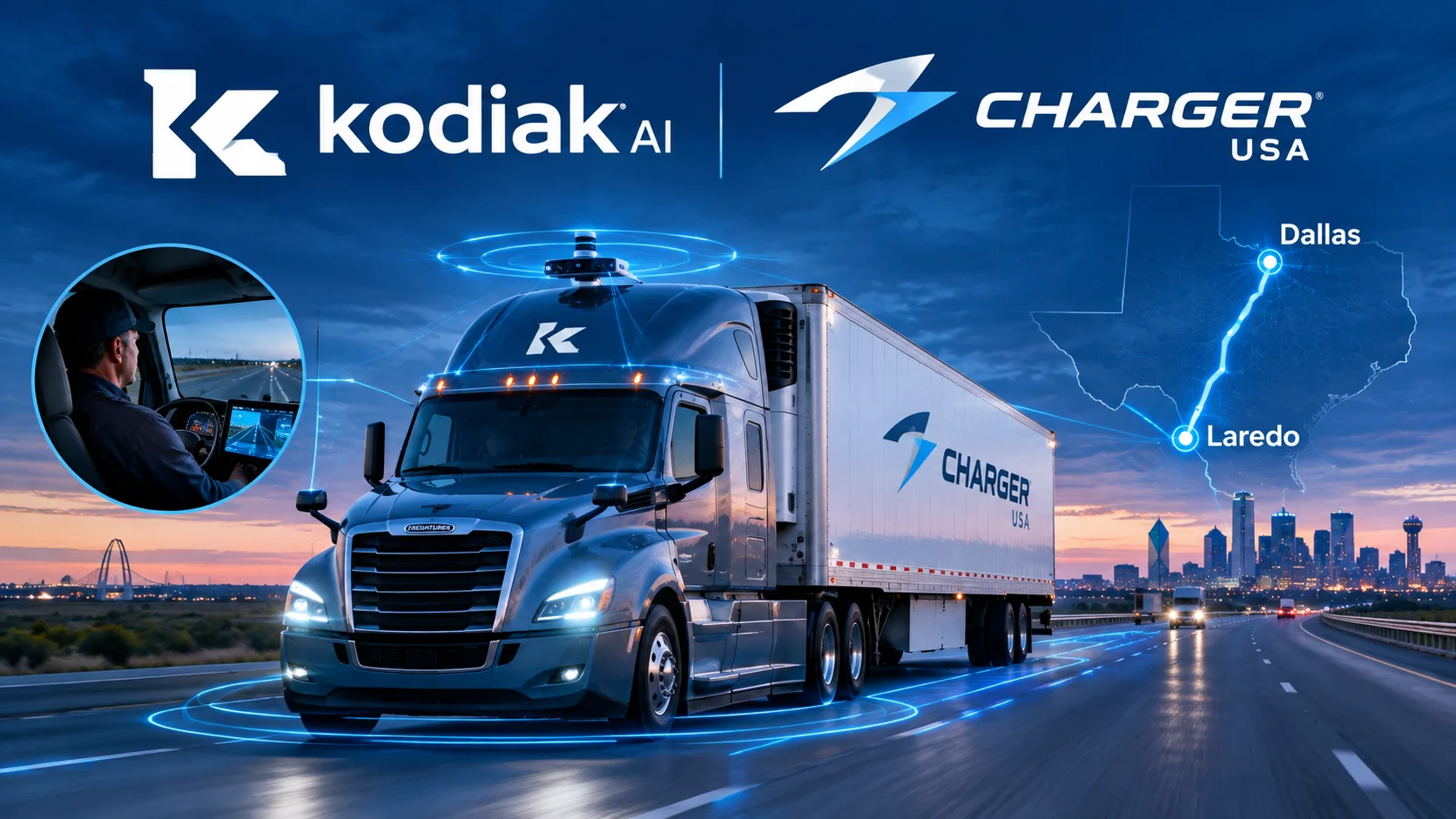
Autonomous driving technology company Kodiak AI and cross-border carrier Charger USA have launched an autonomous trucking service between Dallas and Laredo, Texas, marking a commercial step towards driverless long-haul freight operations. The companies announced the partnership on October 8, 2026, and are using trucks equipped with Kodiak’s autonomous driving system to transport refrigerated and dry freight along the 435-mile route.
The service currently operates with safety drivers behind the wheel. The companies intend to move towards fully driverless operations once Kodiak completes its safety case for the route.
Autonomous Trucks Begin Commercial Freight Operations
The Dallas–Laredo corridor connects two Charger USA terminals and supports shipments for consumer packaged goods, food and beverage customers. The companies completed their first delivery on September 8, ahead of the public announcement in October.
The route also extends Kodiak’s commercial operations into Laredo, one of the busiest commercial land ports of entry in the United States. Its role in cross-border trade makes the corridor a significant testing ground for autonomous freight services.
Kodiak Driver Powers the Service
The trucks use Kodiak Driver, the company’s autonomous driving system, which combines AI-powered software with specialised hardware to enable automated vehicle operation.
Kodiak commercialises its technology through a Driver-as-a-Service model, deploying its system on trucks owned and operated by customers. This approach allows carriers to incorporate autonomous driving capabilities into their fleets without having to develop the underlying technology themselves.
Safety Drivers Remain in Place
Although the service is commercially active, the trucks are not yet operating without drivers. Kodiak and Charger plan to remove the safety driver only after Kodiak completes its safety case, which requires documented evidence that the system can operate safely within the designated operating environment.
The companies have not announced a specific date for the transition to driverless operations on this route. Safety validation remains the key milestone before the service can move to the next stage.
Plans to Expand Autonomous Freight Routes
Kodiak and Charger expect to expand their collaboration to additional routes as Charger integrates the autonomous driving system into more of its fleet.
The development highlights how autonomous trucking companies are moving beyond technology demonstrations towards freight services that carry commercial shipments. However, scaling these operations will depend on safety validation, operational reliability and the ability to integrate autonomous vehicles into existing logistics networks.