Milan AI Startup Cato Raises €6 Million to Automate Public Tenders
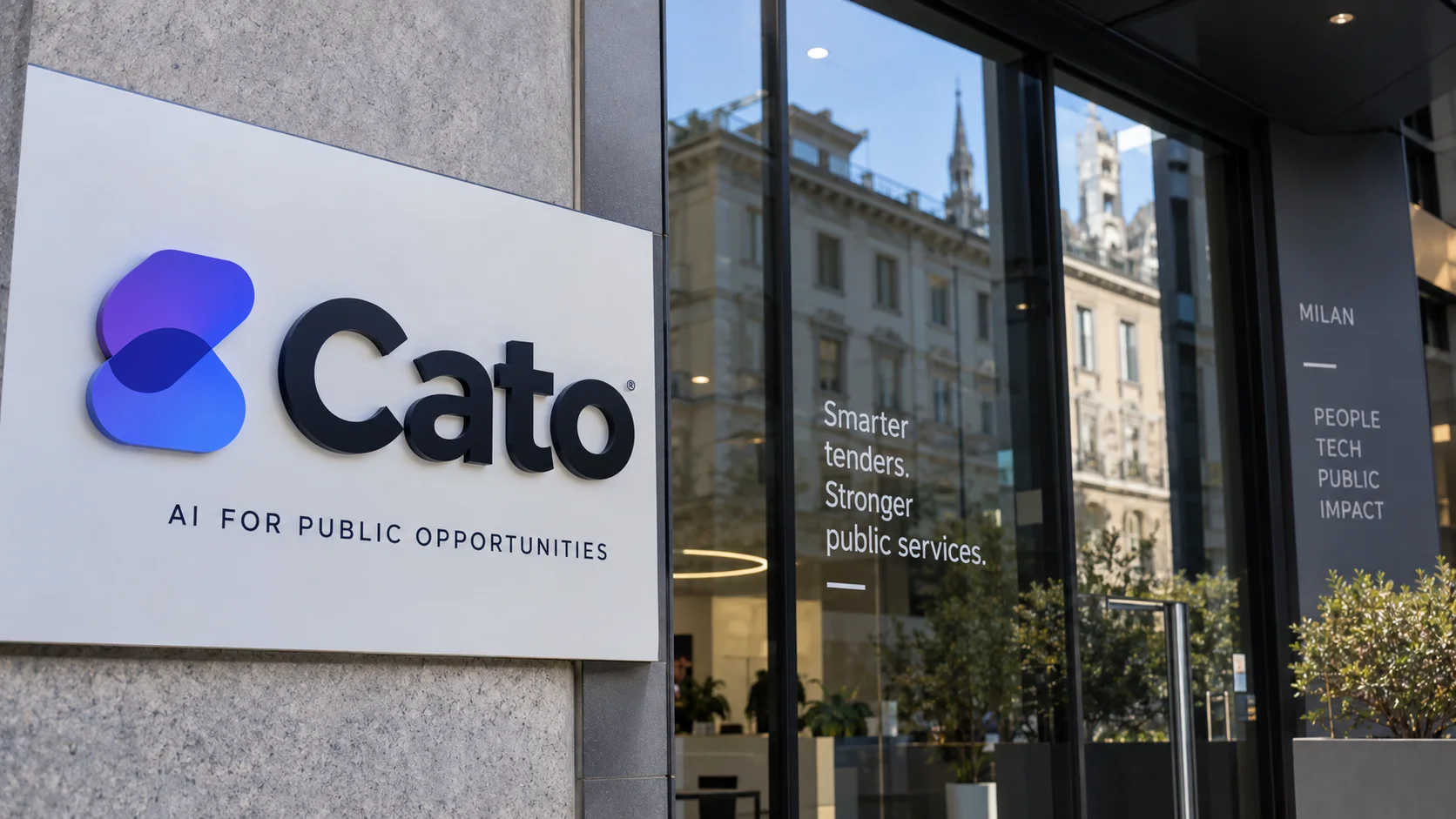
Milan-based AI startup Cato has raised €6 million in a seed funding round led by Keen Venture Partners as it looks to expand its platform for helping companies compete for public-sector contracts. The round brings Cato's total funding to €7.6 million, less than a year after the company was founded.
Existing investors Vento, Heartfelt, Moonstone, BHeroes, Alecla7 and Nova Venture also participated in the round. New angel investors include the founders of Lexroom, Sibill and Pillar. The latest investment follows a €1.6 million pre-seed round led by Italian Founders Fund.
Cato was founded in 2025 by Andrea Zorzetto and Matteo Bossolini to reduce the manual work involved in public procurement. Its platform uses AI to identify relevant tenders, analyse lengthy documents and help companies prepare their bids.
Cato Targets Italy's €309 Billion Tender Market
Public procurement represents a major source of business for companies across Europe. Government contracts account for around 14% of EU GDP, representing roughly €2.5 trillion in annual spending across more than 250,000 contracting authorities.
Italy alone recorded around €309 billion in public tenders in 2025, with the market growing 13.9% from the previous year.
For businesses, competing for these contracts can involve screening large numbers of notices, reading hundreds of pages of technical and administrative documents, checking eligibility requirements and preparing detailed submissions.
Cato is attempting to automate several of those steps through a single platform.
AI Analyses Tenders and Prepares Bid Materials
Cato's system monitors more than 27,000 sources in real time and ranks tender opportunities according to how closely they match a company's profile. Once a relevant opportunity is identified, the platform analyses the tender documents and extracts requirements and evaluation criteria.
The system can also identify inconsistencies between different documents within a tender, which can otherwise create problems during the bidding process.
For bid preparation, Cato can pre-fill administrative and technical sections using information supplied by the customer. Generated claims can be traced back to their original sources, while the final submission remains under the customer's control.
The company says it has already processed thousands of tenders since launching and serves customers ranging from small and medium-sized businesses to larger companies. Its users operate across sectors including medical devices, construction, IT and professional services.
Funding Will Support International Expansion
Cato plans to use the new capital to further develop its platform, expand its commercial operations and grow its team. The company also intends to add support for more industries and expand beyond Italy.
The international push is partly driven by existing multinational customers that want to use Cato for tender processes outside the Italian market. The company plans to extend its platform into other markets as it develops its technology and commercial operations.
Cato has also strengthened its leadership team with Luisa Gamba, who previously led public-sector partnerships in Italy at Amazon Business. The company had earlier acquired Avvista.ai through an acqui-hire, bringing its founder Riccardo Sabatti and his team into Cato.
Turning Public Procurement Into an AI Workflow
Cato is entering a market where companies already rely on tender databases, specialist consultants and internal bid teams to identify and respond to government contracts. Its approach combines tender discovery, document analysis and bid preparation within an AI-powered workflow.
The company is still in the early stages of its expansion, and moving into new countries will require its technology to handle different procurement rules and tender processes.
For now, Cato is focused on reducing the paperwork and manual research involved in public-sector sales. With the latest funding, the startup has more resources to develop its platform and pursue expansion across European procurement markets.