
OpenAI Expands AI Chip Design Push as CFO Touts Lower Costs
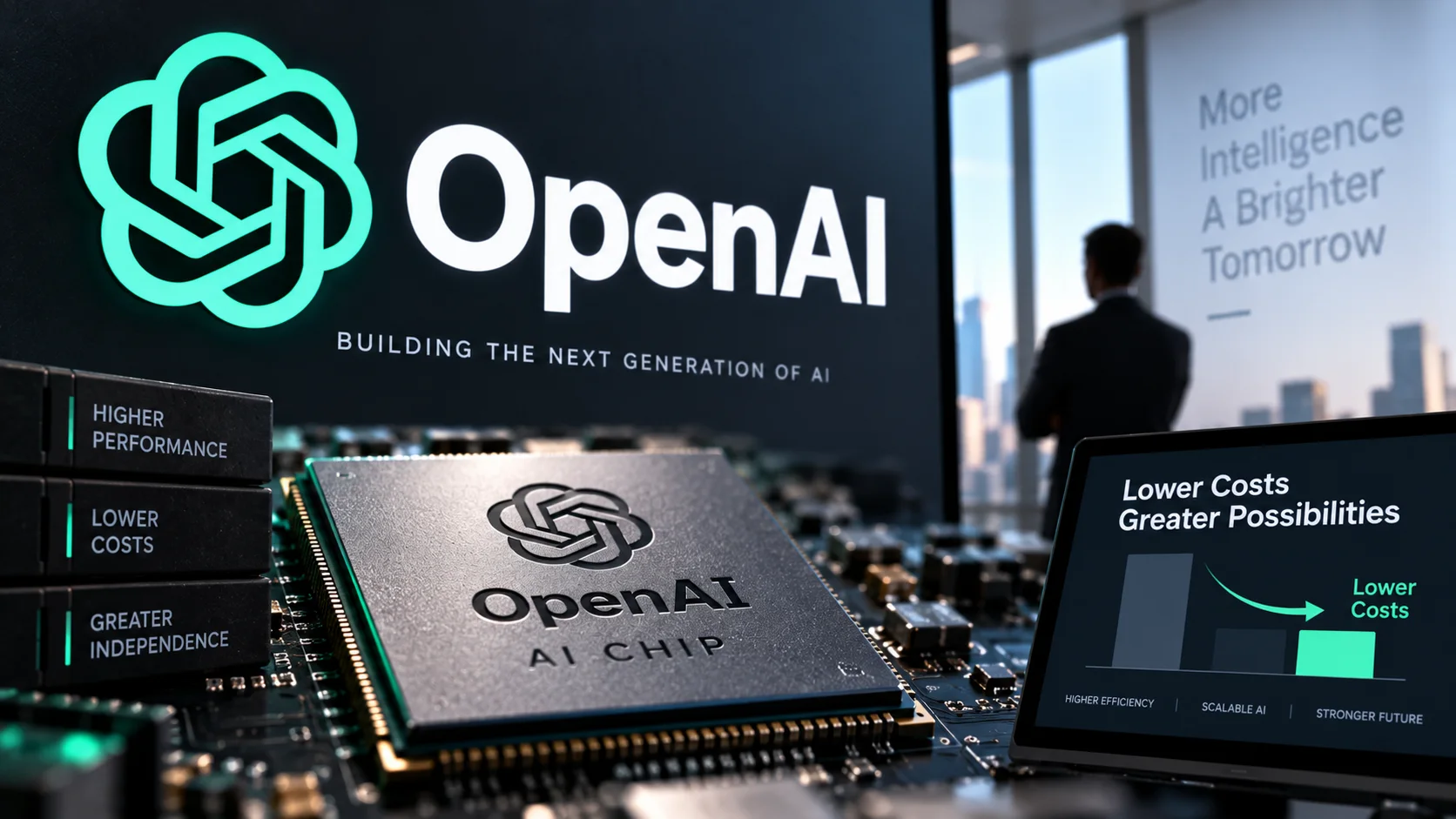
OpenAI is expanding its artificial intelligence business beyond general-purpose models and software into specialized applications such as chip design, life sciences and financial services, Chief Financial Officer Sarah Friar said at the Goldman Sachs Communacopia + Technology Conference. The company is also testing outcome-based pricing for enterprise AI as customers increasingly demand measurable returns from their spending.
Friar said OpenAI used its own AI models while developing its Jalapeño inference chip, taking the design to the tape-out stage in nine months. Tape-out is the point at which a finalized chip design is sent for manufacturing. OpenAI had previously announced Jalapeño in partnership with Broadcom, saying the chip was designed specifically for large language model inference and developed from design to production in nine months.
OpenAI Uses Its Own AI to Design Chips
The Jalapeño project is part of OpenAI's broader effort to control more of the infrastructure behind its AI systems. The company designed the accelerator around the computing requirements of its models, while Broadcom and Celestica are helping with implementation, networking, boards and system integration.
OpenAI said in June that engineering samples of Jalapeño were already running machine-learning workloads at production-target frequency and power. The company expects the first generation to enter deployment by the end of 2026, with additional generations planned afterward.
The chip strategy could give OpenAI greater control over inference costs, particularly as demand for its models grows. OpenAI has said early testing indicates Jalapeño could deliver substantially better performance per watt than current state-of-the-art solutions, although detailed performance results have not yet been released.
OpenAI Targets Specialized Enterprise AI
Friar said OpenAI is increasingly focusing on industry-specific applications rather than selling the same general-purpose AI experience to every business. Chip design, life sciences and financial services are among the sectors the company is targeting as enterprises look for systems built around particular workflows.
OpenAI is also experimenting with pricing based on business outcomes instead of simply charging for usage. That approach could make enterprise customers more willing to adopt AI if the cost is directly connected to measurable productivity or financial gains rather than the number of tokens processed.
The shift comes as enterprise customers have become more selective about AI spending. Companies are increasingly comparing different models and deployment options based on performance, reliability and total cost rather than choosing the most capable model regardless of price.
Lower-Cost Models Take Aim at Open-Source Rivals
OpenAI has also been cutting prices on its lower-cost Luna model. Friar said an 80% price reduction resulted in roughly a tenfold increase in usage, showing how strongly demand can respond when the cost of AI inference falls.
She also argued that Luna can be cheaper to deploy than some Chinese open-source models when the alternatives are run through cloud providers. Friar specifically compared OpenAI's model with Z.ai's GLM 5.3, saying Luna was less expensive at the cloud layer.
The comparison is significant because open-weight models have increasingly been positioned as a lower-cost alternative to proprietary systems from companies such as OpenAI and Anthropic. Chinese developers have also been gaining attention with models that can be downloaded or deployed through third-party infrastructure, putting additional pressure on proprietary AI providers to justify their pricing.
Enterprise Revenue Gains Momentum
OpenAI's enterprise business is also growing quickly. Friar said enterprise revenue increased 32% between June and July, compared with 20% growth in the company's overall annualised revenue during the same period.
The company has reached roughly an even split between enterprise and consumer revenue earlier than expected, according to Friar. OpenAI had previously targeted reaching that balance by the end of 2026.
Codex, OpenAI's AI coding product, is another major part of the company's enterprise push. Friar said the service now has around 25 million users, as businesses and developers increasingly use AI agents for software development and related technical tasks.
OpenAI Builds a Full-Stack AI Business
The combination of custom chips, specialized models, enterprise applications and new pricing structures points to a broader strategy for OpenAI. Rather than relying entirely on third-party hardware and selling access to general-purpose models, the company is attempting to optimize multiple layers of the AI stack.
Jalapeño is an important part of that strategy because lower-cost and more efficient inference can directly affect how much it costs to serve increasingly capable AI systems. OpenAI's ability to use its own models to accelerate chip development could also shorten future hardware development cycles, although the long-term financial impact remains to be demonstrated.
For OpenAI, the challenge is now to turn that technical advantage into sustainable economics. Competition from Anthropic and increasingly capable open-weight models means enterprises have more choices, while the enormous computing requirements of frontier AI continue to put pressure on margins. The company's expanding enterprise revenue and push into specialized AI suggest it is trying to address both sides of that equation at the same time.