South Korea and US Discuss Chip Investments as Semiconductor Tariffs Loom
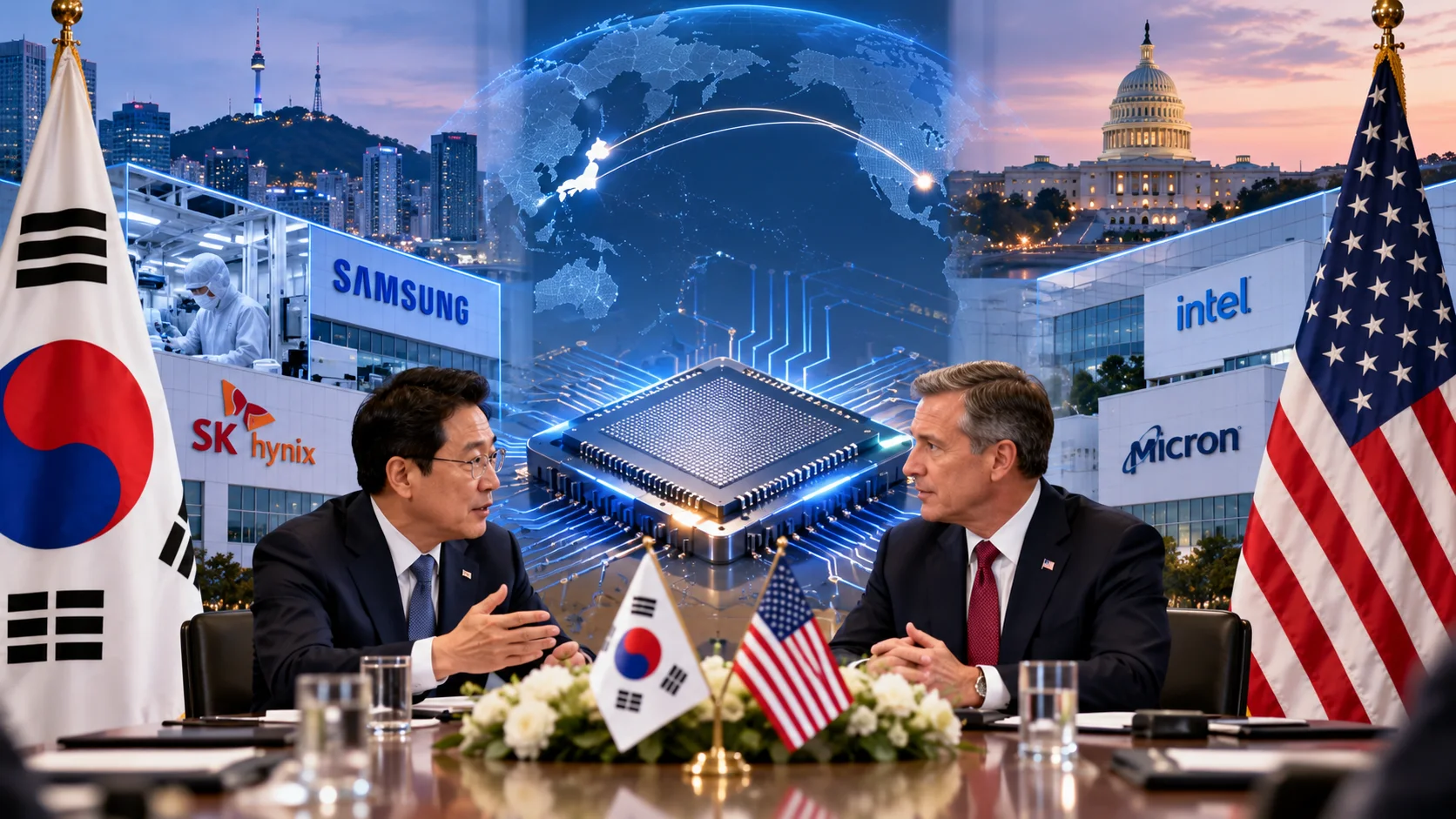
South Korea and the United States are discussing semiconductor investments in the US as Washington prepares a new tariff policy for imported chips, putting the future of Korean chipmakers in the middle of wider trade negotiations.
A South Korean presidential official said on Friday that semiconductors are among the investment-related issues being discussed between Seoul and Washington. The talks come as the Trump administration considers targeted tariffs on semiconductor imports, raising questions about how the new duties could affect Korean companies that supply the US market. The official acknowledged that different issues in the broader US-South Korea relationship can affect one another, but said the two sides were working to prevent those issues from getting in the way of each other.
US pushes for more chip production at home
US Commerce Secretary Howard Lutnick said this week that Washington was preparing a “targeted, thoughtful tariff policy” for semiconductors. His message was clear: companies that want easy access to the US market may be expected to manufacture more of their products inside the country. That puts South Korean chipmakers in a particularly important position. Samsung Electronics and SK Hynix are the world's largest memory chipmakers, and demand for their products has risen sharply as US technology companies pour money into artificial intelligence infrastructure. Any new semiconductor tariffs could therefore have implications beyond the companies themselves, particularly for the supply of memory chips used in AI data centres and other advanced computing systems.
South Korea already has a tariff understanding with Washington
Seoul is not entering the semiconductor tariff discussions without an existing agreement. Under a bilateral deal reached last year that included $350 billion in South Korean investment in US manufacturing, Washington agreed that South Korean chipmakers would receive tariff treatment no less favourable than that given to another competitor with an equal or larger volume of chip trade.
South Korea's Industry Minister Kim Jung-kwan said the ongoing tariff discussions are based on the understanding that Korean semiconductors should not be placed at a disadvantage compared with competitors. He also pointed to a joint fact sheet issued by the two countries in November, which included the same commitment on semiconductor tariffs. According to Kim, Seoul and Washington are continuing discussions in that spirit. For Korean companies, that commitment could become important if the US moves ahead with new chip duties. The exact tariff rate and the timing of any announcement have not yet been disclosed.
Investment talks could move this month
South Korea is also preparing to announce its first investment project under the bilateral trade agreement. Kim said related discussions could be wrapped up sometime this month, suggesting that an investment announcement may come in September. The timing matters because the US is increasingly linking trade policy with domestic manufacturing. For South Korea, meanwhile, the semiconductor industry is one of its most strategically important exports, making the terms offered to its chipmakers a key issue in the broader relationship.
The two countries are also dealing with unresolved national security matters. Seoul's presidential official said separate talks on security issues have made little progress, including discussions connected to South Korea's plan to build a nuclear-powered submarine under last year's agreement. For now, there is no confirmed timeline for the US semiconductor tariffs. But with South Korean chip investments, US manufacturing and tariff policy now being discussed alongside one another, the outcome could shape how Samsung, SK Hynix and other Korean suppliers expand their presence in the American semiconductor market.