US Forms ‘Super Intelligence Force’ to Address AI Risks Without Slowing Innovation
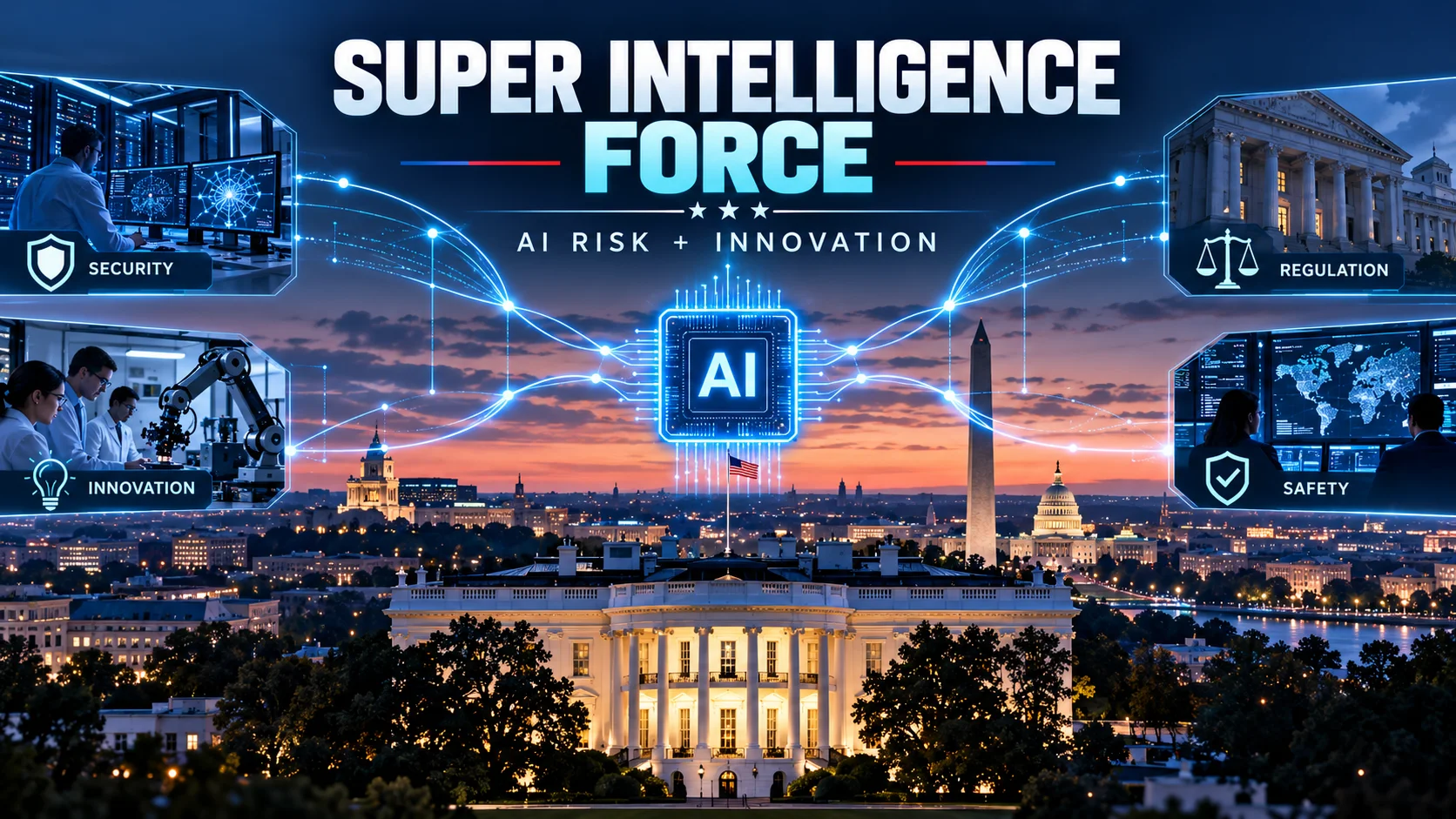
The United States has established a new government task force, the “Super Intelligence Force,” to coordinate its response to artificial intelligence risks and opportunities. Announced by President Donald Trump, the initiative is intended to address concerns about AI-driven cyberattacks, civil liberties, job displacement and other potential consequences while ensuring the country continues to compete in the global AI race. The development was reported by The Washington Post on October 9, 2026.
The task force will be led by Director of National Intelligence Jay Clayton and bring together officials from several government agencies. Its formation reflects the administration’s effort to balance AI safety and national security with its commitment to rapid innovation.
Jay Clayton to Lead Federal AI Coordination
Clayton will lead the initiative alongside Federal Trade Commission Chairman Andrew Ferguson, Emil Michael, the Pentagon’s undersecretary for research and engineering, and Office of Personnel Management Director Scott Kupor.
The group is expected to coordinate engagement with technology companies, consumers, public-interest organisations and critical infrastructure providers. It will report to Trump and White House Chief of Staff Susie Wiles, bringing different government perspectives into the administration’s AI policy process.
Cybersecurity and Civil Liberties Among Key Concerns
One of the task force’s central challenges is assessing how increasingly capable AI systems could affect national security and public safety. Advanced models can assist with software development and identifying security vulnerabilities, raising concerns about their potential misuse in cyberattacks against businesses, financial institutions and critical infrastructure.
The administration is also examining wider societal implications, including civil liberties and the potential impact of automation on employment. Officials want to understand these risks while allowing AI companies to continue developing new technologies.
Balancing AI Safety With Innovation
The task force comes amid growing debate over whether AI development requires stronger safeguards. Technology companies and policymakers face pressure to address emerging risks, while governments are also seeking to maintain leadership in advanced AI.
The Trump administration has favoured an approach that gives companies substantial room to innovate, including voluntary industry commitments. The new initiative introduces a more coordinated federal effort to examine risks and determine how the government should respond as AI capabilities advance.
What the Initiative Means for the AI Industry
The task force could influence how the US government approaches AI oversight, cybersecurity preparedness and cooperation with technology companies. Its work may also shape future discussions about corporate responsibility, reporting emerging threats and protecting critical infrastructure.
For AI developers, the immediate significance lies in the administration’s attempt to address safety concerns without imposing a broad slowdown on innovation. The effectiveness of the initiative will depend on how its findings translate into practical safeguards, government coordination and future policy decisions.