Zipline Funding: Drone Delivery Startup Raises $1.5 Billion at $21.5 Billion Valuation
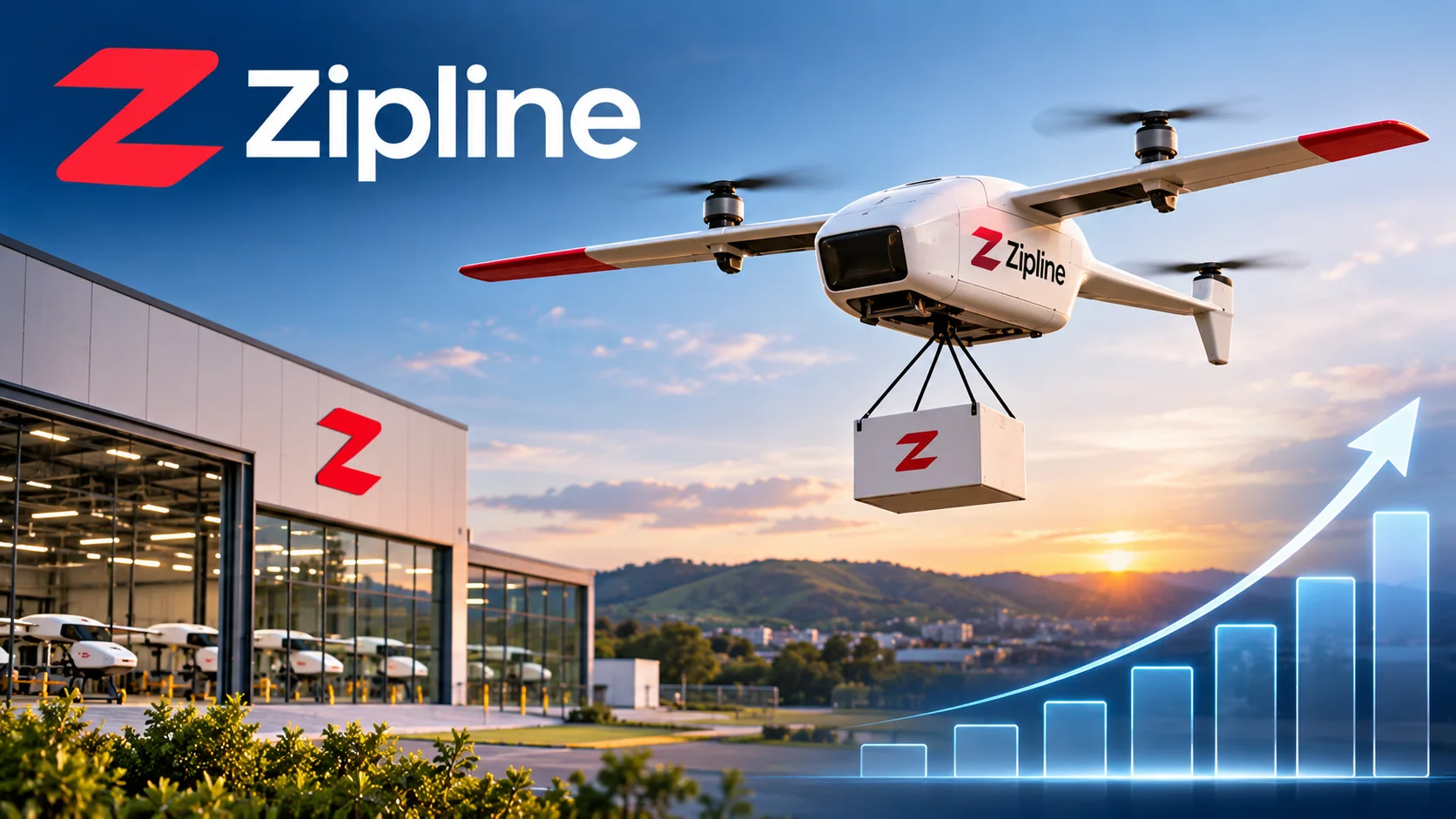
US-based drone delivery company Zipline has raised $1.5 billion in a new funding round, bringing its post-money valuation to $21.5 billion. The Zipline funding marks a major investment in autonomous logistics as the company prepares to expand its manufacturing capacity and strengthen its delivery network across the United States.
The round was led by Paradigm, WCM Investment Management and Layer Global. Investors including Uber, Tiger Global, J.P. Morgan, Fidelity Management & Research Company, ARK Invest and Salesforce Ventures also participated. The latest valuation is nearly three times the $7.6 billion figure reported after Zipline's earlier funding round.
Zipline Funding Will Support US Expansion
Zipline plans to use the new capital to expand its US manufacturing facilities, recruit additional employees and build a nationwide drone delivery network. The company operates an autonomous delivery system that combines aircraft, launch and landing infrastructure, and logistics software.
Its commercial relationships include major retail and delivery businesses. Walmart and Zipline have agreed to add 300 drone delivery sites under a new multi-year partnership. The companies have worked together since 2021, and the latest agreement represents a significant expansion of that relationship.
Uber is another strategic partner. The ride-hailing company has invested in Zipline and is working with it to bring autonomous drone deliveries to Uber Eats customers. Zipline has said the partnership is targeting one million deliveries a day by 2029.
Drone Delivery Moves Beyond Medical Supplies
Zipline began by delivering medical products, including blood supplies, to hospitals in Rwanda. It later expanded its operations to other African markets and developed services for retail goods, food and other consumer products.
The company now operates across multiple continents, serving customers in parts of Africa, the United States and Japan. Its delivery network includes long-range aircraft for enterprise and medical shipments, alongside smaller drones designed for direct-to-customer deliveries.
The funding comes as competition in autonomous delivery intensifies. Companies are investing in aircraft, logistics infrastructure and partnerships to make drone deliveries commercially viable. However, expansion still depends on aviation regulations, local approvals and public acceptance. Concerns over aircraft noise and safety could also affect where services can operate.
A Larger Test for Autonomous Logistics
Zipline's new valuation reflects investor confidence in the potential of drone delivery, but the next challenge is turning that interest into sustainable operations at a much larger scale.
Expanding manufacturing and securing major commercial partners provide a foundation for growth. The company must also demonstrate that its network can operate reliably across more locations while meeting regulatory and community expectations.
The latest Zipline funding gives the company substantial resources to pursue that expansion. Its progress will offer a significant test of whether autonomous aircraft can become a practical part of everyday retail and food delivery.