AI Data Centre Boom Faces Power, Water and Financing Risks
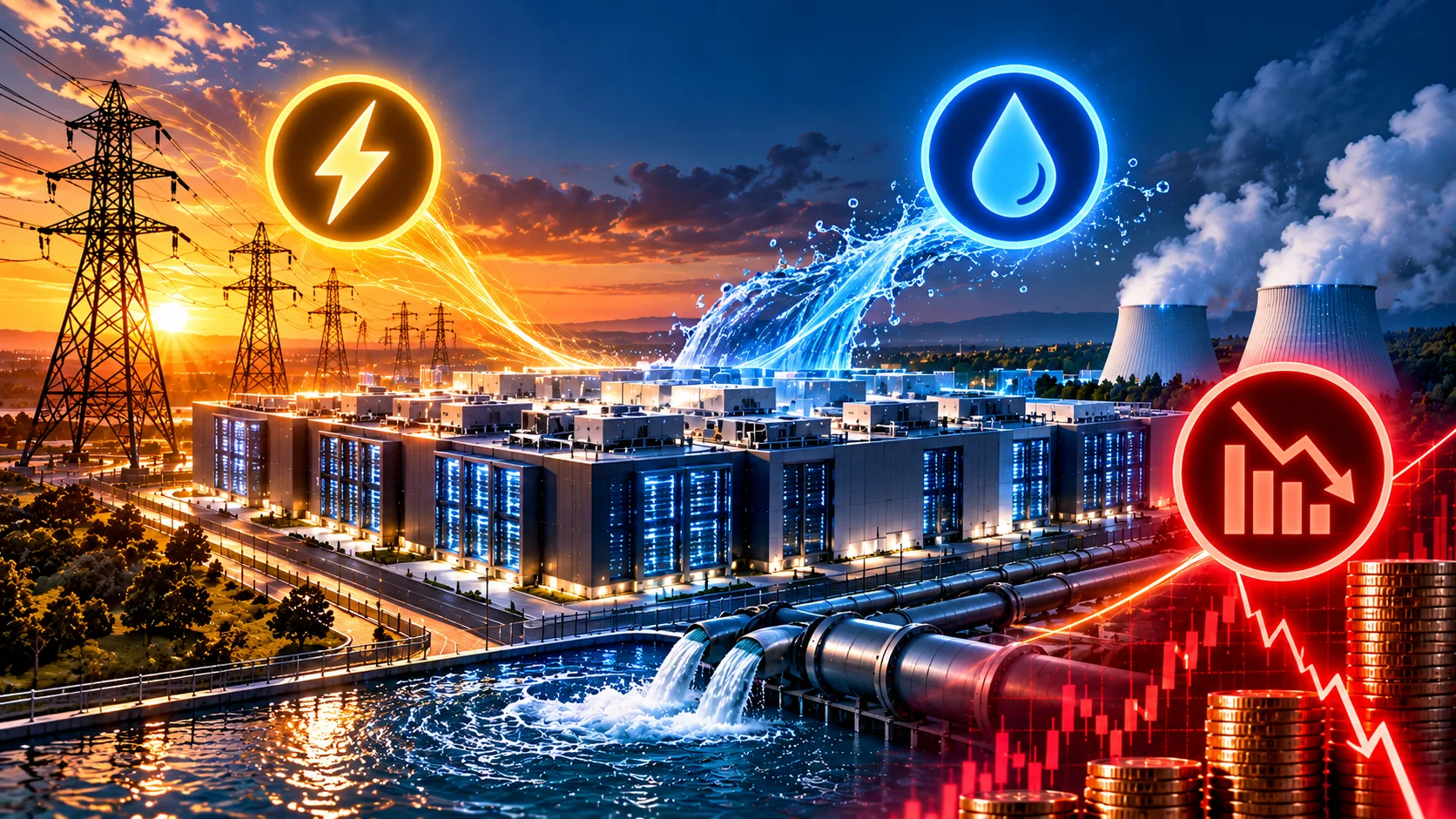
The AI data centre risks facing developers are becoming harder to ignore as electricity connections, water access, semiconductor supplies and local opposition delay projects. While demand for artificial intelligence computing continues to drive infrastructure investment, developers are discovering that securing customers and capital does not guarantee that facilities can be completed on time or operate profitably.
A Reuters Breakingviews analysis published on October 23 highlights mounting pressure on the sector, including falling share prices, abandoned investment plans and projects held back by power constraints. The challenges raise questions about whether the expected returns from AI infrastructure will justify the cost and complexity of building it.
AI Data Centre Risks Extend Beyond Computing Demand
Data centres have attracted major investment as technology companies expand the computing capacity needed to train and operate AI models. However, these facilities depend on more than servers and advanced chips. Developers also need reliable electricity, cooling systems, water access, construction equipment and suitable sites.
The International Energy Agency has identified grid capacity, lengthy connection queues and shortages of electrical equipment as important constraints on data-centre expansion. These problems can delay projects even when investors and prospective customers are ready to proceed.
Water availability and community opposition add further uncertainty. Local concerns about resource consumption, electricity infrastructure and the effects of large facilities can lead to planning disputes or changes to development proposals. As a result, announced capacity does not necessarily translate into operational computing infrastructure on the expected schedule.
Delays Are Creating Financial Pressure
The consequences are already visible in individual projects and company finances. Reuters reported that Australian data-centre operator NextDC’s shares fell sharply after opposition to electricity infrastructure for its Melbourne M3 facility contributed to delays and a reduction in its earnings forecast. The company also suspended some projects that did not have contracted customers and reviewed its capital expenditure plans.
In another example, UK data-centre developer Nscale lost a Microsoft contract because the required power would not be available until 2030, Reuters reported. Such cases illustrate how electricity access can become a commercial bottleneck, even when demand for computing capacity is strong.
Financing structures can make the problem more serious. Data-centre projects require substantial upfront spending, often supported by debt and expectations of future customer revenue. If construction or power connections are delayed, developers may face interest costs before a facility begins generating income.
Contracts can also expose developers to cancellations when projects miss deadlines or fail to secure essential resources. In the worst cases, companies could be left with underused land, incomplete facilities and debt obligations.
Semiconductor Supplies and Local Opposition Add Uncertainty
Electricity is not the only constraint. Semiconductor availability and delays in obtaining specialist equipment can affect when a facility is ready to operate. A building may be completed while essential hardware or supporting infrastructure remains unavailable, postponing the point at which it can serve customers.
Community opposition can also derail projects after developers have committed significant resources. Reuters cited Amazon’s decision to abandon four planned data centres in Virginia following local opposition as another example of the risks facing the sector.
These setbacks do not establish that the wider AI investment boom will fail. They do show why project timelines, equipment availability, planning approval and access to utilities matter when assessing the viability of individual developments.
What the Infrastructure Risks Mean for AI Investment
The central challenge is the gap between projected AI demand and the infrastructure that developers can realistically deliver. Forecasts of future computing needs can encourage rapid investment, but delays and cost overruns may reduce returns if capacity comes online later than expected or customers withdraw.
The International Energy Agency has also warned that uncertainty around future data-centre demand makes infrastructure planning difficult. Building too little capacity could create bottlenecks, while overestimating demand could leave utilities and investors with underused assets.
For developers and investors, the next phase of the AI boom will depend not only on demand for computing power, but also on whether projects can secure electricity, water, equipment, approvals and sustainable financing. The companies that manage these constraints will be better positioned to turn announced investment into operating infrastructure.