China Proposes Export Controls on 23 AI Technologies
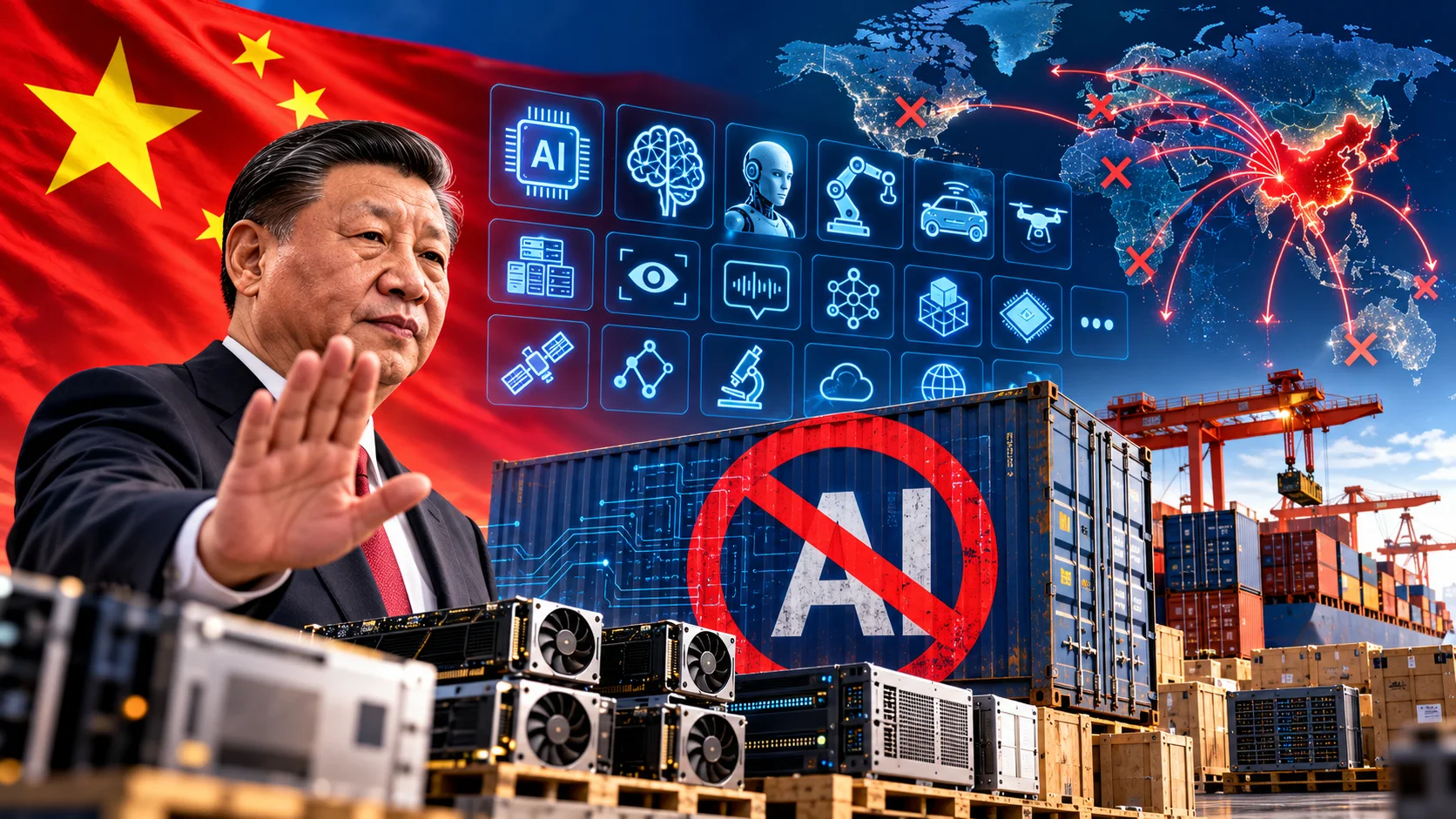
China has proposed new export controls covering 23 artificial intelligence technologies as part of a broader plan to regulate the overseas transfer of strategically important technologies. The proposal includes AI models, intelligent agents and computing clusters, potentially affecting how Chinese AI developers license technology and expand into international markets.
Announced on October 16, 2026, the draft forms part of a proposed revision covering 40 technologies across artificial intelligence, biomedicine and solar power. China’s Ministry of Commerce and Ministry of Science and Technology are seeking public feedback until November 15.
The measures come as China and the United States compete over advanced AI development, semiconductor access and control of critical technologies. Beijing says the proposed controls are intended to address national security risks and prevent sensitive technologies from being misused.
AI Models, Agents and Computing Systems in Scope
The proposed AI controls cover technologies associated with advanced models, intelligent agents and computing clusters. These systems underpin AI development, deployment and the computing infrastructure required to train and operate increasingly capable models.
The measures could affect transfers of restricted AI technology to overseas entities, including certain deployments of models containing controlled technology. However, the proposal distinguishes technology transfers from access to AI services: application programming interfaces, websites, apps and software-as-a-service platforms would remain exempt under the announced framework.
That distinction could allow Chinese AI developers, including DeepSeek and Alibaba, to continue serving international users while Beijing exercises greater oversight over the transfer of sensitive underlying technology.
Technologies already in the public domain through open-source releases or academic publications would also be excluded from the proposed controls.
Interim Registration Requirements Begin
Although the revised export-control catalogue remains under consultation, China has introduced interim pre-export registration requirements for the relevant technologies. Exporters must register applicable transfers while the government considers feedback and prepares the final rules.
The registration process is separate from the proposed restrictions themselves. It does not mean that all technologies covered by the draft have already been banned from export.
The consultation period is scheduled to run until November 15, leaving room for changes to the proposed catalogue before its final adoption. Companies involved in AI research, licensing and international technology partnerships will need to assess whether their activities fall within the relevant categories.
Broader Controls Extend to Biomedicine and Solar Power
The proposed revision extends beyond AI to include technologies in biomedicine and photovoltaic solar manufacturing. These areas cover strategically significant capabilities in fields such as cell and gene therapies, small nucleic acid drugs, polysilicon production, silicon wafers and solar cells.
The broader proposal reflects China’s effort to manage exports of technologies it considers sensitive across several industrial sectors. The restrictions could influence licensing agreements, technology transfers and overseas expansion plans, depending on the final scope of the rules.
The measures also arrive amid existing US restrictions on China’s access to advanced AI chips. Together, export controls on computing hardware and technology transfers are becoming important factors in the international competition to develop and commercialise advanced AI.
Global AI Development Faces Potential Licensing Changes
If adopted, the proposed controls could require companies to review how they transfer AI technology, license models and establish overseas operations. The practical impact will depend on the final definitions, technical thresholds and exemptions.
For now, the proposal does not establish a blanket ban on exporting Chinese AI systems or accessing their services abroad. Its clearest distinction is between transferring controlled underlying technology and providing access to models through online services.
Conclusion
China’s proposed export controls could reshape parts of the global AI supply chain by placing additional oversight on the overseas transfer of advanced models and related technologies. With public consultation continuing until November 15, the final rules will determine how extensively the measures affect international AI development, licensing and semiconductor competition.