Google Brings Personalised Gemini Assistant to Cars
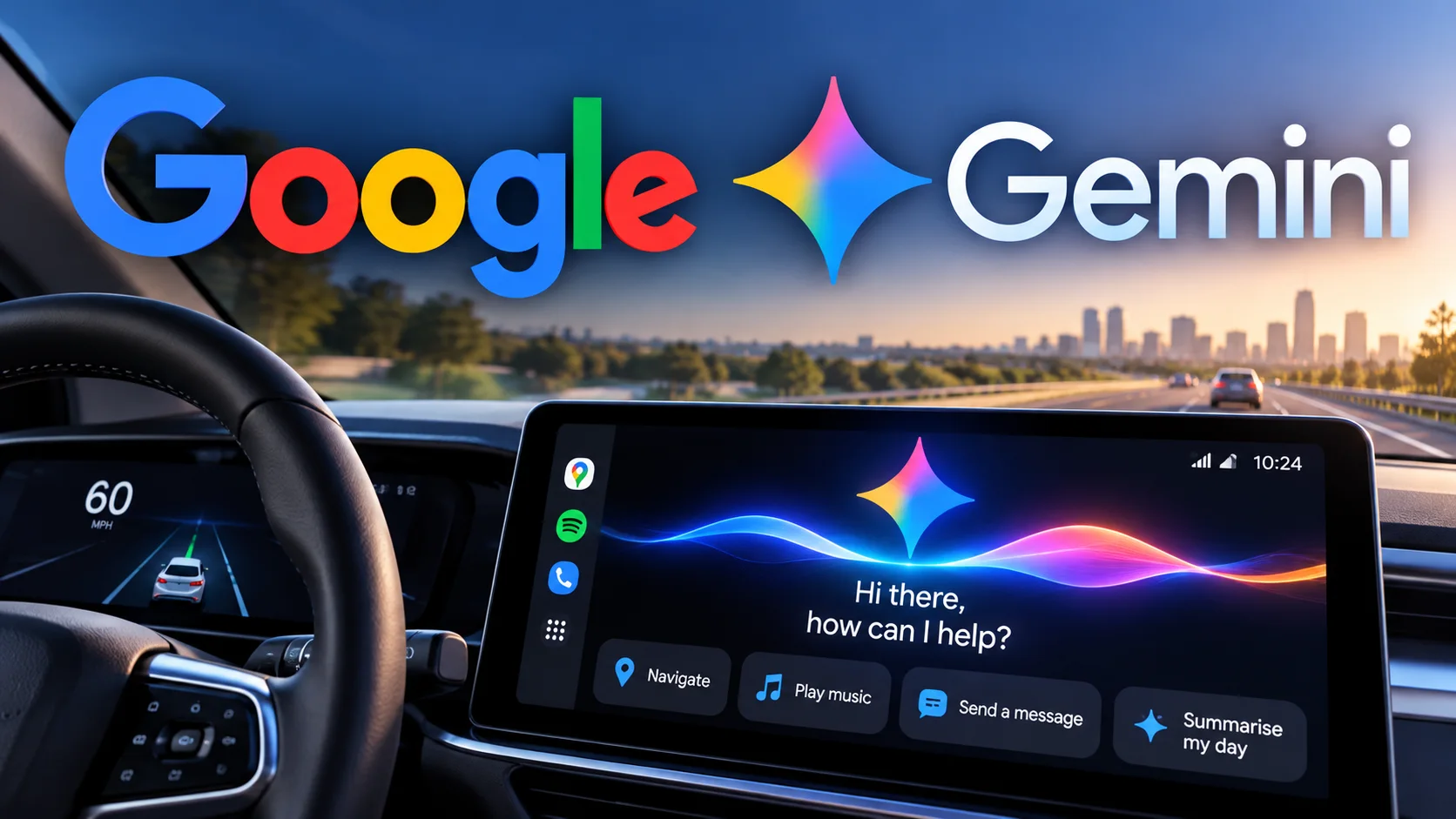
Google is bringing its personalised Gemini assistant to vehicles, allowing drivers to receive answers based on information from their connected Google apps. The update extends the company’s AI assistant beyond general voice commands into more context-aware help while travelling.
Announced on October 20, the upgrade introduces Personal Intelligence to Android Auto, which connects a smartphone to a vehicle’s infotainment system, and cars equipped with Google built-in. With users’ permission, Gemini can draw on information from Gmail, Google Calendar, Google Photos, Google Maps, YouTube and Google Search to provide more relevant responses.
How the Personalised Gemini Assistant Works
The new experience is designed to handle requests that involve information spread across multiple apps. Instead of searching manually for separate details, drivers can ask questions naturally and receive answers that combine relevant personal context.
For example, someone travelling to an airport could ask Gemini for their flight gate and whether the flight is delayed. The assistant could retrieve booking details from an email and help the user find relevant travel information without requiring separate searches.
The personalised Gemini assistant can also help users find places based on their preferences, navigate to appointments and locate destinations they previously encountered in photographs. These functions aim to reduce the need to switch between apps while on the road.
Google is positioning the update as a more useful way to interact with information during a journey. However, the assistant provides information and navigation support; the announcement does not mean that the system independently takes control of driving.
Privacy Controls and Availability
Personal Intelligence is optional. Users must enable the feature and choose which Google apps they want to connect. Google says they can change their settings or turn the feature off at any time.
For cars with Google built-in, personalised responses require the user's phone to be connected to the vehicle. Drivers who do not enable Personal Intelligence can continue using standard functions, including navigation, music, calls and general questions.
Google began rolling out the feature through Android Auto on October 20, with availability in cars using Google built-in planned for the coming months. Although Gemini is available in cars globally, Personal Intelligence has separate eligibility restrictions. At launch, it is available to eligible personal Google accounts belonging to users aged 18 or older, excluding the European Economic Area, Switzerland, the United Kingdom and Nigeria.
What the Update Means for In-Car AI
The move brings conversational AI closer to everyday activities by connecting an assistant with information people already use. Rather than relying only on a spoken command, Gemini can use permitted personal context to make its responses more relevant to a particular journey.
That convenience also makes privacy settings important. Connecting email, photographs, calendars and search information can expose sensitive personal context to an AI service, making user consent and control central to adoption.
Google’s latest update expands the role of its personalised Gemini assistant in the car, but its practical value will depend on feature availability, the information users choose to share and the usefulness of its responses. The development highlights how technology companies are moving AI assistants from standalone chat interfaces into the digital systems people use throughout the day.