
Copenhagen to Get New Quantum Chip Facility as Europe Scales Quantum Manufacturing
Europe is putting more weight behind the part of the quantum race that happens after the breakthrough in the laboratory: actually making the chips.
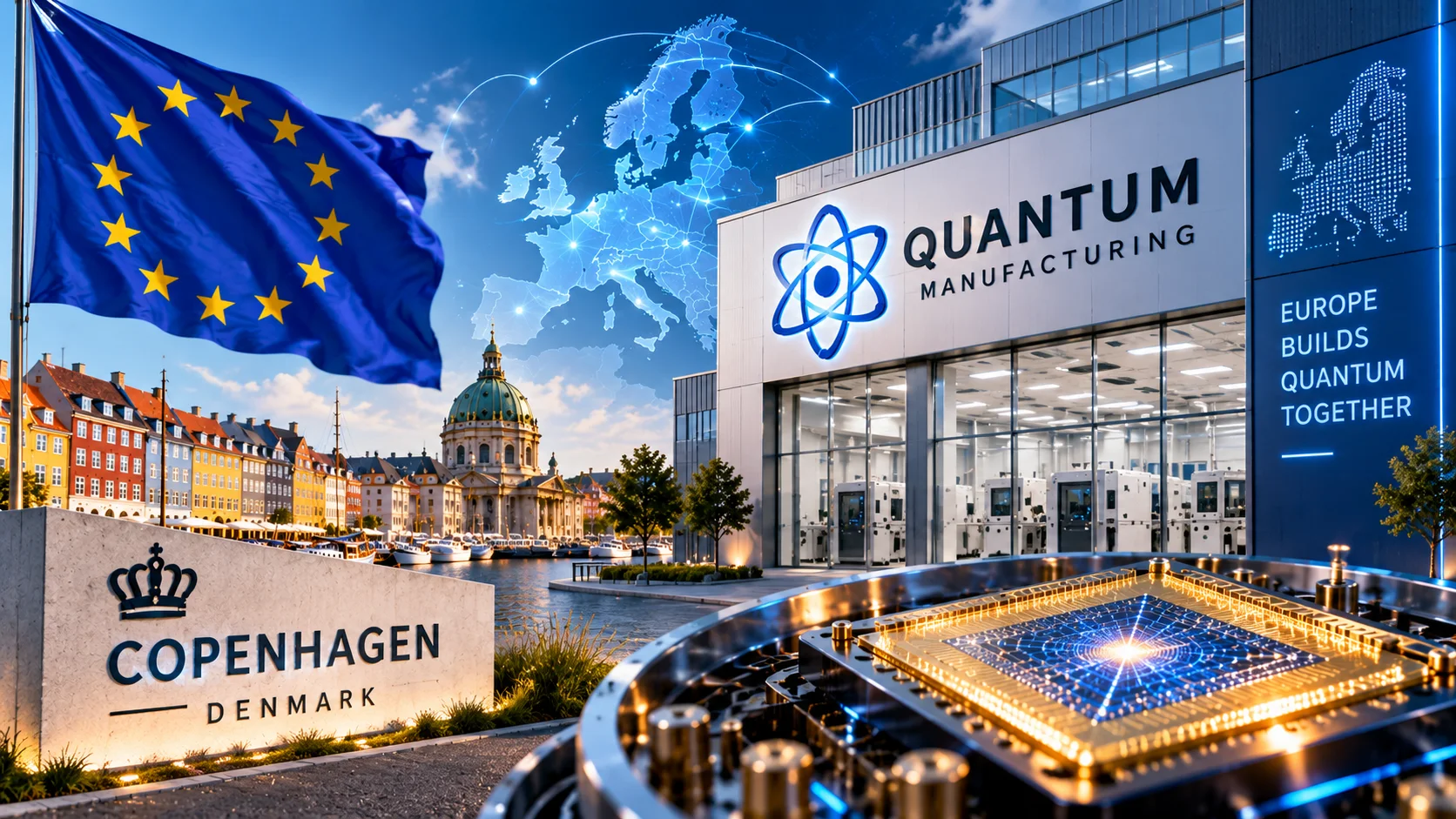
Quantum Foundry Copenhagen and the Novo Nordisk Foundation have announced plans for a new 5,300-square-metre quantum chip fabrication facility in Copenhagen. The facility is expected to open in 2027 and will focus on developing and scaling the manufacturing equipment and processes needed to produce next-generation quantum chips. The project is aimed at strengthening Europe's ability to manufacture quantum hardware at commercial scale, rather than relying mainly on research facilities and small-scale production. That distinction is becoming increasingly important as quantum companies move closer to building systems that can be deployed outside the laboratory.
From quantum research to actual chip production
Quantum computing has produced major advances in research, but turning those advances into reliable products requires a manufacturing base to match. The new Copenhagen facility will bring several stages of that process under one roof. Its capabilities are planned to include nanofabrication, materials characterisation, testing, chip assembly and packaging, alongside ultra-high-vacuum manufacturing. That combination is significant because quantum chips are not simply conventional computer chips made with different materials. Their performance can depend on extremely precise materials, fabrication processes and environmental conditions. Having dedicated infrastructure for those processes can make it easier for quantum technology companies to move from prototypes to repeatable production.
Quantum Foundry Copenhagen says the facility will also offer wafer fabrication to quantum technology companies globally on commercial terms. The company wants to develop production lines capable of supplying Europe with advanced quantum processors while giving quantum companies a path to scale their hardware.
Denmark is building a wider quantum ecosystem
The facility is part of a much larger push around quantum technology in Denmark. Quantum Foundry Copenhagen is owned by the Novo Nordisk Foundation and is connected to the foundation's Quantum Computing Programme at the Niels Bohr Institute, University of Copenhagen. The foundation has committed more than DKK 2.9 billion (about €390 million) to quantum technologies, including the programme's goal of developing Denmark's first fully functional fault-tolerant quantum computer before 2034.
The planned manufacturing facility is expected to work closely with that research programme. The idea is to create a more direct link between university research, specialist talent and industrial production. That could matter as Europe tries to turn its strength in quantum science into a stronger commercial position.
Europe wants more control over quantum hardware
The Copenhagen project also arrives as the European Union pushes for greater technological independence in quantum computing. The EU's Quantum Europe Strategy and forthcoming Quantum Act place greater emphasis on industrial capacity, commercialisation and resilient supply chains. The European Commission says the planned legislation is intended not only to boost quantum research and innovation but also to scale industrial capacity and strengthen supply-chain resilience.
For Europe, that means the quantum race is no longer only about who develops the best algorithms or demonstrates the most qubits. The ability to manufacture the hardware, package it and produce it consistently could become just as important. Quantum Foundry Copenhagen CEO Peter Krogstrup said the company's ambition is to become a leading quantum chip manufacturer and help quantum companies scale production. The new facility is expected to open in 2027. If the project delivers as planned, Copenhagen could become an important part of Europe's effort to build a domestic manufacturing layer for quantum computing—helping take the technology one step closer to an industry that can produce hardware at scale.