Delta-V Brings Live Space Launch Tracking and Orbital Game to One Platform
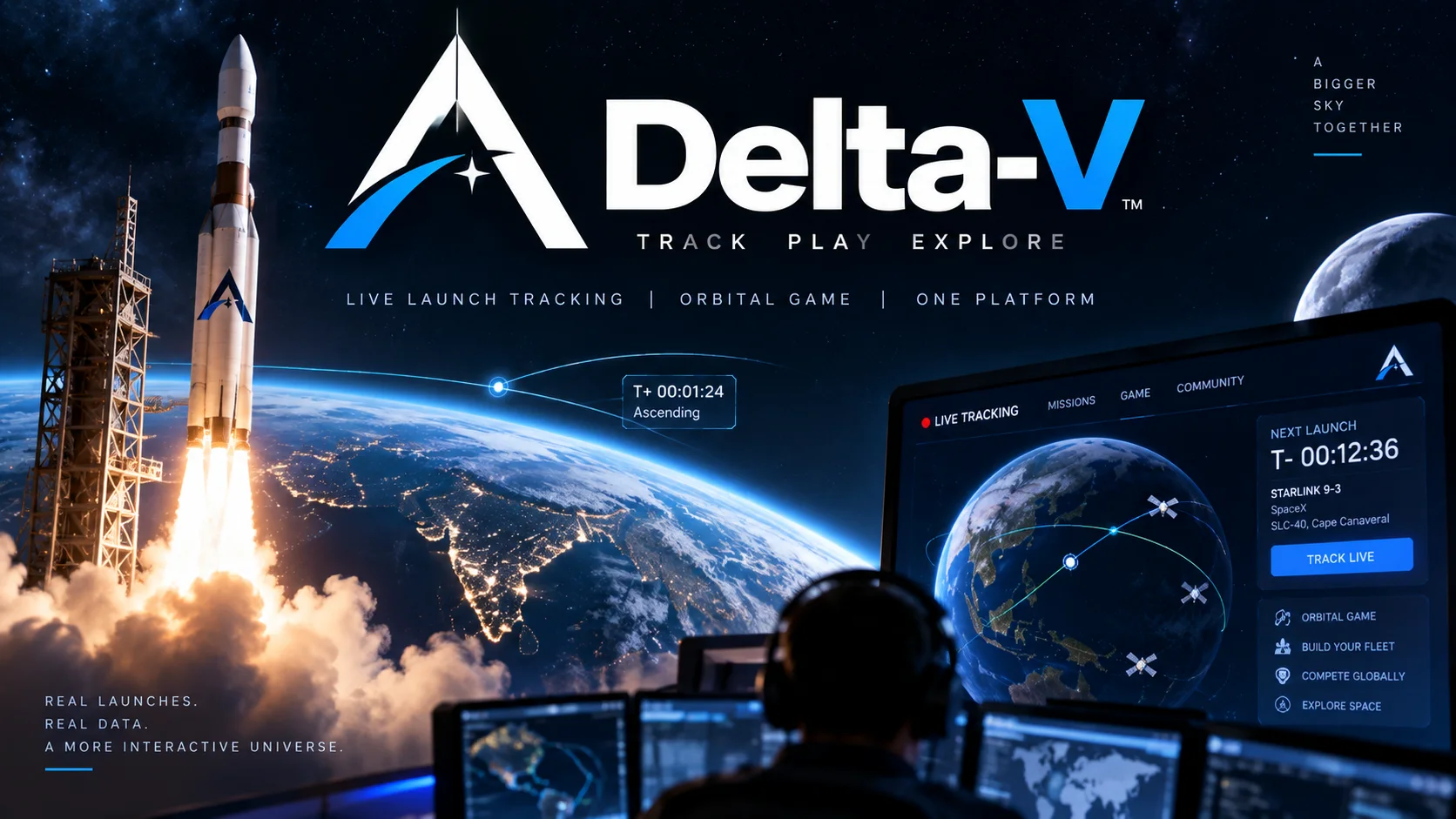
Space enthusiasts now have a new way to follow rocket launches and explore orbital mechanics from the same platform. Delta-V, an independent spaceflight console, brings live orbital launch tracking, spaceflight news, space-weather information and a browser-based gravity-flight game together in one interface. The platform tracks scheduled orbital launches around the world, providing countdowns, launch locations, vehicles, operators and mission information. It also links users to official webcasts when they are available, giving the site a practical role beyond simply aggregating space news.
A launch tracker built around real-time spaceflight data
Delta-V currently tracks dozens of space agencies and commercial launch operators, with its database covering thousands of orbital launch attempts. Users can browse launch vehicles, operators and upcoming missions through dedicated sections of the platform. The site's launch feed also brings together information from several external data sources, including The Space Devs' Launch Library 2, Spaceflight News API, NASA's astronomy and near-Earth-object services and NOAA's Space Weather Prediction Center. Delta-V says launch schedules should still be treated as estimates because mission times can change. That approach makes the platform useful for people who want more than a simple countdown. A launch page can connect the mission to its operator, rocket, launch site and orbital destination, while the wider platform provides historical and current spaceflight information.
Turning orbital mechanics into a game
The other half of Delta-V is a space game built around orbital mechanics. Its browser version can be played without an account, installation or payment, while an Android version is also available. The game uses gravity as an active part of navigation. Players control thrust and steering while managing a limited fuel supply, with planets and moons affecting the spacecraft's trajectory. Carefully timed manoeuvres can use gravitational assists to conserve fuel, while a poorly planned approach can send a spacecraft crashing into a planetary surface. The game also includes a salvage system in which players recover materials and parts from debris fields. Those resources can then be used to improve spacecraft, including engines, tanks and hulls. The Android version currently lists 25 ships and a campaign with multiple space environments.
Space data meets interactive learning
What makes Delta-V different from a conventional launch tracker is the way it puts factual spaceflight information alongside an interactive simulation. Users can move from following an actual rocket launch to experimenting with concepts such as thrust, orbital velocity and gravity in the game. The platform also includes an “Overhead” section that helps users identify objects visible in the night sky. It tracks recent launches, the International Space Station and satellite activity, giving the service another way to connect orbital data with what people can see from Earth.
For now, Delta-V describes itself as an independent project rather than a service affiliated with a launch provider or space agency. Its launch and orbital information comes from external data feeds, while the game operates as its own interactive experience. With commercial launches becoming more frequent and interest in spaceflight spreading beyond specialist communities, platforms like Delta-V are attempting to make orbital activity easier to follow—and, through simulation, easier to understand.