DJI Launches ROMO 2 AI Robot Vacuum With Robotic Arm
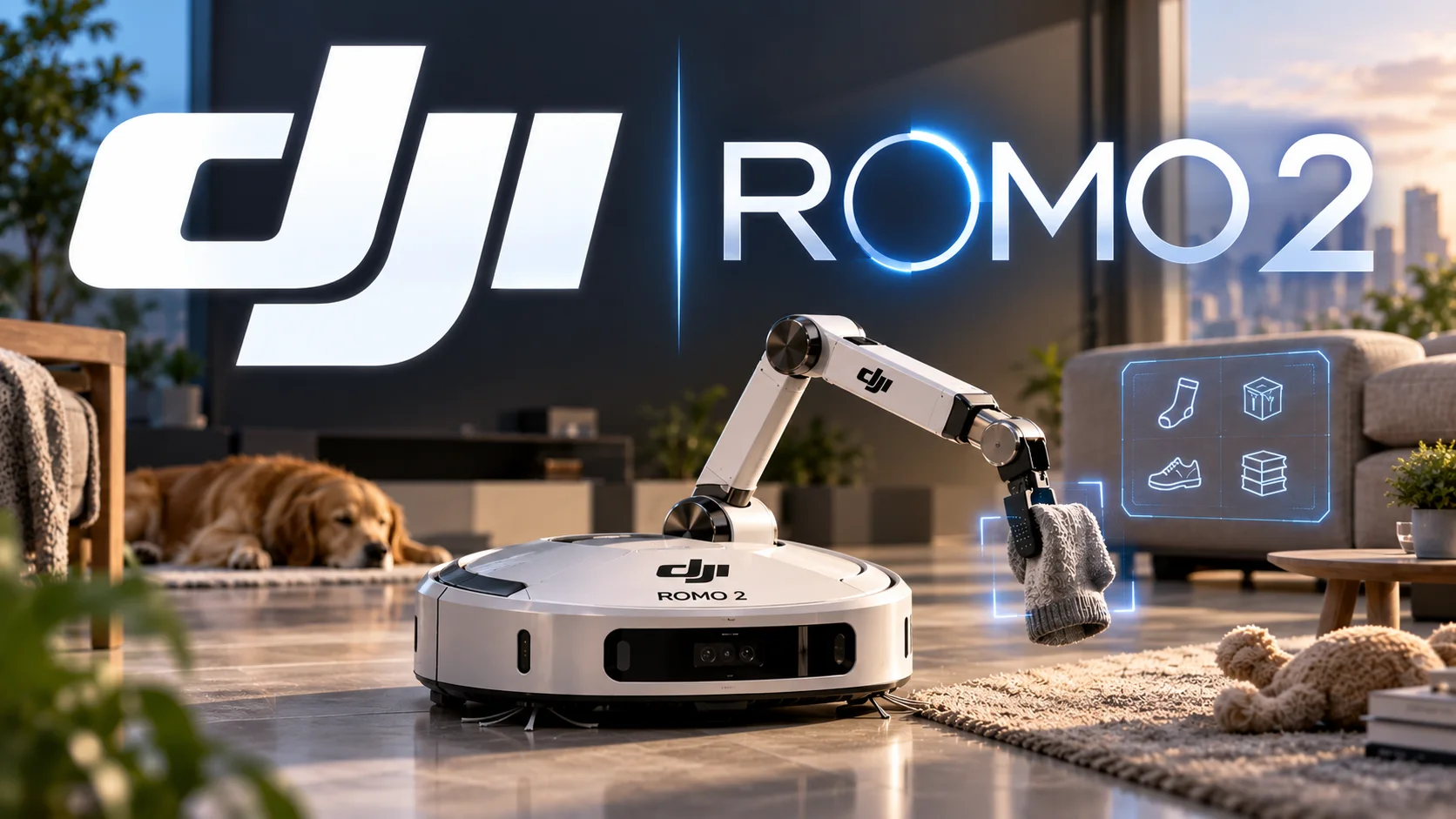
DJI has launched its second-generation ROMO 2 robot vacuum series, bringing more advanced artificial intelligence and robotics into home cleaning. The new lineup includes the ROMO P2 and ROMO A2, with both models designed to navigate complicated home environments while adjusting their cleaning approach based on what they detect. The launch marks another step in DJI’s expansion beyond drones and cameras. For the ROMO 2, the company has adapted sensing technology developed for its aircraft to help a household robot understand its surroundings with greater precision.
AI that decides how to clean
The ROMO 2 is designed to distinguish between different types of dirt and situations rather than simply following a fixed cleaning route. DJI says the robot can identify debris and liquid, increase suction when it moves onto carpets and change its cleaning behaviour when it detects a spill. Its perception system can detect floor-level obstacles as small as 2 mm, including cables and pet training pads. It can also identify transparent objects such as glass and mirrors, which can be difficult for conventional robot vacuums to recognise. A built-in light helps illuminate dust and obstacles in darker areas of the home. DJI says the system can also learn from previous experiences and apply what it has learned to unfamiliar obstacles. That gives the ROMO 2 a more adaptive approach to navigation instead of relying only on predefined routes.
A robot vacuum with an adaptive arm
One of the most distinctive features of the ROMO 2 is its robotic arm. Guided by LiDAR, the arm can swing through 123 degrees and extend its cleaning reach into areas that are difficult for a conventional robot vacuum to reach. According to DJI, the arm provides a 7.8 cm wider reach than the previous generation and can mop 4.5 cm deeper underneath floating furniture. This allows the robot to work closer to walls, table legs, cabinets and sofas while reducing the amount of space left untouched. The ROMO 2 also uses robotic legs to move over thresholds and small steps. DJI says it can cross single-step obstacles up to 4 cm high and double-step obstacles up to 8.5 cm, allowing it to move between different areas of a home without getting stopped by every raised surface.
36,000Pa suction and a self-cleaning dock
Cleaning performance has also been upgraded. On carpets, the ROMO 2 can deliver up to 36,000Pa of suction, with the system designed to create a tighter seal against the floor to remove deeply embedded dust. The robot returns to its base station for washing and other maintenance tasks. DJI says the station uses high-pressure water jets and a specially treated washboard to reduce grime buildup, with the company claiming up to 365 days of maintenance-free operation under its test conditions. The company has also worked on reducing operating noise. DJI says the ROMO 2 can reduce noise energy by up to 85%, while quiet mopping can operate at as little as 38 dBA under controlled testing conditions.
DJI adds new privacy controls
With cameras, microphones and advanced sensing systems inside a home robot, data privacy is another part of the ROMO 2 launch. DJI says users can disable the camera and microphone through the DJI Home app and delete personal data. A Local Data Mode is also planned for the fourth quarter of 2026. When activated, the company says the feature will cut the app’s internet connection and prevent photos or videos from being unintentionally synced to external servers.
The ROMO 2 is set to enter the global market through DJI’s online store and authorised retail partners. The P2 starts at €1,299, while the A2 starts at €1,199 in the configurations announced for the European market. With AI perception, drone-derived sensing, an adaptive robotic arm and robotic legs, DJI is pushing the robot vacuum beyond simple automated sweeping. The bigger question now is whether these technologies can make everyday home cleaning meaningfully more autonomous—and whether consumers will be willing to pay a premium for it.