IBM Unveils Dual-Architecture Processor Designed to Bring Arm Computing to IBM Z
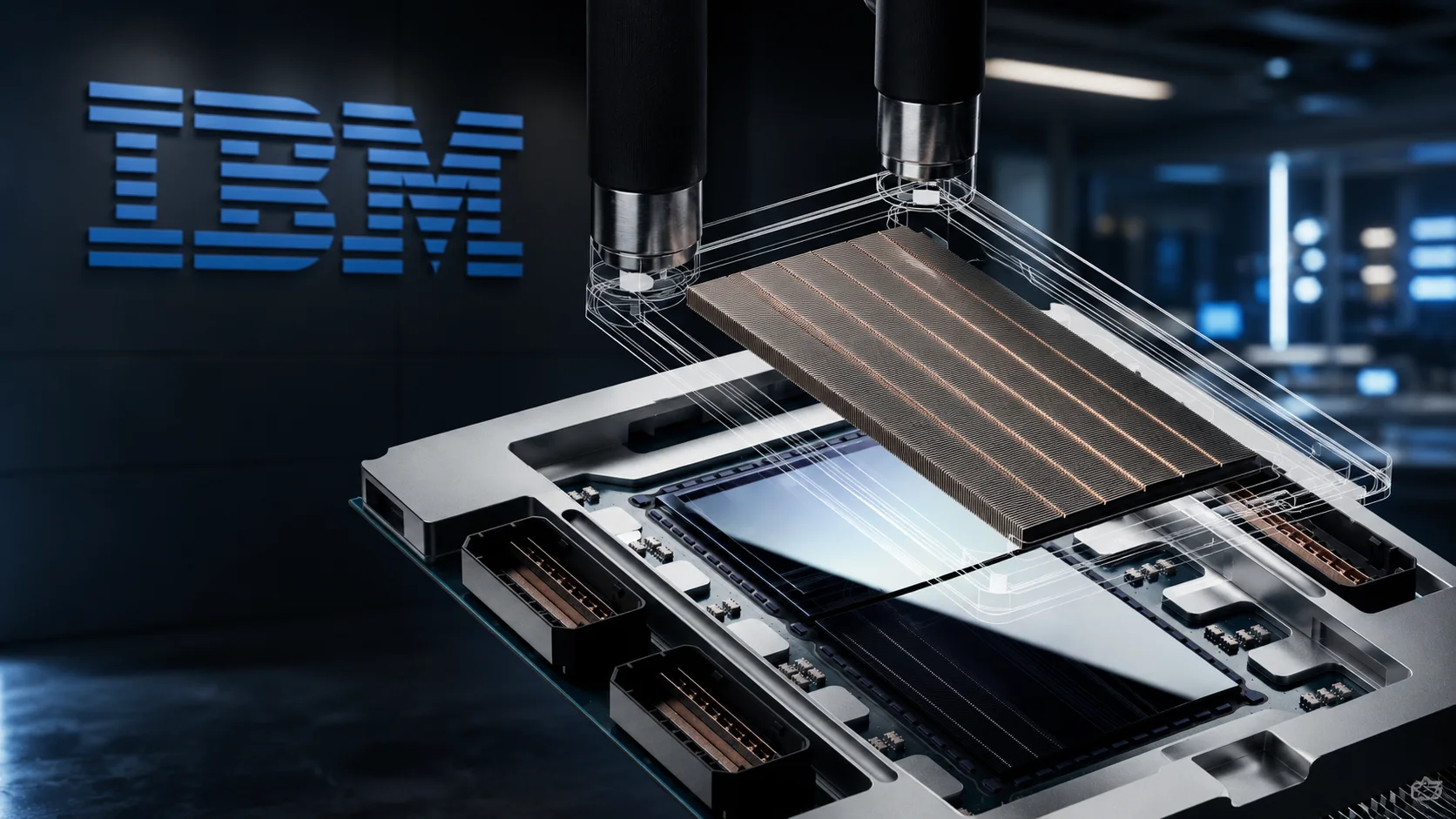
IBM is developing a new processor that could significantly broaden the software capabilities of its mainframe and enterprise computing platforms.
Announced at the Hot Chips conference, the processor is being designed to allow future IBM Z and LinuxONE systems to run workloads based on both IBM's own architecture and Arm technology.
The move represents the first major processor milestone from IBM's collaboration with Arm, established earlier in 2026.
Rather than requiring separate processors for different computing environments, IBM's approach is designed to allow the same cores to work with both architectures.
Bringing Arm Capabilities to IBM Z
IBM Z systems are widely used for demanding enterprise workloads, including financial transactions, large databases and other applications where reliability and security are critical.
Arm, meanwhile, has become a major architecture across cloud computing, mobile devices and increasingly AI infrastructure.
The new processor is intended to bring the large Arm software ecosystem into IBM's enterprise computing environment.
That could give organisations more flexibility when deploying applications, particularly as companies increasingly operate a mixture of traditional enterprise workloads and newer AI-driven applications.
One Processor, Two Architectures
The most notable aspect of IBM's announcement is the processor's dual-architecture design.
The new cores are being engineered to execute both Arm instructions and IBM Z instructions.
This is different from simply placing separate Arm and IBM processors in the same system.
The objective is to allow workloads based on the two architectures to operate within the same computing environment.
For enterprises, that could reduce some of the barriers associated with moving software between different processor architectures.
It could also make IBM's mainframe systems more accessible to developers already working with Arm-based software.
Built Using 2nm Technology
IBM says the processor is being developed using a 2-nanometre manufacturing process.
The design includes more than 11 high-performance cores, with clock speeds exceeding 5.7GHz.
The processor also incorporates a number of specialised components intended to improve performance for modern enterprise workloads.
These include:
AI inference accelerators
An integrated data-processing unit
Large cache capacity
High-speed processor cores
Support for IBM and Arm architectures
The combination is aimed at workloads that require significant processing capacity while maintaining the reliability expected from enterprise infrastructure.
AI Is Part of the Design
Artificial intelligence is becoming increasingly important to enterprise computing, and IBM is incorporating AI capabilities directly into the new processor.
The chip includes AI inference accelerators designed to support workloads such as real-time fraud detection.
This could be particularly relevant for industries such as banking, insurance and payments, where organisations need to analyse transactions quickly while maintaining strong security controls.
Instead of sending every AI task to a separate accelerator or external system, specialised processing capabilities on the processor could allow certain inference workloads to be handled closer to the transaction itself.
An On-Chip Data Processing Unit
Another important component is the processor's integrated data processing unit, designed to accelerate data movement and I/O-related operations.
Moving data between processors, memory and storage can become a major performance constraint in large enterprise systems.
Offloading some of these operations to specialised hardware can allow the main processor cores to spend more time executing applications.
For enterprise customers handling large volumes of transactions and data, improvements in this area could have a meaningful impact on overall system efficiency.
Why Arm Compatibility Matters
Arm has developed a massive software ecosystem over the past several years.
Its architecture is widely used in smartphones and embedded systems and has expanded significantly into cloud infrastructure and data centres.
For IBM, supporting Arm natively could make it easier for customers to use software originally developed for Arm-based environments.
That could be particularly useful as companies increasingly adopt software designed to operate across multiple types of infrastructure.
Developers would potentially have another route for bringing applications into IBM's enterprise environment without relying exclusively on software designed specifically for IBM's architecture.
A Shift in Enterprise Computing
The announcement reflects a broader change taking place across the semiconductor industry.
For decades, computing environments were often built around a relatively fixed processor architecture.
Today, enterprises are using a mixture of CPUs, GPUs, AI accelerators and specialised processing units.
Software is also becoming increasingly architecture-independent, with developers building applications that can operate across different hardware platforms.
IBM's dual-architecture approach fits into this broader trend.
Instead of forcing enterprises to choose between traditional mainframe computing and newer Arm-based software ecosystems, IBM is attempting to bring both into a single platform.
IBM Z and LinuxONE
The processor is intended for future generations of both IBM Z and LinuxONE systems.
IBM Z is designed for large-scale enterprise computing, with a particular emphasis on transaction processing, security and availability.
LinuxONE provides an enterprise platform focused on Linux workloads while using IBM's mainframe technology.
The new processor could expand the range of applications that these systems can support.
That could be especially relevant for organisations modernising older applications while simultaneously adopting cloud-native software and AI.
IBM and Arm Collaboration
The processor is also the first major hardware milestone to emerge from the IBM-Arm collaboration announced earlier this year.
The partnership brings together IBM's expertise in enterprise and mainframe computing with Arm's broad processor ecosystem.
For IBM, the collaboration provides an opportunity to expand its software ecosystem.
For Arm, the partnership opens another path into high-value enterprise computing environments.
The new processor therefore represents more than a chip development project; it is also an attempt to connect two major computing ecosystems.
What It Could Mean for Enterprises
If the technology reaches production as planned, customers could gain more flexibility in how they deploy applications.
An organisation could potentially continue running established IBM workloads while introducing applications built for Arm without requiring completely separate infrastructure.
That could be useful for companies undergoing gradual technology modernisation.
Rather than replacing existing systems all at once, businesses could potentially introduce newer applications alongside established workloads.
For large organisations, that type of transition can be important because many critical systems cannot simply be switched off and replaced.
Security and Reliability Remain Important
IBM is not positioning the processor simply as a way to gain broader software compatibility.
The company is also emphasising the security, reliability and scalability associated with its enterprise systems.
This is important because many IBM Z customers operate mission-critical workloads.
Banks, insurers, governments and other large organisations need systems that can process enormous amounts of information while maintaining strict security and availability requirements.
The challenge for IBM will be combining those established characteristics with the flexibility of a newer processor architecture.
A Processor Still in Development
It is important to note that IBM has announced the processor as a design for future IBM Z and LinuxONE systems.
It is not being presented as an already available commercial processor.
That means performance claims and other capabilities will ultimately need to be demonstrated through completed hardware and real-world systems.
The development phase will also determine how effectively the dual-architecture concept performs under enterprise workloads.
Why the Announcement Matters
IBM's processor announcement comes at a time when the boundaries between traditional enterprise computing, cloud infrastructure and AI are becoming increasingly blurred.
Businesses are demanding more computing power while also wanting flexibility in the software and hardware they use.
A processor capable of supporting two major architectures could give IBM an interesting way to respond to that demand.
It also demonstrates how processor design is evolving beyond simply increasing clock speeds and core counts.
Modern enterprise chips increasingly combine general-purpose computing with AI acceleration, specialised data processing and support for diverse software ecosystems.
The Road Ahead
IBM will continue developing the processor for future generations of its enterprise systems.
The success of the project will ultimately depend on several factors, including real-world performance, software compatibility, availability and how easily enterprises can integrate the technology into existing infrastructure.
If IBM can deliver on its vision, the processor could make its mainframe platforms more attractive to organisations looking for a combination of traditional enterprise reliability and access to the growing Arm software ecosystem.
Key Takeaways
IBM is developing a dual-architecture processor for future IBM Z and LinuxONE systems.
The processor is designed to support IBM and Arm architectures on the same cores.
It is being developed using a 2nm process.
The design includes 11+ high-performance cores.
Clock speeds are planned to exceed 5.7GHz.
The processor includes AI inference accelerators.
An integrated data-processing unit is designed to improve I/O-related workloads.
The chip is the first major processor milestone from the IBM-Arm collaboration established in 2026.
The technology is aimed at modern enterprise, AI and transaction-processing workloads.
The Bottom Line
IBM's new processor could represent an important change in how its mainframe platforms interact with the wider computing ecosystem.
By designing a processor capable of handling both IBM and Arm architectures, the company is attempting to give enterprises greater freedom in choosing and deploying software.
The addition of AI acceleration and specialised data-processing capabilities also shows how IBM is adapting its long-running enterprise computing business to the demands of modern workloads.
The processor remains under development, so its ultimate impact will depend on how the technology performs once it reaches production systems.
But the direction is clear: IBM is looking to make its mainframe infrastructure more flexible while retaining the security, reliability and enterprise capabilities that have traditionally defined the platform.