
Isar Aerospace Secures €197.8M ESA Contract as Spectrum Reaches Orbit
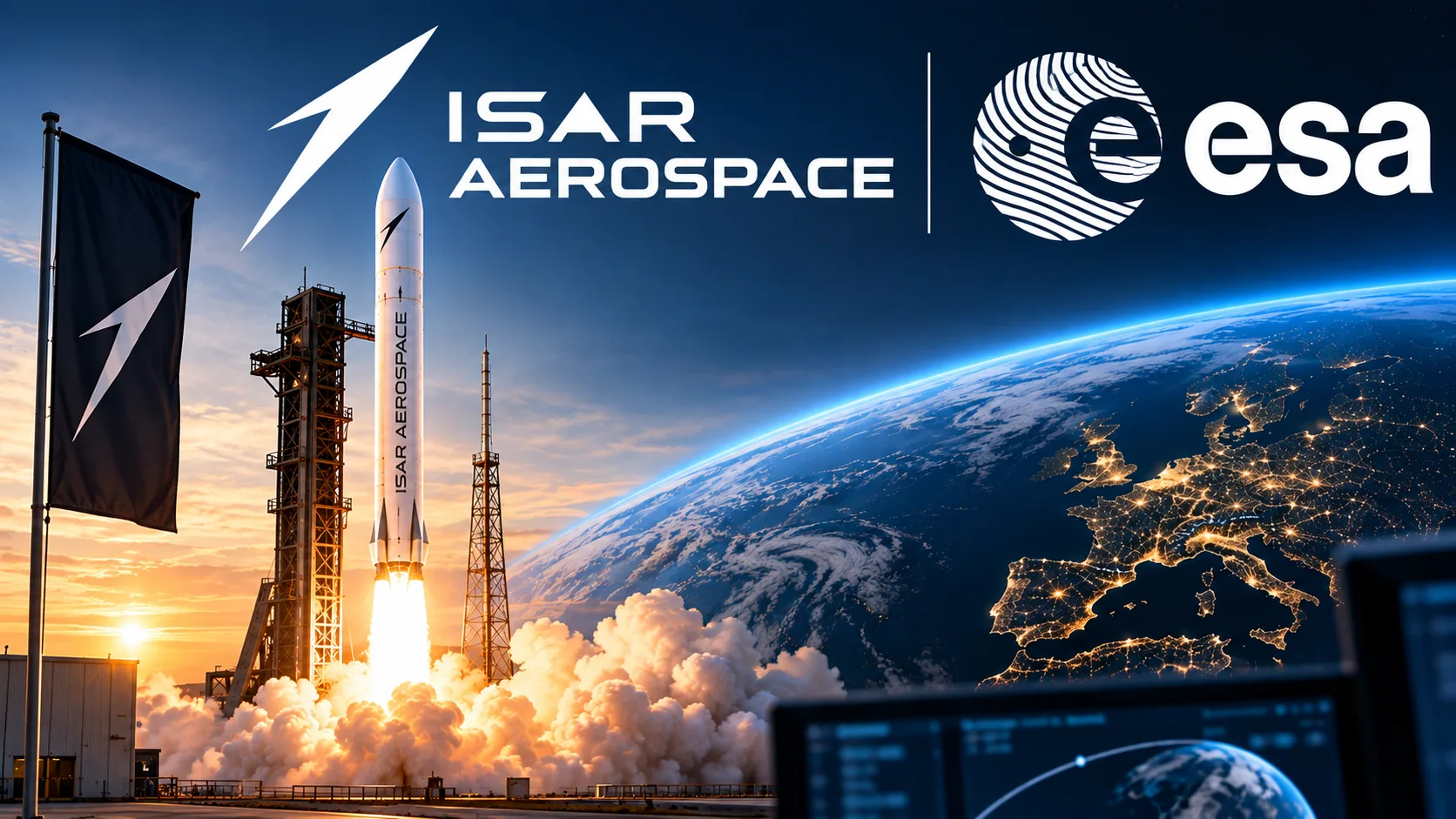
German launch startup Isar Aerospace has secured a €197.8 million contract from the European Space Agency (ESA) under the European Launcher Challenge, as Europe steps up efforts to build a more competitive and independent commercial launch sector. The agreement will support the development of Isar’s next-generation launch vehicles, expansion of testing and launch infrastructure, and higher launch cadence.
The contract was signed on August 27 and is mainly funded by Germany, with contributions from Austria and Norway. The agreement was followed by a major technical milestone on September 5, when Isar’s Spectrum rocket successfully reached orbit from Andøya Spaceport in Norway. That flight made Isar the first European Launcher Challenge provider to meet the programme’s initial orbital-launch requirement.
ESA Backs Isar’s Next Stage of Growth
The European Launcher Challenge is designed to increase the number of European launch providers and give governments and commercial customers more options for putting satellites into orbit. Instead of developing and operating every launcher itself, ESA is acting as a customer and providing financial support to privately developed launch services that meet defined milestones.
Under the programme, selected companies must first demonstrate a successful orbital launch no later than 2027. They must then demonstrate an upgraded launch capability by 2028, after which ESA can contribute to operational launches through 2030. The programme has more than €900 million in total funding commitments across participating European launch providers.
Isar's contract is worth €197.8 million, while Spain's PLD Space has secured a separate €158.9 million agreement for its Miura 5 launcher. ESA said the contracts unlock funding as participating companies reach agreed technical and programme milestones.
Spectrum Has Already Reached Orbit
The timing of the contract has become particularly significant following Isar's September 5 Spectrum mission. The 28-metre, two-stage rocket lifted off from Andøya Spaceport and successfully reached orbit, carrying customer payloads including CubeSats and an experimental mission.
The flight, named Onward and Upward, was Spectrum's second launch attempt. Its first test flight in 2025 lasted around 30 seconds before the vehicle was lost. The successful second mission therefore provided Isar with its first full orbital demonstration and valuable operational data for the next stage of the programme.
The successful flight also means Isar has already completed the European Launcher Challenge's first major technical requirement. ESA described the achievement as the first time a European Launcher Challenge provider had reached orbit, while the European Commission called it the first successful orbital flight of a privately developed rocket from continental Europe.
Funding Will Support Higher Launch Capacity
Isar plans to use the ESA-backed programme to accelerate work on future launch vehicles while expanding the infrastructure required to test and operate them. The company develops, manufactures and tests most of its launch vehicles in-house, following a vertically integrated production model.
Spectrum is designed to carry payloads of up to 1,000 kilograms to low Earth orbit. Isar has also been expanding its manufacturing capabilities near Munich and is targeting substantially higher production rates as demand for commercial and institutional launches grows. The company says its launch manifest currently extends through 2028 and includes missions for ESA and other international customers.
The company is also pursuing additional launch infrastructure outside Germany. In July, Isar announced an agreement with Maritime Launch Services to advance orbital launch capability from Spaceport Nova Scotia in Canada, with the aim of supporting future international operations.
Europe Pushes for More Independent Launch Options
Isar's progress comes as Europe looks to reduce its dependence on non-European launch providers and expand the number of rockets available for commercial and government missions. The European Launcher Challenge is one part of that effort, with Isar Aerospace, PLD Space, MaiaSpace and Rocket Factory Augsburg originally selected as challengers. Orbital Express Launch later withdrew after entering administration.
The push has gained additional urgency as European governments focus on sovereign access to space for communications, Earth observation, navigation and defence. Reuters reported this week that European policymakers are seeking greater investment and resilience in the region's launch sector, with ESA developing proposals aimed at reducing dependence on U.S. launch providers.
For Isar Aerospace, the €197.8 million ESA contract now comes with an important milestone already achieved. The successful Spectrum flight moves the company from development and testing toward proving that it can provide a repeatable commercial launch service. The next challenge will be increasing launch frequency, improving vehicle capabilities and turning that first orbital success into a sustainable European alternative for satellite customers.