
ISRO Launches EOS-05 on GSLV-F17, India’s First Geosynchronous Imaging Satellite
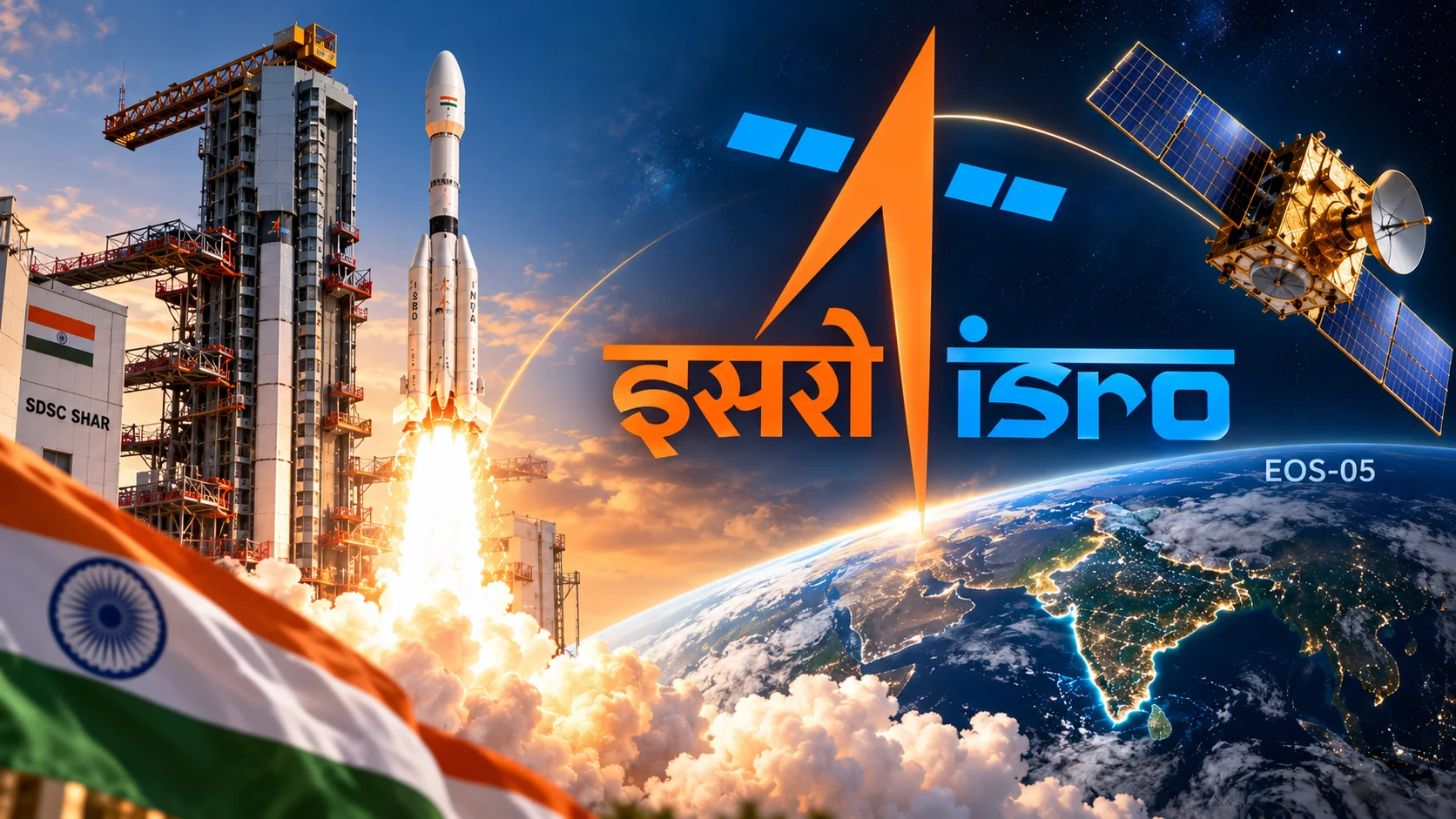
The Indian Space Research Organisation (ISRO) has successfully launched EOS-05, placing India’s first dedicated imaging satellite designed to operate from a geosynchronous orbit into space. The satellite lifted off aboard the GSLV-F17 from the Satish Dhawan Space Centre in Sriharikota at 2:55 am IST on September 4. GSLV-F17 placed EOS-05 into a Sub-Geosynchronous Transfer Orbit (Sub-GTO) about 18 minutes after liftoff. From there, the spacecraft will carry out further orbital manoeuvres to reach its intended geosynchronous position, around 36,000 km above Earth.
For ISRO, the mission is about more than another satellite launch. EOS-05 is designed to give India a very different kind of view of its own territory.
Why EOS-05 is different
Most Earth-observation satellites operate in lower orbits and pass over a particular location at intervals. EOS-05 is designed to stay aligned with the Earth's rotation from its geosynchronous orbit, allowing it to repeatedly observe the same broad region. That means the satellite can provide continuous, near-real-time imaging rather than waiting for a satellite to make its next pass over a location. The capability can be particularly useful when conditions on the ground are changing quickly. The satellite is an advanced Earth-observation spacecraft, and ISRO describes it as the country's first imaging satellite from geosynchronous orbit. Its applications include monitoring the environment and supporting areas such as weather observation, disaster management and other Earth-monitoring requirements.
GSLV-F17 carries a major payload
The mission also puts the capabilities of ISRO's Geosynchronous Satellite Launch Vehicle to work. GSLV-F17 is the 19th flight of India's GSLV and used a four-metre-diameter ogive composite payload fairing for the mission. EOS-05 weighs more than 2,300 kg, making it one of the heaviest spacecraft carried by a GSLV. The satellite's size and the destination orbit make the mission a demanding one for India's launch system.
The successful launch is also significant because the mission follows a difficult run for some of India's recent satellite launches. The previous GISAT attempt, EOS-03, was lost after the GSLV-F10 mission failed in 2021. EOS-05's successful deployment therefore closes an important chapter for the country's planned geosynchronous imaging programme.
A new eye for Earth observation
Once EOS-05 reaches its final orbit and begins operations, its ability to repeatedly watch the same region could give Indian agencies a useful tool for tracking events that develop over time. For disaster response, for instance, frequent imaging can help authorities follow changing conditions rather than relying only on snapshots taken during separate satellite passes. Similar advantages can apply to weather monitoring, agriculture and other large-area observation requirements.
The GSLV-F17 EOS-05 mission also comes at an important point for India's space programme. ISRO has been expanding its Earth-observation capabilities while developing increasingly specialised satellites for scientific, civilian and strategic applications. With EOS-05 now successfully on its way to geosynchronous orbit, India has added a new kind of Earth-observation capability to that network. The next step will be to raise the satellite into its operational orbit and begin putting its continuous imaging capability to work.