ISRO NVS-03 Satellite Launch Strengthens India's NavIC Navigation System
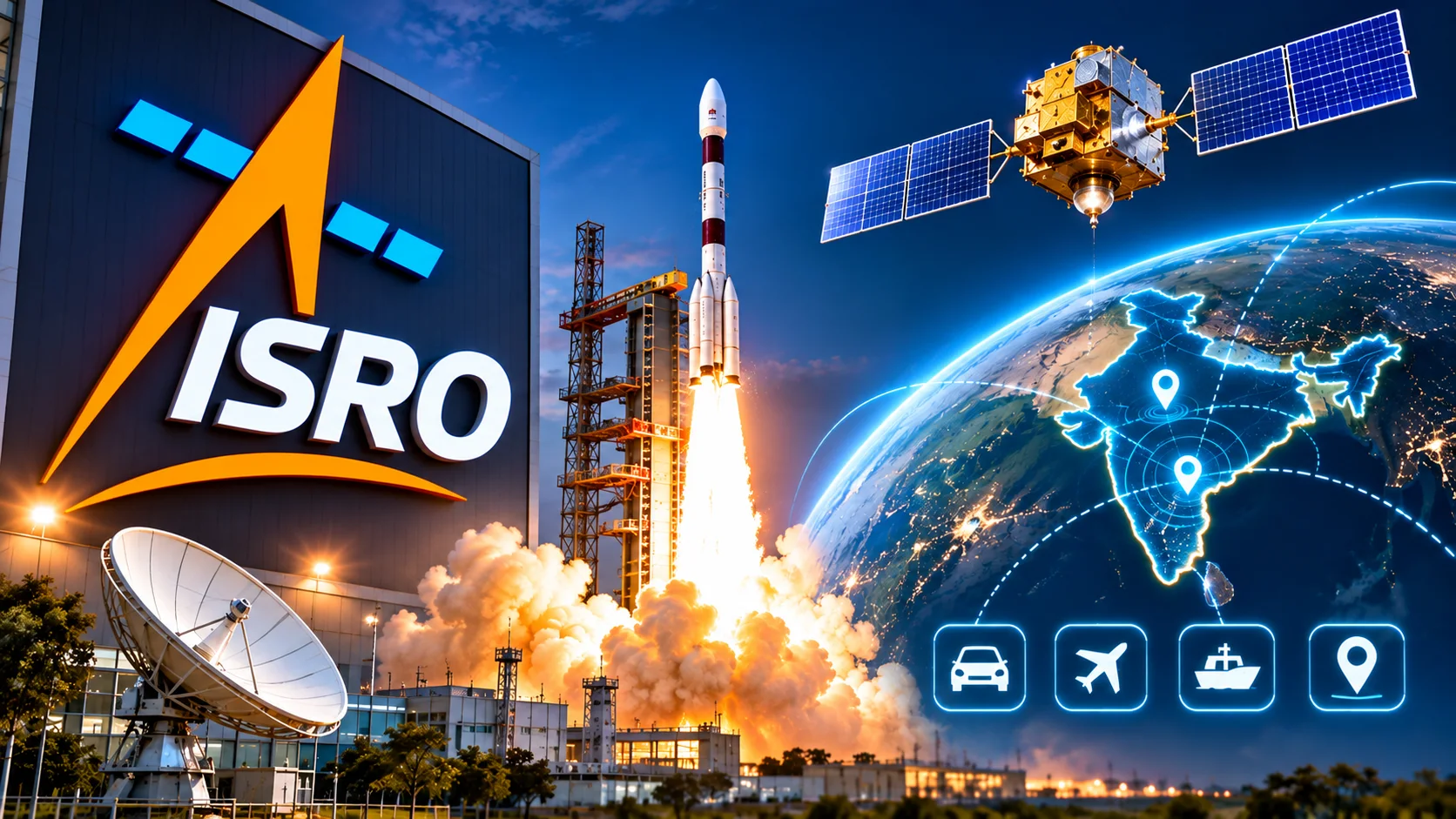
The Indian Space Research Organisation (ISRO) has successfully launched the NVS-03 satellite aboard its GSLV-F18 rocket, strengthening the country's indigenous navigation network, NavIC. The 2,232 kg spacecraft lifted off from the Satish Dhawan Space Centre in Sriharikota at 11:51 pm IST on October 30 and was placed into its intended Geosynchronous Transfer Orbit.
The mission adds a new-generation navigation satellite equipped with an indigenous atomic clock and an additional L1 navigation signal. It also marks the 20th flight of India's Geosynchronous Satellite Launch Vehicle programme, extending ISRO's efforts to maintain and improve the country's independent positioning and timing capabilities.
NVS-03 Satellite Adds New Capabilities to NavIC
NVS-03 is the third spacecraft in ISRO's second-generation navigation satellite series. It is designed to support continuity and improve the availability of services provided by the Navigation with Indian Constellation (NavIC), India's regional alternative to systems such as the US-operated GPS.
One of its key features is an indigenously developed atomic clock, carried alongside procured atomic clocks. Precise timekeeping is essential to satellite navigation because receivers calculate their positions using the timing of signals transmitted by multiple satellites. The mission also introduces the L1 frequency band alongside NavIC's existing L5 and S-band signals.
GSLV-F18 Completes Its 20th Flight
The GSLV-F18 mission lifted off from the Second Launch Pad at Sriharikota. The launch vehicle successfully deployed the satellite into Geosynchronous Transfer Orbit, from where it will undergo further orbit-raising manoeuvres to reach its intended geosynchronous position.
Weighing approximately 2,232 kg, NVS-03 is designed to provide navigation coverage across India's landmass and a region extending up to 1,500 kilometres beyond the country's boundaries. The additional L1 signal is expected to support wider compatibility with navigation receivers, although broader integration into consumer devices will depend on compatible hardware and the development of the wider NavIC constellation.
Why the NVS-03 Mission Matters for India's Navigation Independence
NavIC supports positioning, navigation and timing services for civilian and strategic applications. These include transport, maritime operations, location-based services and infrastructure that depends on accurate timing. Maintaining an independent navigation network also gives India an alternative to relying entirely on satellite systems operated by other countries.
ISRO has described NVS-03 as part of its effort to ensure continuity of NavIC services. The launch is an important addition, but the satellite's successful deployment does not mean every planned service upgrade is immediately available. It must complete its orbital manoeuvres and operational checks before entering service.
The mission extends India's domestic navigation capabilities while demonstrating the role of indigenous timing technology in space infrastructure. Its longer-term impact will depend on the performance of the satellite and the continued development of the NavIC constellation.