
ISRO Reassures Staff as India Expands Private Role in Space Sector
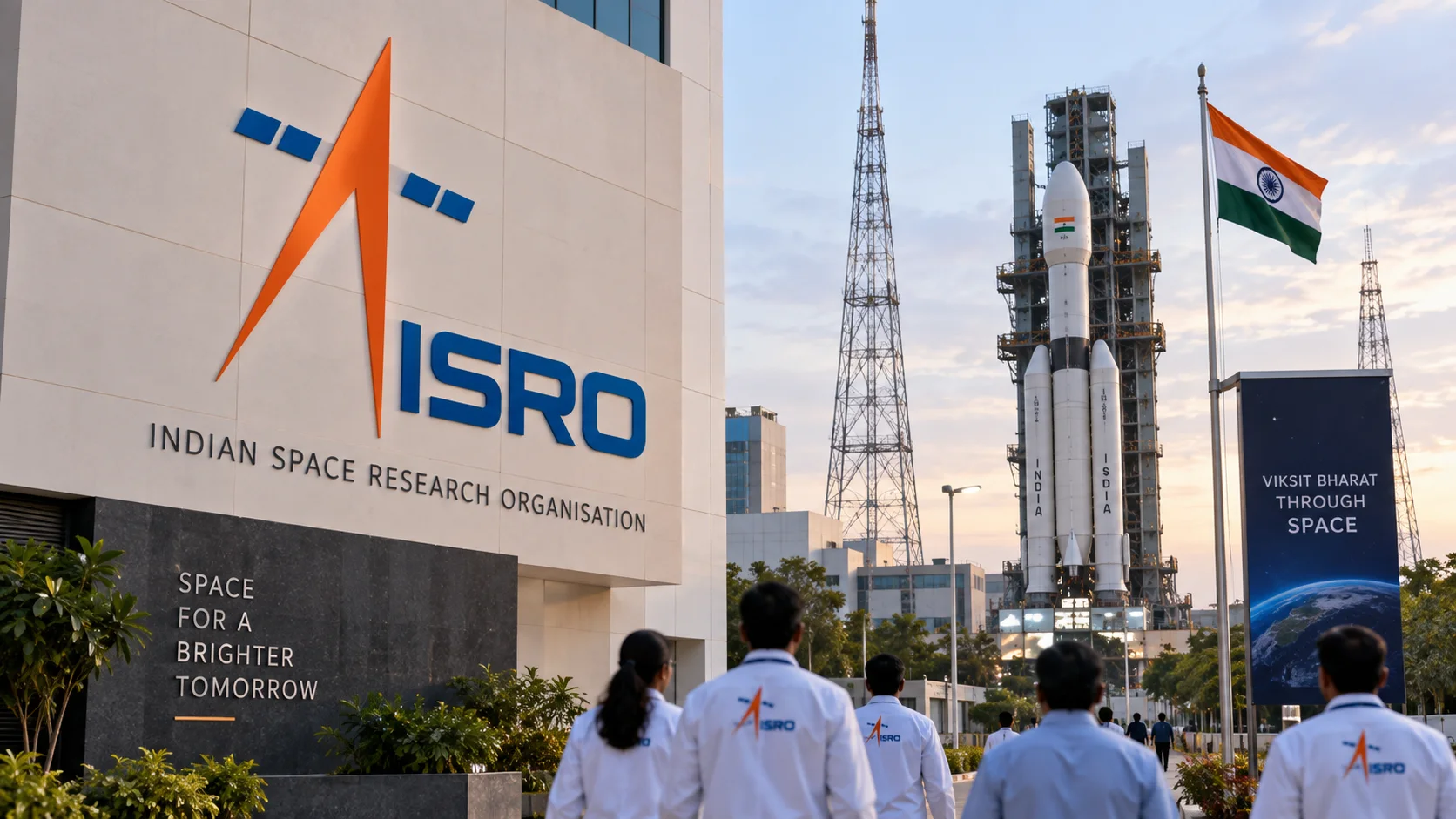
The Indian Space Research Organisation (ISRO) has reassured its employees and the wider public that it will not be privatised or stripped of its central role in India’s space programme, as the government pushes ahead with reforms that give private companies a larger role in the sector.
The clarification follows a September 4 letter from ISRO employee representatives expressing concern about the possible transfer of manufacturing and operational responsibilities to outside companies. The concerns emerged after plans to expand industry participation in activities traditionally handled by the space agency.
ISRO said the reforms are intended to expand the overall space ecosystem rather than reduce the agency’s importance. Under the new approach, private companies are expected to take on more mature manufacturing and commercial activities, while ISRO concentrates more heavily on research, advanced technologies and major strategic missions.
Private Companies Take on More Production
India began opening its space sector to private participation in a more structured way after the reforms announced in 2020. The government subsequently established the Indian National Space Promotion and Authorisation Centre (IN-SPACe) as a regulatory and promotional body for private space companies.
The policy has gradually moved private companies from supporting roles toward developing and operating their own space systems.
A consortium led by Hindustan Aeronautics Limited and Larsen & Toubro is now manufacturing the Polar Satellite Launch Vehicle (PSLV), one of ISRO’s established launch systems. Technology for the Small Satellite Launch Vehicle (SSLV) has also been transferred to HAL for commercial production.
These developments have raised questions within ISRO about what the agency will continue to manufacture itself and how its workforce will be affected as industry assumes a larger role.
ISRO's latest clarification seeks to draw a distinction between transferring mature technologies to industry and transferring the agency's core responsibilities.
ISRO to Focus More on Advanced Missions
The space agency says greater industrial participation will allow it to concentrate on technologies and missions that require continued research and development.
That includes next-generation launch systems, advanced spacecraft, human spaceflight, planetary exploration and other strategic capabilities. Industry can then take technologies that have reached a mature stage and manufacture them at greater scale.
ISRO chairman V. Narayanan and IN-SPACe chairman Pawan Goenka have stressed that the agency will remain at the centre of India's space programme.
The distinction is important because India's space ambitions are expanding quickly. The country needs more launch capacity, satellites and commercial space services than a single government organisation can produce on its own.
India’s Private Space Sector Is Already Growing
The policy shift is no longer limited to government announcements. Private companies have begun developing rockets, satellites and space-based services, while established engineering companies are taking on larger manufacturing responsibilities.
In July, Skyroot Aerospace became the first Indian private company to conduct an orbital launch from Indian soil with its Vikram-1 rocket. The mission marked a new stage in India's transition toward a mixed public-private space industry.
Startups are also active in satellite manufacturing, Earth observation, space communications and other parts of the value chain. IN-SPACe has been authorised to promote, enable and regulate private participation, while ISRO continues to provide technical support and infrastructure.
The Indian Space Policy 2023 formally calls for greater private-sector participation across the space economy, including the development of space and ground-based assets and services.
Concerns Over Jobs and Institutional Role
For ISRO employees, however, the expansion of private participation raises practical questions about future roles, recruitment and the organisation's traditional responsibilities.
The employee concerns centre partly on whether transferring manufacturing and operational work could gradually reduce the agency's workforce or turn ISRO primarily into a research organisation.
ISRO has sought to address those concerns by saying that private participation is not intended to replace the agency. Instead, it argues that industry can scale technologies that ISRO has already developed while scientists and engineers focus on more advanced work.
The agency has also rejected suggestions that its institutional position is being downgraded.
India Wants a Larger Space Economy
The government’s broader objective is to turn India into a larger global space economy by bringing more companies and investment into the sector.
That requires private firms to build rockets, satellites and other systems at commercial scale, while ISRO continues to develop technologies and conduct missions that can later feed into the wider industry.
The challenge now is managing that transition without creating uncertainty among ISRO’s workforce or weakening capabilities that have taken decades to build.
For now, the agency’s message is clear: India’s space sector is being opened further to private companies, but ISRO itself is not being privatised. The organisation expects to remain the country's lead space institution while industry takes on a growing share of mature commercial activities.