Japan Plans Up to $21 Billion for GlobalFoundries Chip Factories
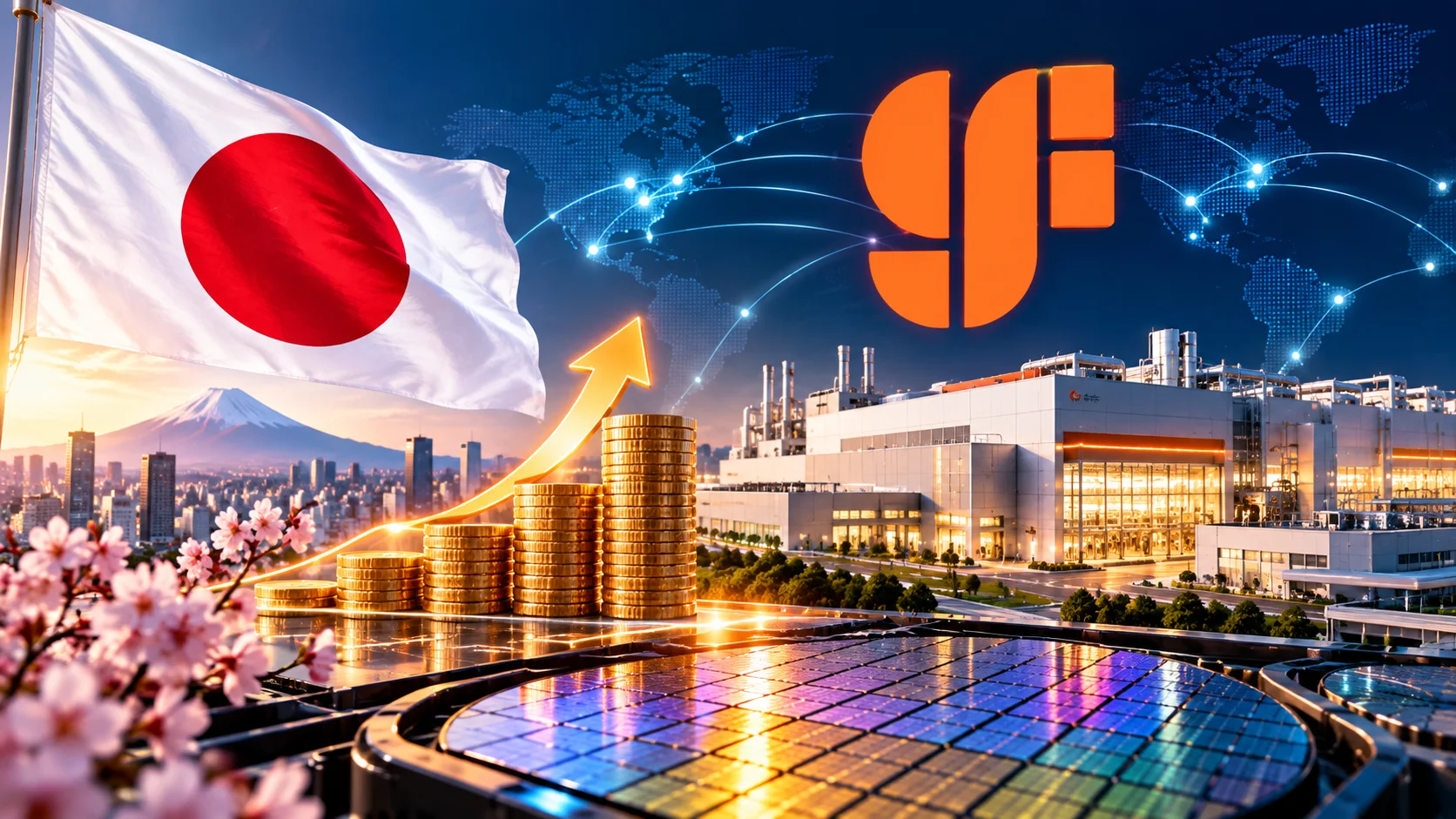
Japan plans to invest up to $21 billion in two semiconductor factories in New York that GlobalFoundries will operate, bringing a major new funding commitment to US chip manufacturing. The project is designed to expand domestic production capacity and strengthen semiconductor supply chains for automotive, industrial and connected infrastructure markets.
Announced on October 14, 2026, the initiative will fund facilities at GlobalFoundries’ Malta, New York, site. Japan will provide the investment, while GlobalFoundries will contribute its semiconductor technologies, manufacturing expertise and operational capabilities.
The initial investment of approximately $10 billion will support construction of the first 300-millimeter wafer fabrication plant, which is expected to begin production in 2029. A second investment of approximately $10 billion would finance another facility, with a decision on proceeding expected before the end of 2028.
First Factory Targets Production in 2029
The first GlobalFoundries factory is expected to add approximately 900,000 300mm wafers of annual US manufacturing capacity when fully operational. A second facility would provide a similar amount of additional capacity if it proceeds.
The project is expected to create more than 1,000 high-skilled manufacturing jobs in New York’s Capital Region. GlobalFoundries has also estimated approximately 27,000 construction and wider ecosystem jobs associated with the two-factory initiative.
The facilities will focus on foundational semiconductors used in automotive systems, industrial equipment and connected infrastructure. These chips support functions such as power management, connectivity and embedded computing, which remain essential across a wide range of electronic products.
The production timeline means the investment will not immediately increase available chip supplies. Construction, equipment installation, qualification and manufacturing ramp-up must take place before the facilities can deliver their planned capacity.
US and Japan Expand Semiconductor Cooperation
The investment forms part of a broader US-Japan agreement under which Japan committed to invest $550 billion in the United States. The arrangement connects the factory project with wider efforts to expand US industrial capacity and strengthen economic and technology ties between the two countries.
Under the plan, the US government and Japanese interests will jointly own the new facilities, while GlobalFoundries will operate them. GlobalFoundries also said the US Department of Commerce will receive additional equity in the company, taking its government stake to approximately 7%, according to the company’s announcement and subsequent reporting.
The investment could also benefit Japanese semiconductor equipment suppliers. GlobalFoundries has indicated that Japanese companies may participate in the manufacturing supply chain, although specific supplier contracts have not been detailed.
Separate Funding Will Support Advanced Chip Technologies
Alongside the factory plans, GlobalFoundries agreed to reallocate $955 million from an existing US CHIPS and Science Act award. The funding will accelerate investments in silicon photonics, silicon-germanium technologies and advanced packaging at facilities in Malta, New York, and Burlington, Vermont.
These technologies are increasingly important for communications infrastructure and data centres, where demand for faster data movement and specialised chip integration continues to grow.
The reallocation is separate from Japan’s investment in the two new factories. Together, the initiatives are intended to expand manufacturing capacity while supporting additional semiconductor technologies within GlobalFoundries’ existing US operations.
Conclusion
Japan’s planned investment would give GlobalFoundries the funding to build two large semiconductor factories in New York, with the first expected to begin production in 2029. The project marks a significant expansion of US chipmaking plans, although the second facility remains subject to a future decision and the additional capacity will take years to come online.