John Ternus Leads Apple’s First Major Product Launch as CEO
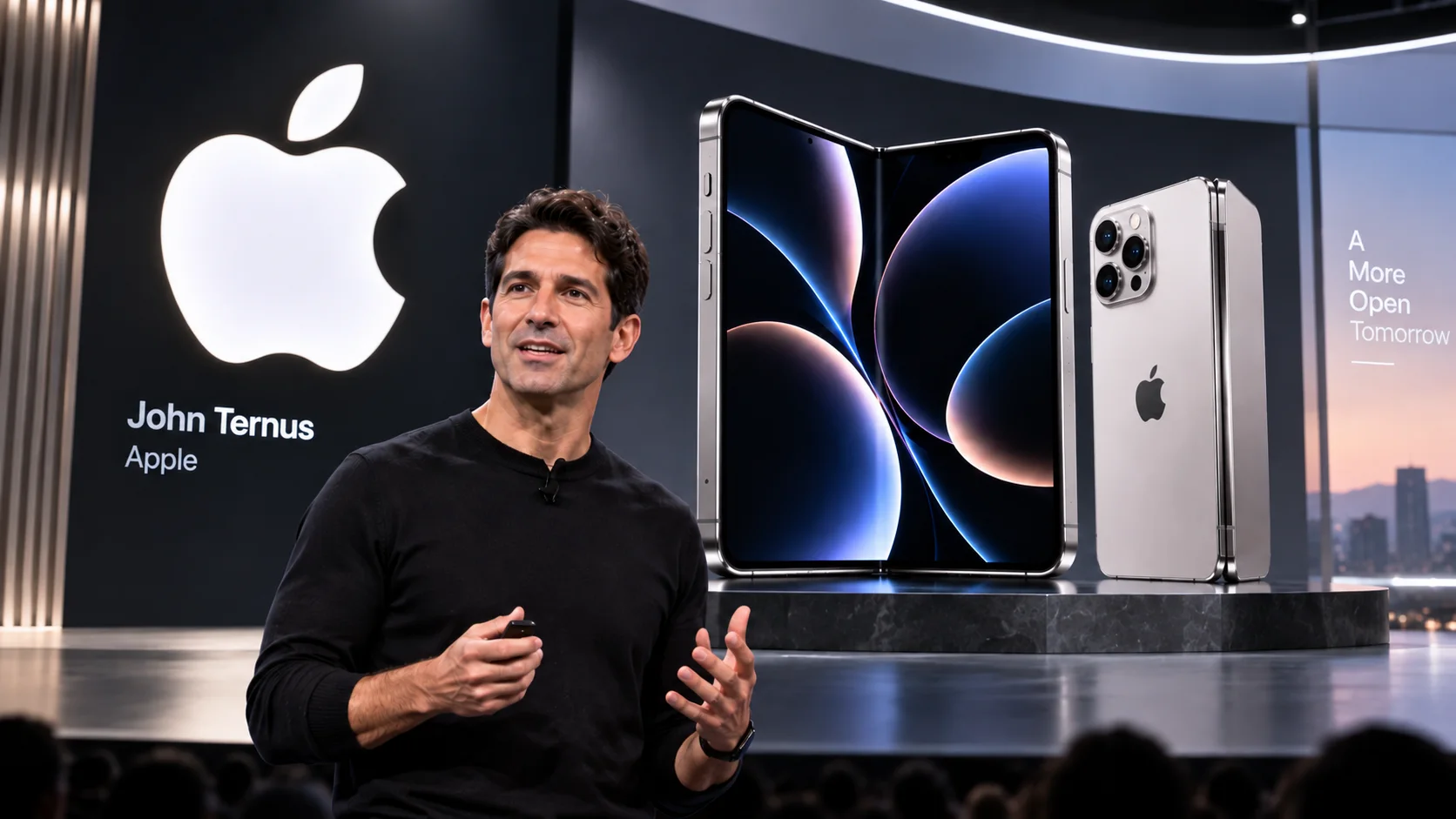
John Ternus has led his first major Apple product launch as CEO, taking the stage at the company’s September 9 event just days after formally succeeding Tim Cook. His debut comes with Apple introducing its first foldable iPhone, alongside new premium iPhone models and a broader push to make artificial intelligence a bigger part of its devices.
Ternus officially became Apple CEO on September 1 after more than two decades at the company, while Cook moved into the role of executive chairman. The leadership transition ends Cook’s 15-year tenure as chief executive and puts a longtime hardware executive in charge of Apple as the company faces pressure to accelerate its AI strategy and develop its next major sources of growth.
Ternus Takes the Stage After Tim Cook
The September 9 event was Ternus’ first major public product launch as Apple’s chief executive. Cook opened the presentation with a video before handing the spotlight to his successor, reinforcing the leadership transition at the company.
Ternus is not new to Apple’s product development. He joined the company in 2001 and became senior vice president of Hardware Engineering in 2021. During his career, he has overseen hardware development across the iPhone, iPad, Mac, Apple Watch and AirPods product lines. Apple selected him as Cook’s successor in April, describing his technical background and long experience inside the company as key strengths.
Foldable iPhone Becomes Ternus’ First Major Test
The biggest product unveiled under Ternus is the iPhone Duo, Apple’s first foldable smartphone. The device opens from a compact, passport-like form into a larger display, making it the most substantial redesign of the iPhone in years.
The launch gives Ternus an immediate opportunity to establish his own leadership direction while continuing Apple's long-standing focus on hardware and tightly integrated software. Reuters described the foldable as the biggest change to Apple's flagship product since the company removed the physical Home button with the iPhone X in 2017.
The timing is important because Apple is entering the foldable market several years after Samsung, Huawei and other manufacturers introduced their own devices. Ternus now has to convince customers that Apple's approach can bring enough improvements in design, durability and software integration to justify its premium positioning.
AI Is Another Early Challenge
The leadership transition also comes at a time when Apple is under growing pressure to catch up with competitors in generative AI. At the September event, Apple positioned Apple Intelligence and Siri more prominently across its products, with the company emphasizing on-device processing and privacy.
Ternus' background could shape how Apple approaches that challenge. His career has largely been centred on hardware engineering, but the company's AI strategy increasingly depends on close integration between chips, operating systems and applications. Reuters reported that analysts see the success of the upgraded Siri as an important early test for the new CEO.
Apple's hardware installed base gives Ternus a significant advantage, but it also raises expectations. The company needs to turn AI improvements into features that are useful across hundreds of millions of devices while maintaining its privacy-focused approach.
Cook Remains Close to Apple
Although Ternus now runs Apple, Cook has not left the company. He became executive chairman on September 1 and is expected to remain involved in selected areas, including engagement with policymakers. Arthur Levinson, who previously served as Apple's chairman, has become the company's lead independent director.
Cook's continued presence gives Ternus access to an experienced former CEO during the transition, but the new chief executive will ultimately be judged on Apple's performance under his own leadership. Cook's tenure saw Apple expand from a roughly $350 billion market capitalization in 2011 to around $4 trillion, while annual revenue grew from $108 billion to more than $416 billion by fiscal 2025.
A New Era Begins at Apple
Ternus inherits an Apple that remains one of the world's most valuable technology companies but is entering a period where its traditional hardware formula faces new challenges. The iPhone remains central to the business, while AI, services and emerging product categories are becoming increasingly important to future growth.
His first product event therefore carries significance beyond the launch of a new iPhone. The foldable device gives Ternus an early opportunity to demonstrate Apple's approach to new hardware, while the company's renewed focus on AI gives him another major challenge to address.
For now, Ternus is beginning his tenure from familiar ground: Apple's hardware business. The bigger question will be whether he can use that foundation to guide the company through its next phase of growth without losing the product discipline that defined the Cook era.