Meta Humanoid Robot Prototype Signals Push Into Physical AI
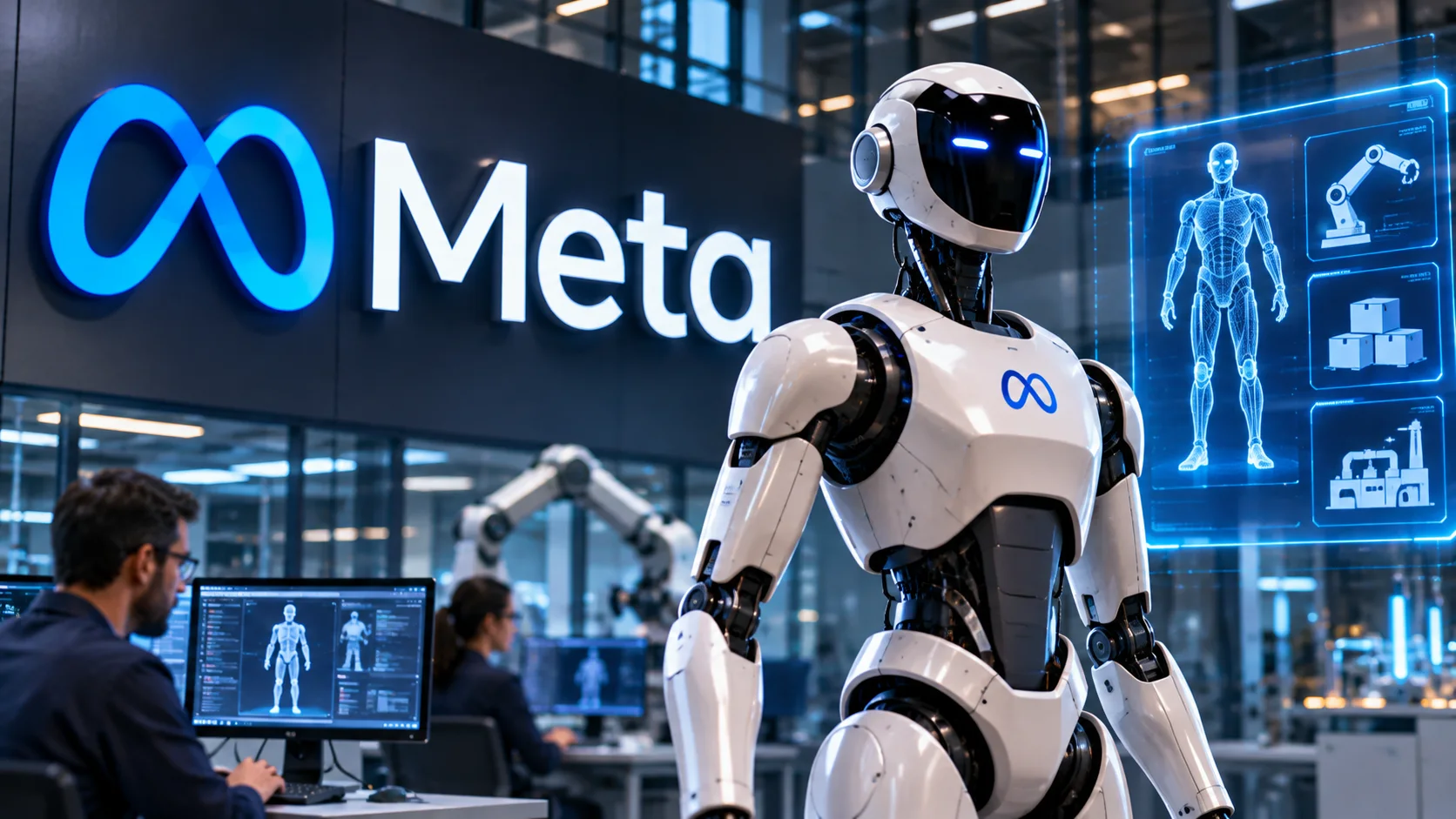
The Meta humanoid robot project reportedly involves a prototype developed with Chinese robotics company Fourier and has started work on a second version, marking a new step in the company’s efforts to explore artificial intelligence beyond screens and software. The project, first reported by The Information on October 31, involves a prototype known internally as Max. Reuters relayed the report but said it could not independently verify the details.
The development points to Meta’s interest in connecting its AI systems with machines that can interact with people and carry out tasks in physical environments. However, the project remains at the research and prototype stage. Meta told The Information that its work with Fourier is focused on internal research and experimentation and that it has no plans to sell the units.
Meta humanoid robot project moves to a second prototype
The Information reported that Meta and Fourier built Max in roughly three months. The robot stands about 1.5 metres tall and weighs around 106 pounds. It uses Nvidia’s Jetson Thor chip and has a face display capable of mimicking expressions, speakers built into its chest and five-fingered hands designed to pick up small objects.
The report said the prototype was demonstrated to some Meta employees at an internal robotics summit in late August. Meta’s robotics team travelled to China to work with Fourier, with the company’s vice president of product for robotics, Li-Chen Miller, spending almost two months at the startup’s Shanghai factory during development.
Work on Max 2 reportedly began in September. The next prototype is expected to have a redesigned torso, improved hands for object manipulation, a projector and additional sensors to help it navigate stairs. These details come from people familiar with the project cited by The Information; Meta has not publicly confirmed the specifications.
Meta sees humanoid robots as a possible AI interface
The Information reported that Meta views humanoid robots as a potential physical extension of its Muse AI agent. The broader ambition is to develop machines that could assist with household tasks and interact naturally with people at home. That remains a longer-term goal rather than a demonstrated consumer product.
Meta has been building its robotics capabilities on the software side as well. In May, it acquired Assured Robot Intelligence, a startup developing AI models intended to help robots understand and adapt to human behaviour in different environments. The company also established Meta Robotics Studio as part of its push into the field.
The project places Meta in a competitive area that includes established technology companies and specialist robotics startups. Tesla is developing its Optimus humanoid, while companies such as Figure and 1X Technologies are working on robots intended for industrial and home settings. Turning prototypes into reliable machines that can safely handle varied household tasks remains a significant technical challenge.
Meta humanoid robot effort faces supply and commercial questions
The collaboration with Fourier also highlights the role of Chinese robotics suppliers in the global humanoid industry. The Information noted that the partnership comes amid increased US scrutiny of reliance on Chinese robotics technology, including concerns about supply chains and cybersecurity. US import restrictions and proposed changes to testing exemptions could affect how companies source and evaluate robot hardware.
For now, Meta’s stated position is that the Fourier work is experimental and not a product launch. The development shows the company is testing how AI could operate in the physical world, but it does not establish when a commercial robot might be available, what it would cost or whether Meta intends to manufacture one at scale.