
Monumental’s Pisa Robot Brings Autonomous Bricklaying to Construction Sites
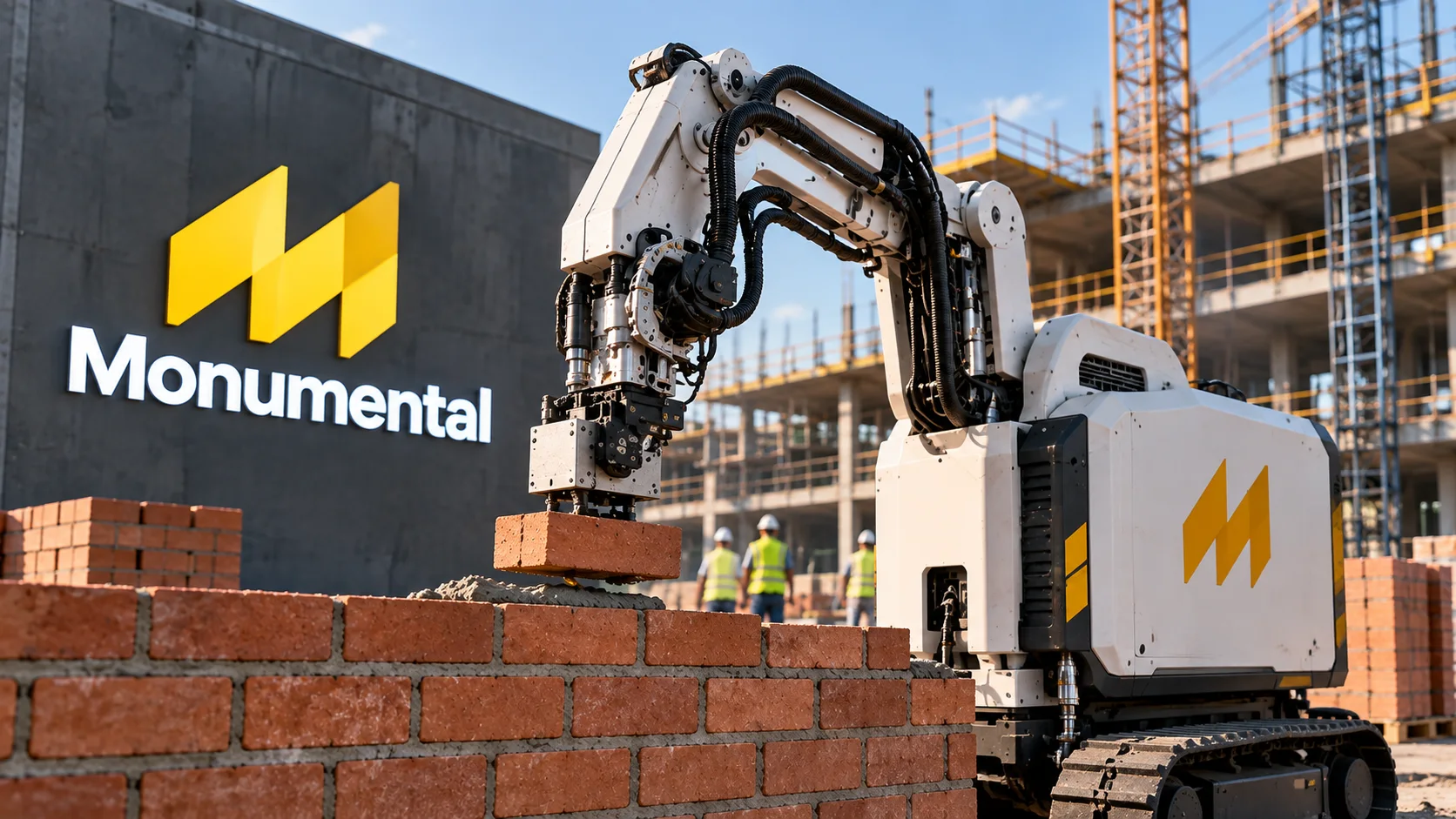
Construction sites are becoming a new testing ground for autonomous robotics, with Amsterdam-based Monumental using its Pisa robot to automate bricklaying and mortar work. The company has deployed a fleet of more than 100 robots across Europe, building walls for more than 100 homes as well as schools, community facilities and other structures.
Pisa is not designed to work alone. Monumental operates it as part of a coordinated system in which Petra supplies bricks and Panama supplies mortar, while the company’s Atrium software manages planning, robot coordination and site data. The approach is aimed at taking some of the repetitive and physically demanding work away from human crews while allowing construction companies to receive completed walls rather than purchase and operate the robots themselves.
How Monumental’s Pisa Robot Works
Pisa uses sensors, computer vision and a small crane mechanism to pick up and place bricks with millimetre-level positioning. The robot receives its instructions through Atrium, which converts construction plans into bricklaying instructions and uses information from the machines and the worksite to track progress and detect deviations.
The system has also been developed to deal with the messy conditions of real construction sites rather than a controlled factory floor. Monumental has worked on problems such as inaccurate site plans, variations in brick dimensions and sensor errors. The company uses photogrammetry to create three-dimensional representations of worksites and compares them with digital plans, while a neural network helps compensate when a brick is picked up slightly off-centre.
Pisa Is Part of a Larger Robot Fleet
Monumental’s construction system relies on three specialised machines. Pisa handles the actual bricklaying, Petra transports and supplies bricks, and Panama delivers mortar. Keeping these functions distributed allows the company to coordinate material supply with the bricklaying process instead of leaving a human worker to continuously move materials back and forth.
That setup has also allowed Monumental to experiment with more complex masonry patterns. In one project near The Hague, the company needed to place bricks vertically in a pattern known as a soldier course. Rather than redesigning the entire robot, engineers developed and refined a passive mechanism on Petra that could rotate the bricks before Pisa picked them up.
Construction Labor Shortages Are Driving Automation
The technology is arriving as builders face persistent difficulties finding skilled workers. Monumental says its robots have already been used on more than 100 homes, and the company is expanding beyond the Netherlands and the UK as it prepares for a wider international rollout. In July, Monumental raised $32 million in Series B funding led by Khosla Ventures to expand its fleet, grow its engineering team and enter the US market.
The company is also positioning the robots as a way to change the nature of construction jobs rather than simply eliminate them. Human workers are still involved on sites, while automation takes on repetitive material handling and masonry tasks. Monumental says its longer-term goal is to extend the system beyond bricklaying into other parts of building-shell construction, including blockwork and other dimensional building components.
From Bricklaying to Autonomous Construction
Monumental's larger ambition goes beyond Pisa. The company describes Atrium as an operating system for construction, linking project planning, robot operations, site monitoring and quality control. Its robots are already being used commercially across the Netherlands and the UK, while the company is onboarding its first US pilot partners.
For now, autonomous bricklaying remains a specialised application rather than a complete replacement for construction crews. But Pisa demonstrates where robotics can fit into a real building project: handling a difficult, repetitive trade while specialised machines and software work together around human workers. If Monumental can extend that model to more stages of shell construction, bricklaying could become the starting point for a much broader form of automated building.