
NASA Picks Blue Origin for $700 Million Mars Communications Orbiter
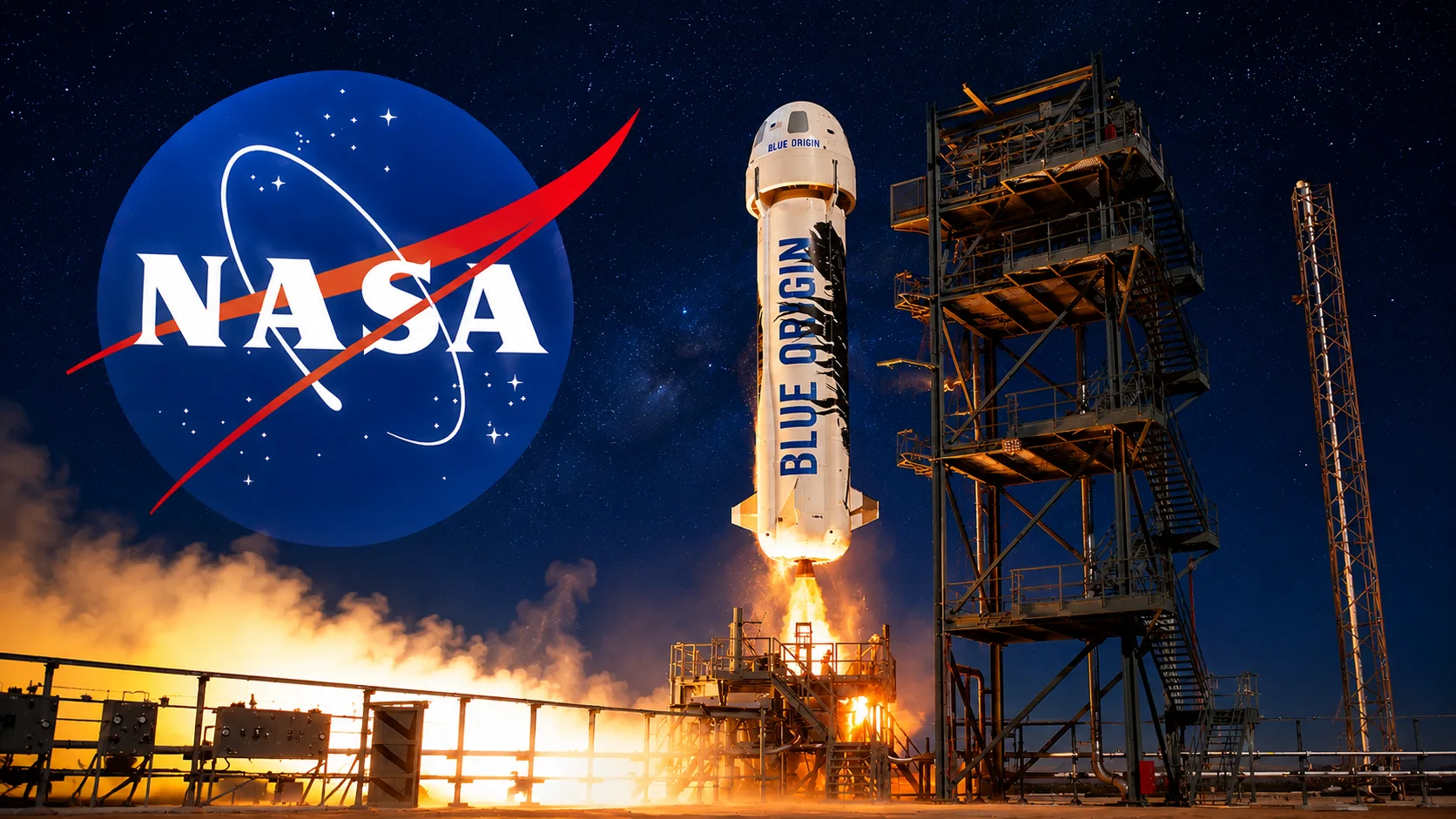
NASA has awarded Blue Origin a contract worth up to $700 million to develop, launch and operate a new communications spacecraft around Mars, with delivery required by the end of 2028.
Body Content
NASA is looking to strengthen the communications network around Mars, and it has turned to Blue Origin for the job. The agency has awarded Jeff Bezos' space company a contract with a maximum value of about $700 million to develop the Mars Telecommunications Network, a spacecraft designed to relay data between Mars missions and Earth. Blue Origin will be responsible for designing, building, launching and operating the orbiter. The spacecraft is expected to be delivered to NASA no later than December 31, 2028, while the telecommunications network is planned to become operational around Mars by 2030.
A communications hub for Mars missions
The new orbiter will not be another Mars spacecraft sent primarily to take pictures or conduct its own science experiments. Its main job will be to keep information moving. The Mars Telecommunications Network will provide high-bandwidth communications and navigation services for current and future missions. It is expected to relay science data, images, navigation information and other critical communications from spacecraft operating on and around Mars. That role is becoming increasingly important as NASA's fleet at Mars gets older and the number of missions to the planet grows. At present, NASA relies on orbiters including Mars Odyssey and the Mars Reconnaissance Orbiter to relay data from its rovers on the surface, with European spacecraft also providing support.
Blue Origin's Blue Ring platform
Blue Origin plans to build the Mars orbiter around its Blue Ring spacecraft platform. The company describes Blue Ring as a spacecraft designed for a range of missions, using hybrid solar-electric and chemical propulsion. The platform has already had a trip to space in prototype form. A version of Blue Ring flew on the first launch of Blue Origin's New Glenn rocket in January 2025, although the full Mars telecommunications mission will be its much bigger test. NASA's contract also requires Blue Origin to handle the launch and operation of the mission, rather than simply delivering the spacecraft. That gives the company responsibility across much of the mission's lifecycle.
Why NASA needs the new network
NASA is preparing for a future in which Mars missions will be far more numerous and data-heavy. Rovers, orbiters and future spacecraft will need to send increasingly large amounts of information back to Earth, while reliable navigation and communication will become more important as exploration expands. The agency says the new network is part of a broader effort to extend communications and navigation infrastructure beyond Earth and the Moon. NASA also sees robotic Mars missions as part of the groundwork for eventual human exploration of the planet.
For Blue Origin, meanwhile, the award adds another major NASA programme to a portfolio that has increasingly moved beyond rocket development. The company now has a direct role in building infrastructure that NASA expects to rely on as Mars exploration enters a new phase. The $700 million Blue Origin contract is therefore about more than putting another spacecraft around Mars. It is an investment in the communications backbone that could support the missions that follow.