Norway Data Centre Restrictions Target AI Power Demand and Grid Capacity
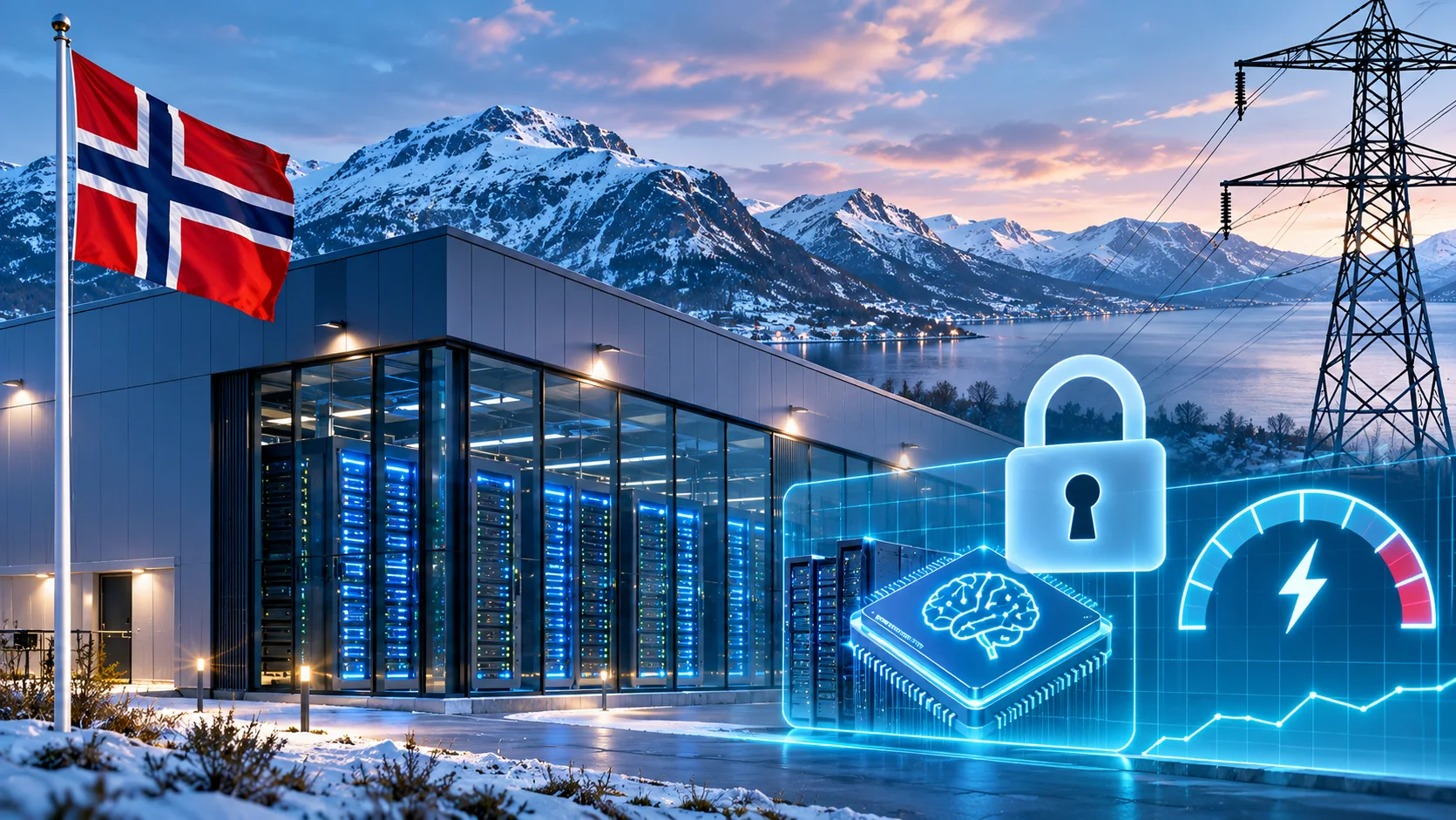
Norway is tightening its approach to data centre expansion as growing electricity demand puts pressure on national power infrastructure. The Norway data centre restrictions follow a temporary decision by grid operator Statnett to stop accepting new grid-capacity reservations for data centres while the government develops a licensing framework.
The government wants future facilities to serve national and critical infrastructure needs, including defence, healthcare, emergency services and telecommunications. The proposed rules could make it harder for large international cloud providers and cryptocurrency businesses to secure land and electricity for new projects. The move reflects growing concern about how AI infrastructure expansion will compete with other electricity demands.
Norway Data Centre Restrictions Begin With a Grid Reservation Pause
Statnett announced on November 9 that it would temporarily suspend new reservations of grid capacity for data centres. It has also paused the processing of certain new applications for technical approval. The measures are intended to protect the stability and reliable operation of Norway's electricity system.
The suspension is expected to remain in place until no later than August 1, 2027. Statnett says it needs time to establish technical requirements for data centres and mechanisms to ensure operators comply with them.
The decision does not amount to a complete ban on new data centre connections. Existing facilities and projects that have already received the required technical approvals are not automatically affected. Statnett will also continue processing certain applications for projects approaching commissioning and may consider some smaller facilities.
The grid operator reported that Norway currently has around 800 megawatts of connected data centre capacity. Another 4,200 MW has been reserved, while 9,100 MW remains in the capacity queue. A further 18,000 MW of connection requests have also been submitted. These figures illustrate the scale of potential demand facing the country's electricity network. <Cite refs={["turn493018search0","turn493018search3"]} />
Data Centres Account for Most New Power Requests
Energy Minister Terje Aasland said data centres represented 75% of the 26,000 MW of new electricity capacity requested in Norway so far in 2026. That is approximately 19,500 MW of requested capacity.
The volume is significant for a country whose maximum electricity consumption is slightly above 25,000 MW. Norway currently produces more electricity than it consumes, but government projections indicate that rapid growth in demand could create supply pressure and increase electricity prices in the coming years.
AI data centres are a major part of this concern. Facilities running large-scale AI models require substantial computing capacity and reliable power. Their electricity consumption can also change rapidly, creating technical challenges for grid operators responsible for maintaining stable supply.
The figures describe requested capacity, not electricity that has already been consumed or approved for use. Many proposed projects may never reach construction or operation. <Cite refs={["turn493018news20","turn493018search0"]} />
Government Plans Licensing for Critical Infrastructure
Norway's government intends to develop a licensing system covering the establishment and operation of data centres. The framework is designed to give authorities greater control over which facilities receive permission to operate and how limited electricity resources are allocated.
Priority is expected for facilities supporting defence, policing, emergency preparedness, healthcare, mobile communications and financial services. The government also wants to protect the computing capacity needed for Norway's own digital services and AI development.
Cryptocurrency mining facilities will not be considered socially beneficial under the proposed approach. International cloud providers could also face tighter access to land and electricity if their projects do not meet national priorities.
The government is still developing the framework, so the final licensing conditions and transition arrangements have not been settled. It has also indicated that data centre operators should contribute more towards the cost of grid expansion and system operations. <Cite refs={["turn493018search3","turn493018news20"]} />
Norway Considers New Power Requirements for Data Centres
Alongside licensing, the government is considering ways to make large data centre projects contribute to additional electricity generation. Options include discussions with operators about building new power facilities, potentially including gas-fired plants equipped with carbon capture and storage, as well as offshore wind projects.
The policy reflects a broader effort to balance digital infrastructure investment with national energy security. Norway wants to retain the economic and technological benefits of data centres while ensuring that their electricity requirements do not undermine the power supply needed by households, public services and other industries.
For cloud providers and AI companies planning Norwegian facilities, the changes introduce greater uncertainty around grid access, project approval and operating costs. The final impact will depend on the licensing framework and technical requirements that follow.
Norway's decision also adds to a wider European debate over how governments should manage the electricity demands of AI infrastructure. The challenge is no longer simply building enough data centres. It is securing enough reliable power to operate them without compromising other national priorities.