Scimplify Raises $25M to Expand AI-Driven Critical-Materials Sourcing
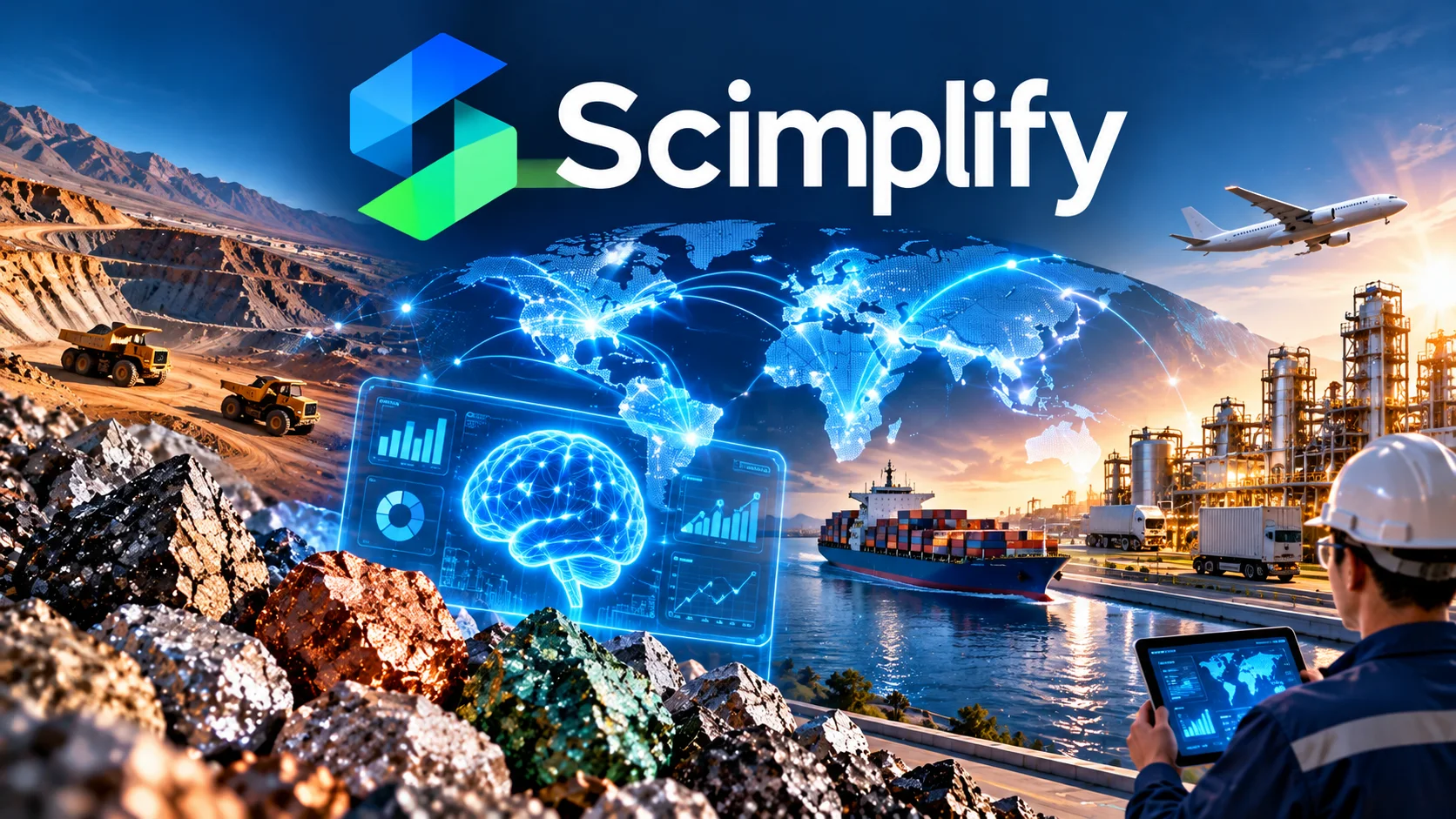
Bengaluru-based startup Scimplify has raised $25 million in strategic funding to expand its AI-powered specialty chemicals and critical-materials business, targeting industries seeking alternatives to concentrated supply chains. The investment will support its expansion into the United States and Japan, alongside further development of its artificial intelligence platform.
The all-equity funding round was led by Hitachi Ventures, with existing investors Accel India, Bertelsmann India Investments, Omnivore and 3one4 Capital participating. Chemical industry customers Henkel and Teknor Apex also joined as investors. The latest round brings Scimplify’s total equity funding to $80 million.
AI Platform Connects Chemical Research With Manufacturing
Scimplify uses its proprietary AI platform, Scinode, to coordinate the process of developing specialty chemicals and scaling them for commercial production. The platform helps identify suitable chemical production routes and manufacturing facilities while tracking quality and regulatory requirements.
The company develops manufacturing processes at its research facilities in Bengaluru and Hyderabad before transferring them to partner factories for large-scale production. Its network includes more than 500 manufacturing facilities, supported by scientists and engineers who oversee production and quality requirements.
Scimplify says this approach can reduce development timelines. Co-founder Sachin Santhosh cited cases in which the company moved from receiving a customer’s requirements to delivering finished material in two months, compared with a typical timeline of 12 to 18 months. The time required varies by project.
Critical Materials Drive Expansion Plans
The company is targeting materials used in semiconductors, energy infrastructure, electronics and defence. These industries depend on specialised chemicals and critical materials whose production or processing is concentrated in a limited number of countries.
Scimplify is developing tungsten derivatives from scrap and working on rare-earth materials as it seeks to create alternative sources for customers. Its strategy focuses on connecting chemical research with manufacturing capacity, rather than relying solely on materials discovery.
Around 90% of its current manufacturing takes place in India. The startup plans to expand its production network into the United States and Japan over the next year, with approximately $7.5 million from the latest funding earmarked for US expansion.
Revenue Growth Supports International Ambitions
Scimplify serves more than 1,000 customers and has delivered products to more than 40 countries. Santhosh said the company’s annualised revenue run rate has reached approximately $200 million, about three times the level recorded a year earlier. The company is targeting $400 million in annualised revenue over the following year.
The startup also plans to allocate approximately $2 million from the new funding to further develop Scinode. Its expansion will depend on building manufacturing partnerships, meeting local regulatory and quality requirements, and securing customers in new markets.
Conclusion
Scimplify’s latest funding will support its effort to combine AI-assisted chemical development with manufacturing scale and international sourcing. As industries seek alternatives for strategically important materials, the startup is betting that faster process development and a broader production network can help diversify supply. Its ability to deliver consistently at commercial scale will be central to that ambition.