SpaceX Tesla Merger Talks Move Forward as Boards Form Committees
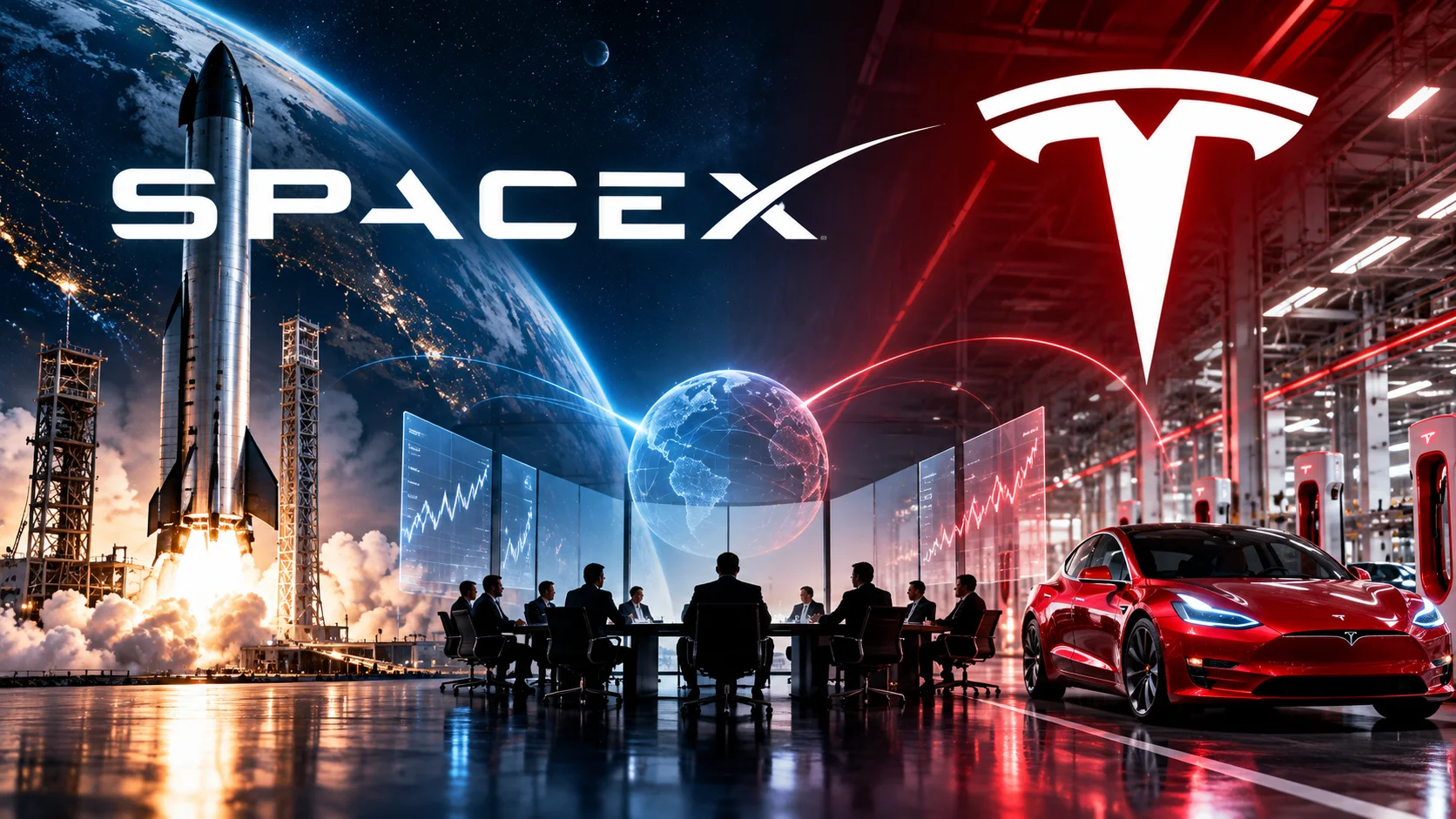
The SpaceX Tesla merger discussions have moved into a formal review stage, with both companies forming special committees of independent directors to examine a possible combination. Elon Musk supports the idea but has warned that a deal is not guaranteed.
The committees were established at shareholders’ request, Musk said during SpaceX’s third-quarter earnings call on October 20. The process allows independent directors to assess the proposal while Musk stays out of their discussions because of his potential conflicts of interest.
Neither committee has agreed on transaction terms, leaving the structure and timing of any potential merger unresolved.
SpaceX Tesla Merger Review Raises Governance Questions
Musk leads both companies, which operate in different but increasingly overlapping areas of technology. Tesla focuses on electric vehicles, energy storage and robotics, while SpaceX develops launch systems, satellite communications and space infrastructure.
Musk has argued that bringing the companies closer together could support work in artificial intelligence, chip design, robotics and connectivity. Their existing collaboration includes Terafab, a joint chip-manufacturing project, while SpaceX has also outlined plans for orbital data-centre infrastructure.
However, potential technological benefits do not establish that a merger would be financially or strategically advantageous for both businesses. The independent committees will need to evaluate the proposal and any terms before shareholders can consider a transaction.
The governance question is particularly important because Musk has leadership roles and substantial ownership interests in both companies. Independent review is intended to provide a process for assessing a transaction in which his interests may not align perfectly with those of every shareholder.
Shareholder Approval Remains a Major Hurdle
Musk has said shareholders would need to support a merger. He also highlighted the difficulty of securing sufficient approval at Tesla, where a majority of all outstanding shares would be required, rather than simply a majority of votes cast.
The companies have not announced a final deal, an agreed valuation or a transaction timetable. The formation of special committees is an initial step in evaluating the possibility, not confirmation that the businesses will combine.
The committees’ independence and review process will therefore be central to any further developments. Investors will also need clarity on how a proposed transaction would value each business, allocate ownership in a combined company and address the interests of shareholders on both sides.
What a Potential Merger Could Mean
A combination could bring electric vehicles, energy systems, rockets, satellite networks and AI-related projects under a broader corporate structure. It could also create significant questions about capital allocation, business priorities and oversight across companies with different operations and risk profiles.
For now, those possibilities remain hypothetical. The companies have yet to agree on terms, and shareholder approval would be required before a transaction could proceed.
The next significant development will be whether the independent committees determine that a merger merits further consideration and establish a proposal for shareholders. Until then, the SpaceX Tesla merger remains under review rather than a confirmed corporate deal.