Tesla Begins Optimus Robot Production at Fremont Factory
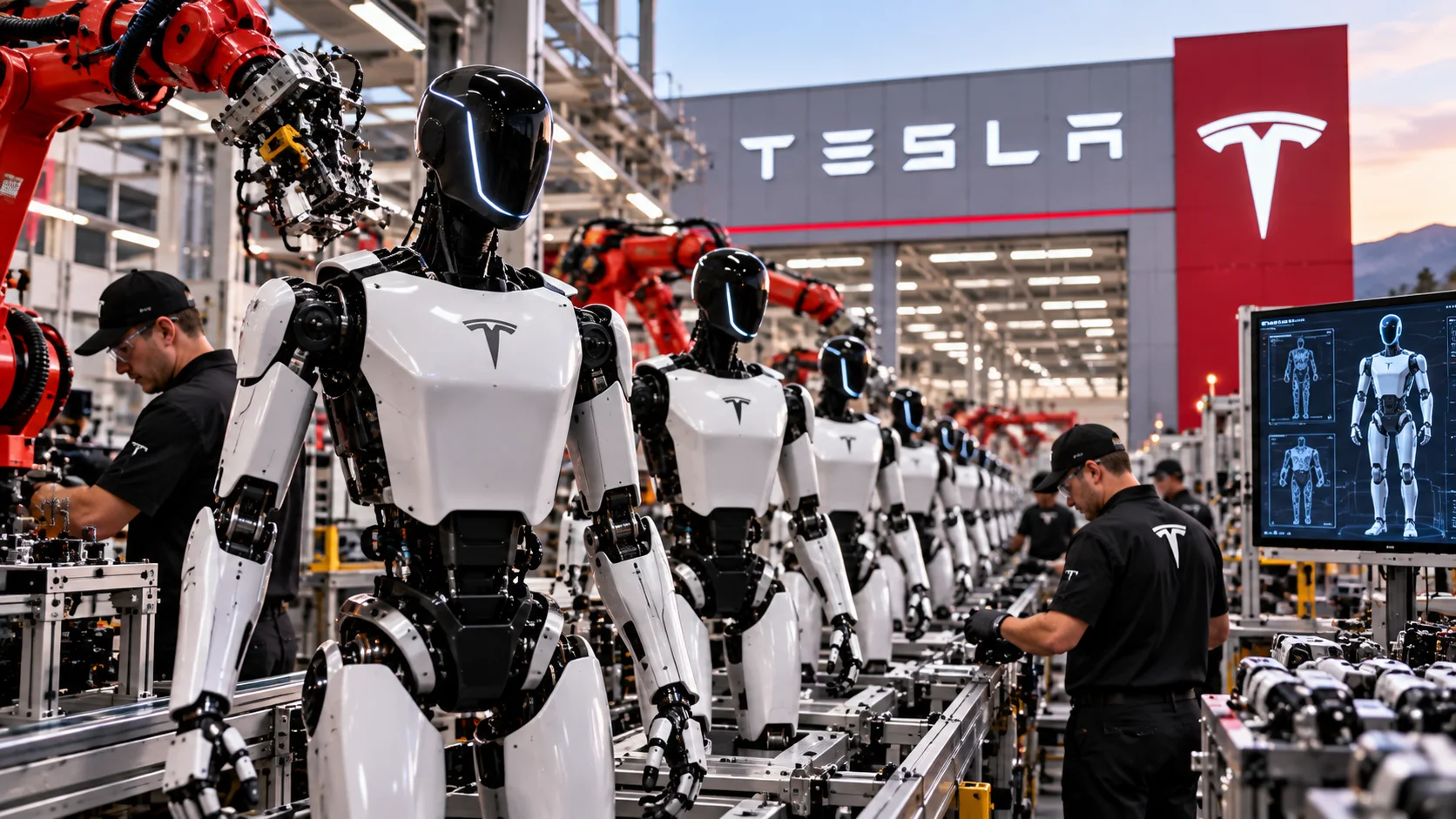
Tesla has begun early production of its Optimus humanoid robot at its Fremont, California, factory, moving the project closer to manufacturing at scale. The Tesla Optimus production milestone marks a shift from development and demonstrations towards building robots on a dedicated production line, although significant work remains before the machines are ready for widespread commercial use.
In its third-quarter 2026 shareholder update, Tesla said the robots coming off the line were its first production-quality units. CEO Elon Musk described the launch as early production and warned that increasing output would be gradual because the robot's design, manufacturing process and supporting technology are still evolving.
Tesla Optimus Production Begins on a High-Volume Line
Tesla confirmed that Optimus production had started on its high-volume manufacturing line in Fremont. The facility is being prepared to support much larger output, but the company has not disclosed how many robots it is currently producing.
Musk said most of the equipment intended for a line designed to eventually support one million robots annually had arrived at Fremont. However, he estimated that reaching an annualised rate of 20,000 robots a week could take at least a year, possibly longer.
The distinction between installed manufacturing capacity and actual production is important. Equipment must operate reliably, suppliers must deliver components consistently, and the company must continue refining the robot's design before output can increase substantially.
Tesla has also listed its planned Optimus manufacturing facility in Texas as under construction. The additional site indicates the company's longer-term production ambitions, but it does not establish when large-scale manufacturing will begin there.
Reliability and AI Remain Major Challenges
Manufacturing the hardware is only one part of developing a commercially useful humanoid robot. Optimus must also perform tasks safely, consistently and for extended periods without frequent failures or human intervention.
Musk acknowledged during Tesla's earnings call that the design still needs changes. He highlighted the complexity of developing reliable robotic hands, improving durability and ensuring the machines can operate for long periods. The AI software must also become capable of handling tasks beyond tightly controlled demonstrations.
Robotics experts have raised similar concerns about the gap between producing a robot and making it useful in real-world environments. A robot may complete a demonstration successfully without being reliable enough for repetitive industrial work across changing conditions.
Tesla has not published detailed performance figures showing how often Optimus can complete tasks autonomously, how frequently it requires intervention or how long it can operate before maintenance. Those measurements will be important for assessing its readiness for commercial deployment.
When Will Customers Receive Optimus Robots?
Musk expects Tesla to begin delivering Optimus robots to companies outside Tesla around the end of 2027. That timeline depends on resolving outstanding hardware, software, reliability and production challenges.
Before external deliveries begin, Tesla plans to build a fleet of robots that can practise tasks and generate training data. The company also expects to incorporate its AI5 chip into Optimus, with Musk pointing to a possible timeline around April 2027.
The plans remain subject to development progress. Tesla has not announced a confirmed delivery schedule for individual customers or provided detailed commercial pricing and deployment terms.
What Early Production Means for Humanoid Robotics
Tesla's production launch gives the Optimus programme a manufacturing milestone, but the next challenge is demonstrating that the robots can work dependably outside controlled settings. Industrial applications could provide an initial testing ground for repetitive tasks, while household use would require a much broader ability to handle unpredictable environments.
For investors and potential customers, the key indicators will be actual production volumes, reliable task completion, safety performance and the start of commercial deliveries. Until those measures are available, early production should be viewed as progress towards commercialisation rather than proof that large-scale deployment is imminent.