TSMC 3D DRAM Plans Emerge After Reported Request From Nvidia
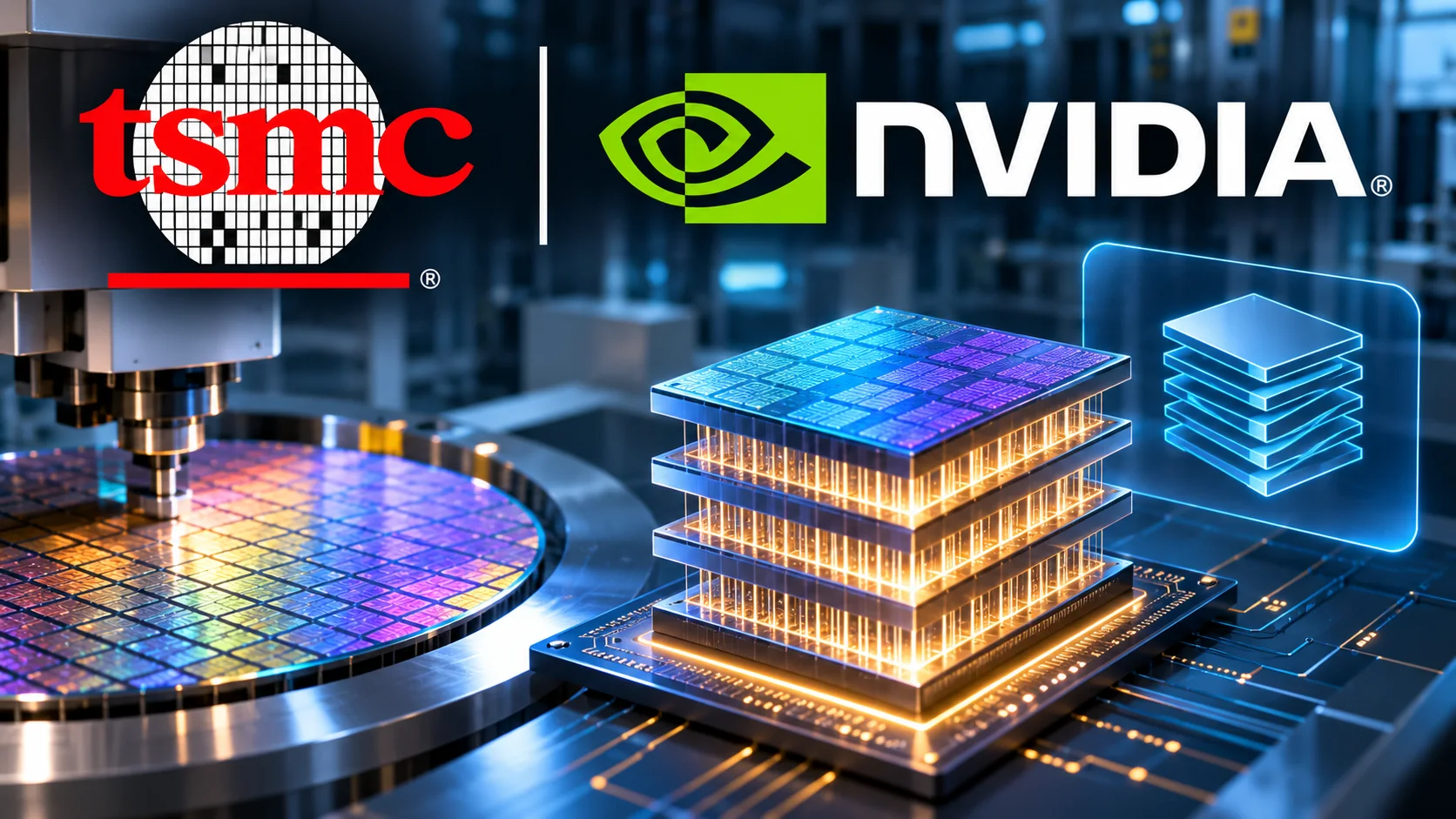
Taiwan Semiconductor Manufacturing Company (TSMC) is reportedly considering entering advanced memory production, with plans to manufacture 3D DRAM following a request from Nvidia. The reported TSMC 3D DRAM plans could mark a significant expansion for the world's largest contract chipmaker, which has traditionally focused on manufacturing processors designed by other companies.
The development comes as the artificial intelligence industry faces growing demand for advanced memory. According to a November 6 report by The Information, citing two people familiar with the matter, TSMC has started examining options for producing 3D DRAM. Neither TSMC nor Nvidia has confirmed the reported initiative.
TSMC 3D DRAM plans could expand its manufacturing business
TSMC is reportedly considering two routes for entering memory production. It could construct new manufacturing facilities or acquire an existing semiconductor plant and convert it for memory manufacturing. The company has not disclosed an investment amount, production capacity or expected start date.
The reported initiative is being led by Hsu Kuo-chin, a TSMC vice president responsible for advanced packaging. According to The Information, Hsu previously oversaw Micron's Taiwan operations, giving him experience in memory manufacturing as well as chip integration.
TSMC has produced standard memory chips in the past, with its memory business dating back to the 1990s. However, the company stopped disclosing memory revenue in 2008 as it focused on its contract foundry operations.
In response to the report, TSMC said it does not comment on market rumours or speculation. The company reiterated that its core business remains dedicated integrated-circuit foundry manufacturing. Nvidia did not immediately respond to requests for comment.
What 3D DRAM means for AI infrastructure
Dynamic random-access memory, or DRAM, temporarily stores the data that processors need to access during operation. Conventional DRAM places memory cells in a largely horizontal arrangement. 3D DRAM aims to increase storage density by stacking memory structures vertically.
The technology could help address the growing memory requirements of AI systems. As AI processors handle larger workloads, access to sufficient memory becomes increasingly important for processing performance and system efficiency.
3D DRAM should not be confused with high-bandwidth memory (HBM). HBM stacks multiple DRAM dies to provide high data-transfer bandwidth to processors, while 3D DRAM focuses on building memory cells vertically within the memory architecture itself.
TSMC would face established memory manufacturers
A move into advanced memory would place TSMC in competition with Samsung Electronics, SK Hynix and Micron, the established leaders in the global memory chip market. All three are also developing 3D DRAM technology.
The expansion could also affect existing industry relationships. TSMC and SK Hynix announced a partnership in 2024 involving TSMC's manufacturing technology for the base die beneath SK Hynix's next-generation HBM. A move into memory production would add another dimension to their relationship.
However, entering the market would not be straightforward. Memory manufacturing is highly cyclical, with shortages often encouraging companies to expand capacity just as demand begins to weaken. Producing 3D DRAM at commercial scale would also require years of process development and manufacturing refinement.
For now, TSMC's reported plans remain at an exploratory stage. If the company proceeds, it could reshape competition across the semiconductor supply chain. But the absence of a confirmed investment or production timeline means its potential impact on memory supply remains uncertain.