TSMC Explores Rare-Earth Alternatives to Protect Chip Production
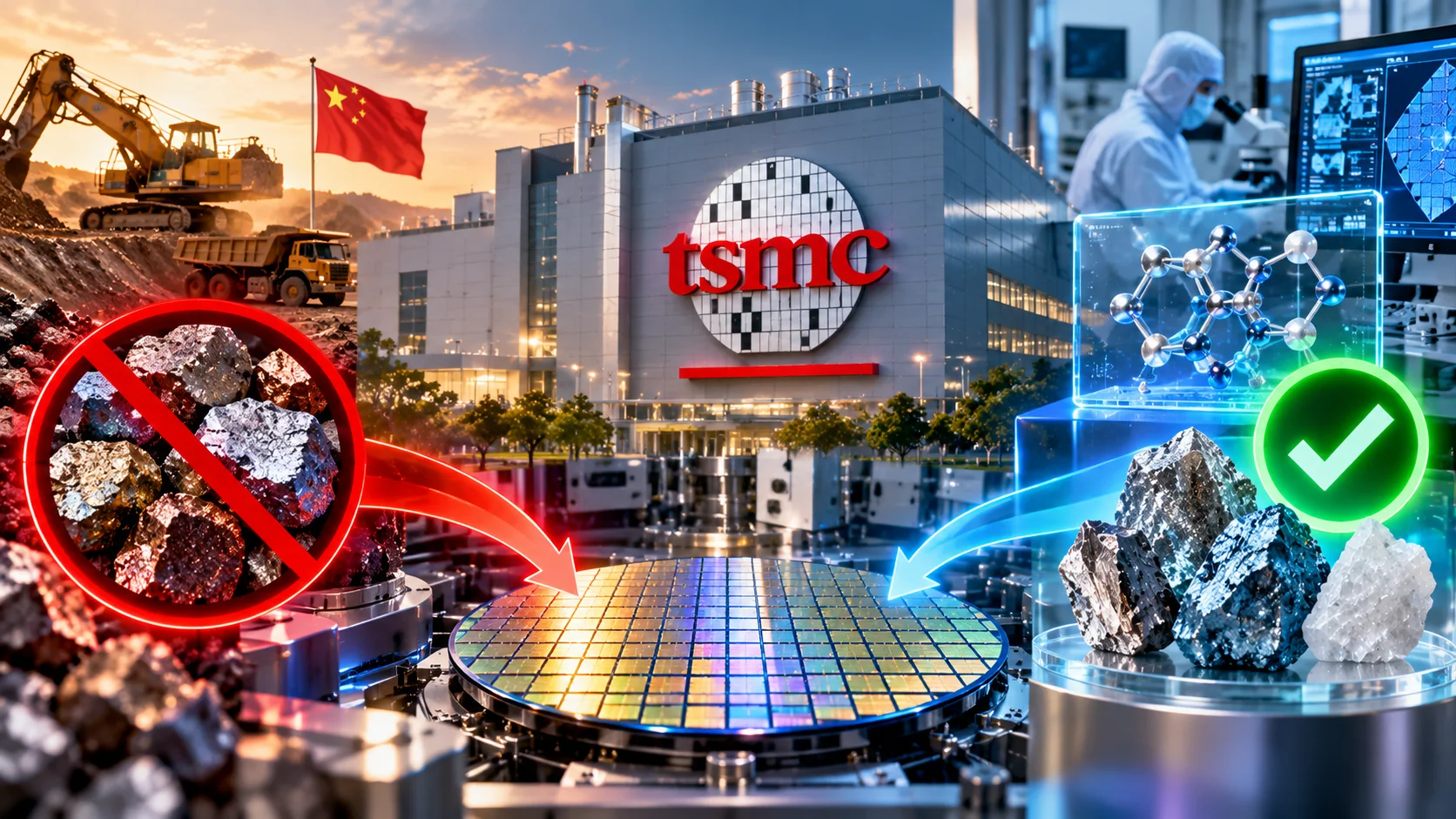
Taiwan Semiconductor Manufacturing Company (TSMC) is exploring TSMC rare-earth alternatives for factory equipment as concerns grow that China's export restrictions could disrupt semiconductor production. The world's largest contract chipmaker has surveyed suppliers about using motors that do not rely on rare-earth materials in automated factory machinery, according to people familiar with the discussions.
The reported initiative reflects a supply-chain risk that extends beyond the chips themselves. Rare-earth magnets are used in motors that power industrial equipment, including machinery inside highly automated semiconductor factories. A shortage of these specialised components could complicate equipment maintenance and threaten production schedules.
The discussions remain at an early stage. TSMC has not announced a broad replacement programme and declined to comment on the reported effort.
Why TSMC Rare-Earth Alternatives Matter
Rare-earth elements are used in powerful permanent magnets found in various industrial motors. These motors help operate automated machinery that moves components and materials through manufacturing processes.
For semiconductor factories, equipment reliability is critical. Chip production involves tightly controlled processes, expensive machinery and demanding operating conditions. A shortage of a specialised component can delay equipment repairs, installation or expansion, even when other materials and production capacity remain available.
TSMC's reported supplier survey is intended to assess alternatives that could reduce exposure to potential supply disruptions. However, identifying a suitable motor is not the same as deploying it across a factory. Any replacement must meet the equipment's technical, reliability and performance requirements.
The company has not disclosed which suppliers are involved, how many equipment systems could be affected or whether the alternatives have passed qualification testing.
China's Export Controls Raise Supply-Chain Concerns
China introduced export controls on certain rare-earth materials, magnets and related processing technologies in 2025, requiring licences for covered exports. The restrictions have increased concern among manufacturers that depend on specialised materials and components.
Rare-earth supply chains are difficult to diversify quickly because mining, separation, processing and magnet production require specialised capabilities. Replacing a component can also involve changes to manufacturing equipment and supplier qualification processes.
A disruption could have consequences beyond Taiwan's semiconductor industry. TSMC manufactures chips used in smartphones, artificial intelligence systems, data centres and other applications. Any significant production interruption could therefore affect customers across multiple technology sectors.
The reported initiative is a precaution against that possibility, rather than evidence that TSMC's production has already been disrupted by a shortage of rare-earth components.
Taiwan and the US Seek Alternative Mineral Supplies
TSMC's reported work comes amid wider efforts by Taiwan and the United States to diversify critical-mineral supply chains. In June, the American Institute in Taiwan said the United States was working with Taiwan and other partners to develop alternative sources, expand processing capacity and strengthen supply-chain resilience.
Taiwan's government has also pledged support for the Industrial Technology Research Institute (ITRI) to develop rare-earth technologies. In February, Economy Minister Kung Ming-hsin outlined plans for a pilot production line within three years, with a target of meeting an estimated 50% of Taiwan's domestic rare-earth demand.
ITRI has confirmed cooperation with Taiwan's Ministry of Economic Affairs on a rare-earth project. The proposed production capacity remains a target, not a guarantee that Taiwan will achieve self-sufficiency within that period.
These initiatives address different parts of the supply chain. Developing alternative material sources could reduce dependence on imports, while exploring rare-earth-free motors could help equipment operators reduce their exposure to particular components.
What Happens Next for Semiconductor Manufacturing?
The immediate question is whether equipment suppliers can develop alternatives that satisfy semiconductor factories' demanding operating requirements. Testing, qualification and integration could take time, so the reported survey should not be interpreted as an imminent factory-wide conversion.
For TSMC, the effort highlights the importance of assessing risks across the equipment supply chain as well as securing advanced chips and production capacity. The outcome will depend on the technical viability of alternative motors, their availability and whether manufacturers can adopt them without compromising reliability.
For now, the initiative remains exploratory. Its significance lies in the industry's attempt to prepare for possible material shortages before they become a direct constraint on chip production.