
Westinghouse eVinci Microreactor Reaches Major Nuclear Testing Milestone
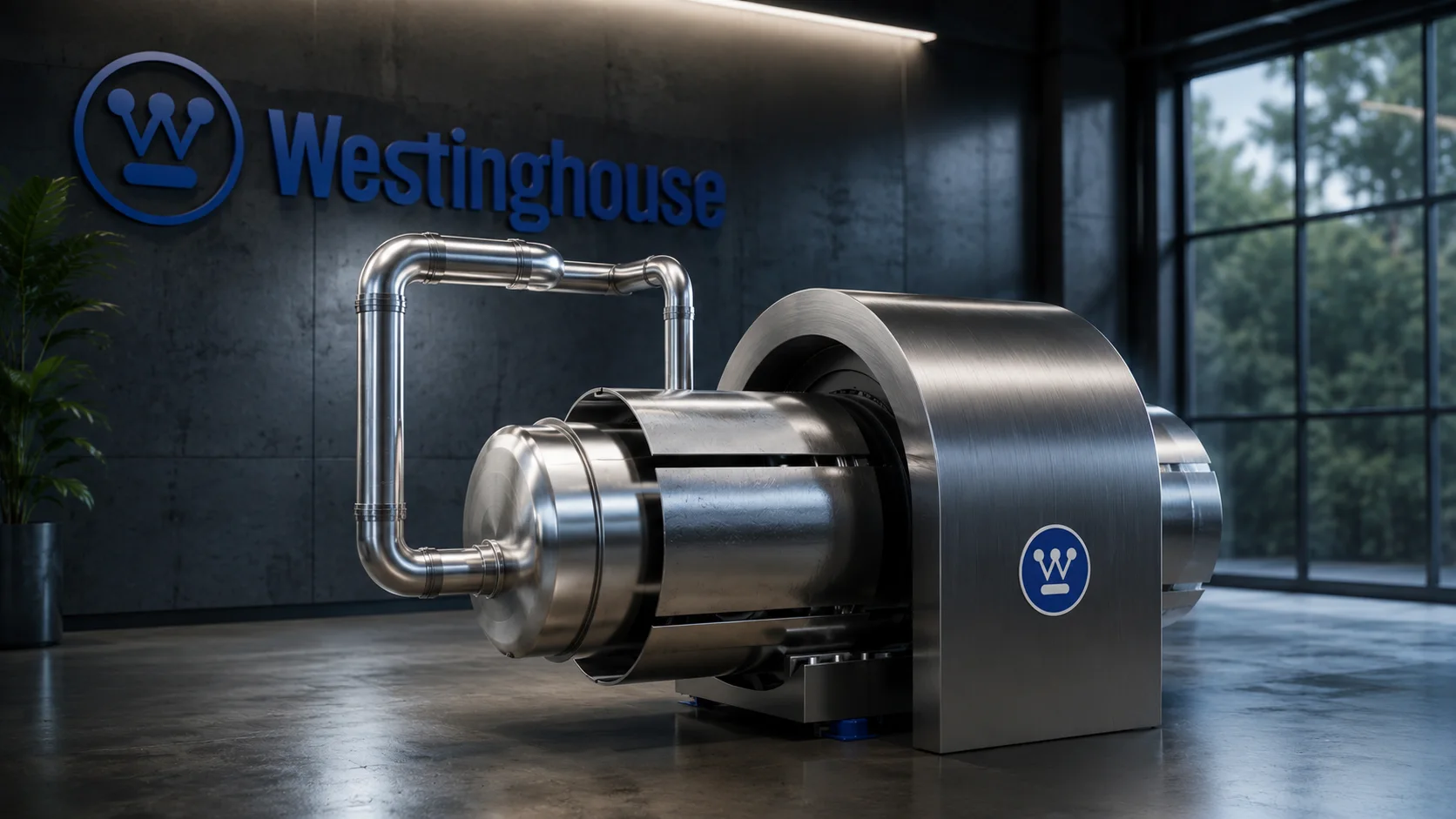
Westinghouse Electric Company has achieved a significant milestone in the development of its eVinci microreactor, completing a zero-power criticality test at a nuclear research facility in Nevada.
The test was carried out on August 24, 2026, at the National Criticality Experiments Research Center at the Nevada National Security Site, with researchers from Los Alamos National Laboratory and Idaho National Laboratory involved in the programme.
The experiment is intended to provide real-world data that can be compared with computer simulations and engineering calculations used during the development of the eVinci system.
For Westinghouse, the results provide additional insight into how the reactor core behaves under controlled conditions and help strengthen confidence in the technology's design.
What Is Zero-Power Criticality?
Criticality is an important concept in nuclear engineering.
A reactor reaches a critical state when its nuclear chain reaction becomes self-sustaining.
However, the latest Westinghouse test was conducted at zero power, meaning the purpose was not to produce electricity.
Instead, researchers were focused on measuring reactor behaviour and collecting data that can be used to verify engineering models.
This distinction is important because advanced nuclear technologies require extensive testing before they can progress toward commercial operation.
Testing the eVinci Design
The testing programme is designed to examine several important elements of the eVinci reactor.
These include its reactor core, fuel configuration, control systems and heat-transfer technology.
The experimental results can then be compared with predictions generated through computer modelling.
If the measured results match the expected behaviour, it gives engineers greater confidence in the underlying calculations.
If differences are identified, researchers can use the data to improve the models and refine the design.
This process is a standard but important part of developing advanced nuclear systems.
What Is Westinghouse's eVinci Microreactor?
The eVinci is a compact nuclear energy system being developed by Westinghouse for applications where conventional nuclear plants may not be practical.
The design is intended to provide approximately 5 megawatts of electrical output, with a reactor core capable of producing around 15 megawatts of thermal energy.
Westinghouse is designing the system to operate for eight years or more before refuelling.
Its relatively compact size is intended to make the technology suitable for locations that may not have access to large-scale nuclear infrastructure.
Heat Pipes Play a Key Role
One of the most distinctive elements of the eVinci design is its use of heat pipes.
These components are designed to transfer heat away from the reactor core without relying on a conventional pumping system.
The approach could simplify parts of the reactor design while supporting passive heat-transfer capabilities.
Reducing the number of mechanical components can potentially improve reliability and simplify maintenance.
The technology is therefore an important part of Westinghouse's approach to developing a smaller nuclear system.
Potential Applications
The eVinci microreactor is being developed with a variety of potential applications in mind.
These could include:
Remote communities
Mining operations
Industrial facilities
Microgrids
Critical infrastructure
Remote energy systems
Hydrogen production
Specialised energy applications
The system could potentially provide continuous electricity and heat in locations where connecting to a large power grid is difficult or costly.
Why Microreactors Are Attracting Attention
Energy demand is increasing across several industries.
Data centres, manufacturing facilities, mining operations and other energy-intensive businesses require dependable electricity around the clock.
At the same time, governments and companies are looking for energy sources that can provide reliable power while reducing carbon emissions.
Microreactors are emerging as one possible solution.
Unlike traditional nuclear plants, which require large sites and extensive construction, microreactors are designed to operate on a much smaller scale.
That could make them suitable for specialised applications where a conventional nuclear facility would not be economically practical.
A Different Approach to Nuclear Construction
Westinghouse is also pursuing a different manufacturing model for eVinci.
Rather than constructing the entire reactor at its final location, the company envisions the system being manufactured and assembled in a controlled factory environment before being transported to its destination.
This could potentially reduce the amount of construction required on site.
A factory-based approach could also allow manufacturers to standardise production and improve consistency as more units are produced.
However, achieving those benefits at commercial scale will depend on manufacturing costs, regulatory requirements and supply-chain development.
Testing Reduces Technical Uncertainty
One of the most important purposes of the current testing programme is reducing uncertainty around the reactor design.
Advanced nuclear systems rely heavily on computer modelling to predict how components and materials will behave during operation.
Experimental testing provides an opportunity to compare those predictions with actual measurements.
The information gathered through the eVinci testing programme can therefore help engineers improve their understanding of the reactor and identify areas where further work may be necessary.
More Testing Is Expected
The successful criticality experiment represents an important milestone, but it does not mean that the eVinci system is ready for widespread commercial deployment.
Additional testing and development will be required.
Future experiments are expected to examine reactor behaviour under different conditions, including elevated temperatures.
Westinghouse has indicated that parts of its testing programme will examine conditions approaching 1,000°C.
These experiments are intended to provide additional information about temperature behaviour and reactor performance.
Growing Interest in Advanced Nuclear Energy
Westinghouse is developing eVinci as the nuclear industry explores smaller and more flexible reactor designs.
A number of companies and research organisations around the world are working on small modular reactors and microreactors.
The objective is to create nuclear systems that can be deployed more flexibly than conventional large-scale reactors.
The technology could eventually complement traditional nuclear power plants rather than replace them.
Large reactors remain suited to major grid-scale generation, while smaller systems could potentially serve remote industrial facilities, isolated communities and specialised energy requirements.
Opportunities for Industrial Customers
Industrial applications could become one of the most important markets for microreactors.
Mining companies, for example, often operate in remote locations where reliable electricity can be difficult to obtain.
A compact nuclear system could potentially provide continuous power without requiring a large connection to an external electricity grid.
Similar opportunities could exist for remote manufacturing facilities, data infrastructure and other energy-intensive operations.
The economics of these applications will ultimately determine how widely the technology is adopted.
The Regulatory Challenge
Technology development is only one part of bringing an advanced reactor to market.
Nuclear systems must also go through extensive regulatory review.
Safety analysis, fuel qualification, manufacturing standards, environmental requirements and emergency planning all form part of the process.
For Westinghouse, successful testing can help provide the technical evidence needed for those future stages.
The company will therefore need to continue building its technical and regulatory case as the eVinci programme progresses.
What the Milestone Means for Westinghouse
The latest test gives Westinghouse another important piece of experimental data for its microreactor programme.
The company is attempting to combine a compact reactor design with passive heat-transfer technology and factory-based manufacturing.
If those elements can be successfully brought together, eVinci could eventually offer an alternative source of reliable energy for locations that are not well served by conventional power infrastructure.
The Road Ahead
Westinghouse will continue testing and refining the eVinci system as development progresses.
The company will need to demonstrate that the technology can perform reliably under a wide range of conditions while meeting regulatory and commercial requirements.
The successful zero-power criticality test is therefore best viewed as an important development milestone rather than the final stage of the project.
Further testing will determine how effectively the reactor performs under increasingly demanding conditions.
Key Takeaways
Westinghouse has completed a zero-power criticality test of its eVinci microreactor.
The test took place in Nevada on August 24, 2026.
Researchers from Los Alamos National Laboratory and Idaho National Laboratory participated in the programme.
eVinci is designed to produce approximately 5 MWe of electricity.
The system uses heat pipe technology for heat transfer.
The reactor is designed for eight or more years of operation between refuelling.
Potential applications include remote communities, mining, industry and microgrids.
Additional testing will be required before commercial deployment.
The Bottom Line
Westinghouse's successful zero-power criticality test represents another step toward the development of smaller and more flexible nuclear energy systems.
The real value of the milestone lies in the data it provides engineers.
By comparing experimental results with computer models, Westinghouse can continue refining the eVinci design and reducing technical uncertainty.
Microreactors still face significant technical, regulatory and commercial challenges, but the latest test demonstrates continued progress toward a new generation of compact nuclear power systems.
For industries that require reliable electricity in remote or specialised locations, technologies such as eVinci could eventually provide another option in the global energy mix.