Intel CEO Backs Hyperbolic in $30 Million AI Startup Funding Round
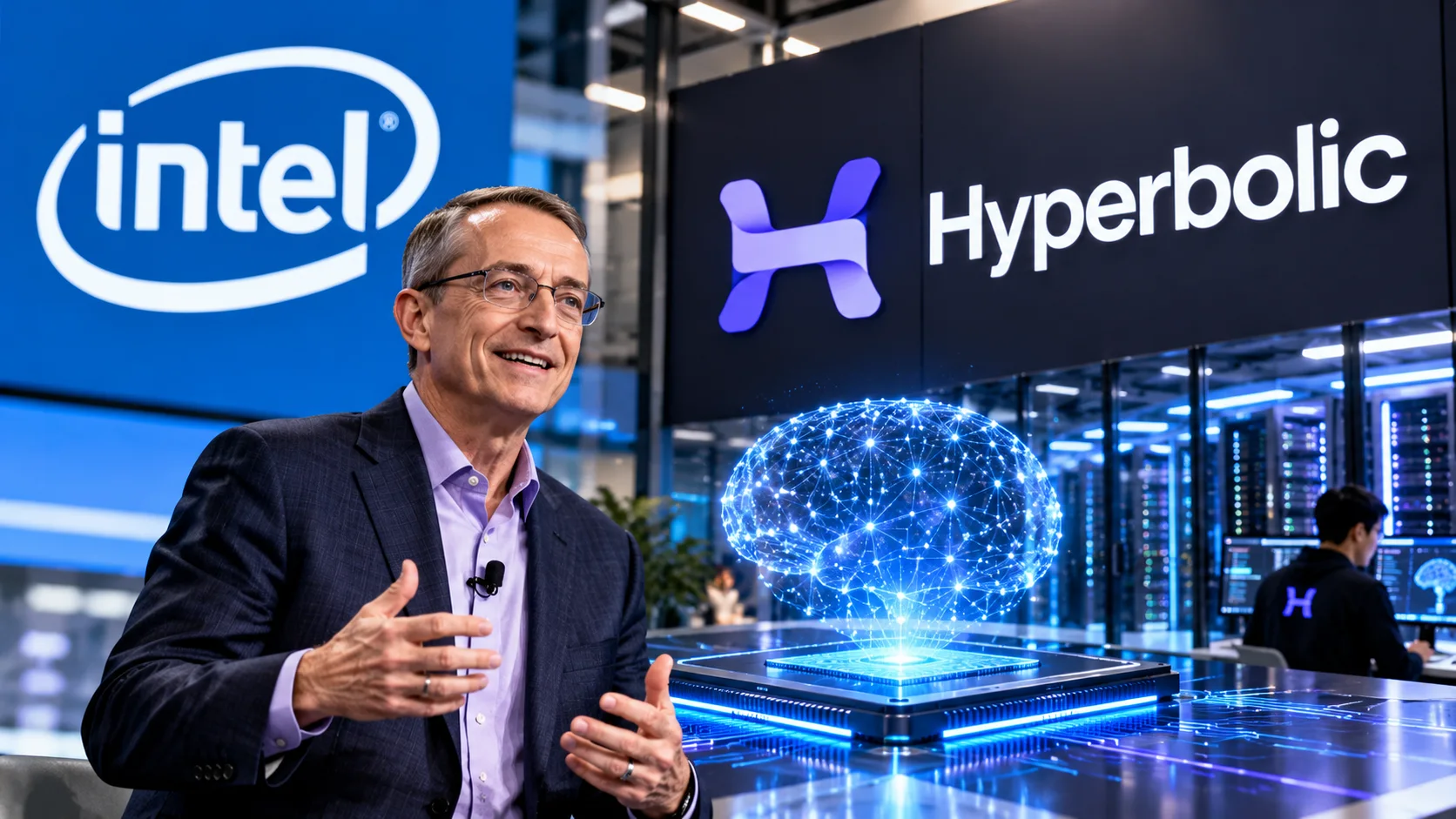
Hyperbolic $30 million funding has brought fresh investment to the AI infrastructure startup, with Walden Catalyst leading its Series A-1 round. The venture capital firm was co-founded by Intel CEO Lip-Bu Tan and former Samsung president Young Sohn. The latest investment brings Hyperbolic’s total funding to $50 million as it develops software to connect customers with computing resources across different AI cloud providers.
Dell Technologies Capital, General Catalyst, Vista Equity Partners and Cambium Capital also participated in the round. The funding comes as demand for AI computing capacity grows and companies look for ways to access graphics processing units (GPUs) without managing multiple cloud providers separately.
Hyperbolic $30 Million Funding Targets Fragmented AI Cloud Infrastructure
Hyperbolic operates an AI chip marketplace and software platform that helps customers find and manage computing resources across independent AI cloud providers, commonly called neoclouds. These providers can use different chips, networking systems and software environments, making it difficult for customers to move between services or coordinate computing workloads.
The startup aims to simplify that process through a unified platform. Rather than arranging access with each provider individually, customers can use Hyperbolic’s software to connect with computing resources across its network. The company also plans to introduce tools that would allow customers to resell computing capacity they have paid for but no longer need.
Hyperbolic works with approximately 30 neocloud providers, according to its chief executive, Jasper Zhang. The company says around $200 million worth of computing capacity is connected to its software annually, although that figure does not represent Hyperbolic’s own revenue.
Lip-Bu Tan’s Venture Firm Leads the Investment
Walden Catalyst led the Series A-1 round. Tan co-founded the investment firm with Young Sohn, who previously served as president of Samsung. Tan’s role as Intel CEO places the investment within a wider technology landscape in which semiconductor expertise, AI computing infrastructure and venture capital increasingly intersect.
The other participating investors include Dell Technologies Capital, General Catalyst, Vista Equity Partners and Cambium Capital. Hyperbolic had previously raised a $12 million Series A round in 2024, led by Variant and Polychain Capital, following a $7 million seed round earlier that year.
The latest funding will support the expansion of Hyperbolic’s software tools for managing AI chips and computing resources across multiple providers. The company expects to have 50 employees by the end of 2026.
Hyperbolic Plans to Expand Its AI Compute Marketplace
Hyperbolic says more than 250,000 developers use its services, including teams at Modal, Higgsfield and Daytona. Zhang has said the company is targeting $150 million in annual recurring revenue by the end of 2026 and is already breaking even. These are company-reported figures and targets, not independently audited financial results.
The startup’s proposed resale capability could also help establish a more flexible market for AI computing capacity. If customers can transfer unused capacity to others, computing resources that would otherwise remain idle could become available to businesses facing shortages.
Zhang has suggested that such a marketplace could eventually support a futures market for AI compute. That remains a longer-term ambition rather than an established feature of the current platform.
AI Infrastructure Investment Moves Beyond Chipmakers
The investment highlights a growing market for software that helps companies access, coordinate and manage AI computing resources. While much of the AI infrastructure race centres on chip production and data-centre construction, platforms such as Hyperbolic are attempting to address the challenge of making available computing capacity easier to use.
Its ability to scale will depend on attracting providers and customers, managing differences between computing environments and turning connected capacity into sustainable revenue. The $30 million round gives the startup additional capital to develop its platform as demand for AI infrastructure continues to reshape the technology industry.