NASA Adds Relativity Space’s Terran R to Launch Services Contract
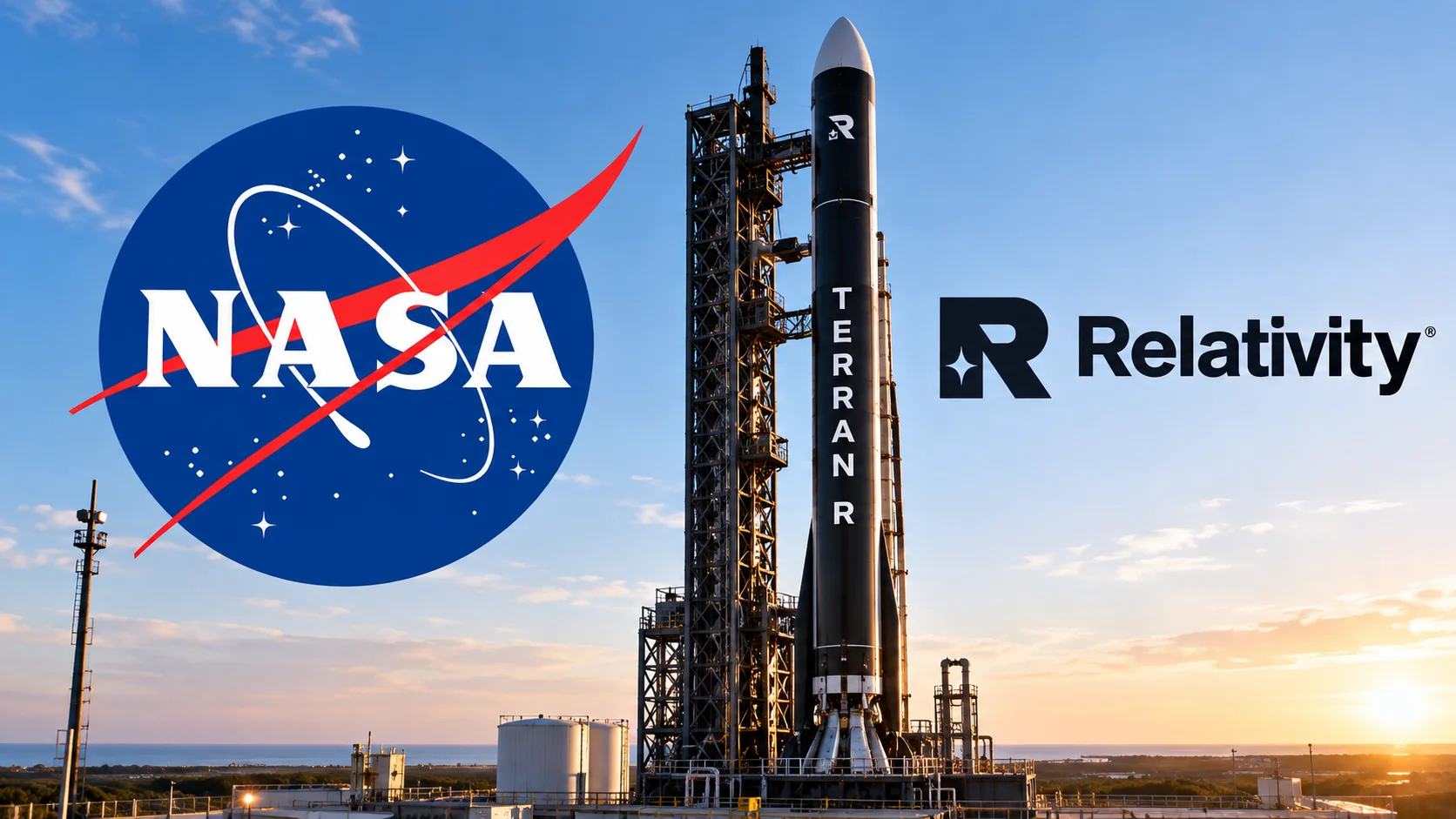
NASA has added Relativity Space’s Terran R launch service to its Launch Services (NLS) II contract, giving the California-based aerospace company an opportunity to compete for future NASA missions. The agency announced the addition on September 9 under the contract’s annual “on-ramp” provision, which allows new launch providers and existing contractors with new rockets to compete for government launch opportunities.
The addition does not represent a specific launch award for Terran R. Instead, it makes the rocket an eligible launch service under NLS II, meaning NASA can consider it for suitable future missions. The contract supports launches for NASA’s human spaceflight, science, and research and technology programs and can also provide launch services to other U.S. government agencies, including NOAA.
Terran R Enters NASA’s Commercial Launch Pool
Relativity Space is developing Terran R as a reusable launch vehicle, with the company working toward its first flight from Cape Canaveral Space Force Station in Florida. The rocket is being developed at a time when NASA is increasingly using commercial providers to expand launch capacity and create competition for government missions.
The company has already established a significant testing presence at NASA’s Stennis Space Center in Mississippi. Relativity has used NASA facilities there for Terran R development and has been expanding its R Complex, while also modifying the historic A-2 test stand for large-scale stage testing.
What the NLS II Contract Means
NASA’s NLS II program is structured as a multiple-award, indefinite-delivery/indefinite-quantity contract rather than a single mission agreement. Its ordering period runs through June 2030, while the overall period of performance extends through December 2032. The annual on-ramp process allows NASA to add new launch providers or introduce launch vehicles that were not previously covered by the contracts.
For Relativity, being added to the contract gives Terran R a pathway to compete for government launches once the vehicle meets the requirements for individual missions. Actual mission assignments will still depend on NASA’s future launch needs, the rocket’s readiness and its ability to meet the technical and contractual requirements of a particular payload.
Relativity Builds Toward Terran R’s First Flight
Terran R represents a major step beyond Relativity’s earlier Terran 1 rocket, which was designed as a smaller launch vehicle and flew its first mission in 2023. The company subsequently shifted its focus toward the larger Terran R, with an emphasis on reusability and higher launch capacity.
Relativity has been developing the rocket’s propulsion and structures while expanding its testing infrastructure. NASA has previously supported the company’s work at Stennis through facility agreements, including access to the A-2 test stand and other facilities used for Terran R development.
The NASA contract addition comes before Terran R has entered operational service, so the immediate significance is access to future opportunities rather than a confirmed mission. If the rocket completes development and certification milestones, its inclusion in NLS II could allow it to compete alongside other commercial launch systems for NASA and broader government payloads.