OpenAI Samsung Partnership in Focus as Altman Visits Korea
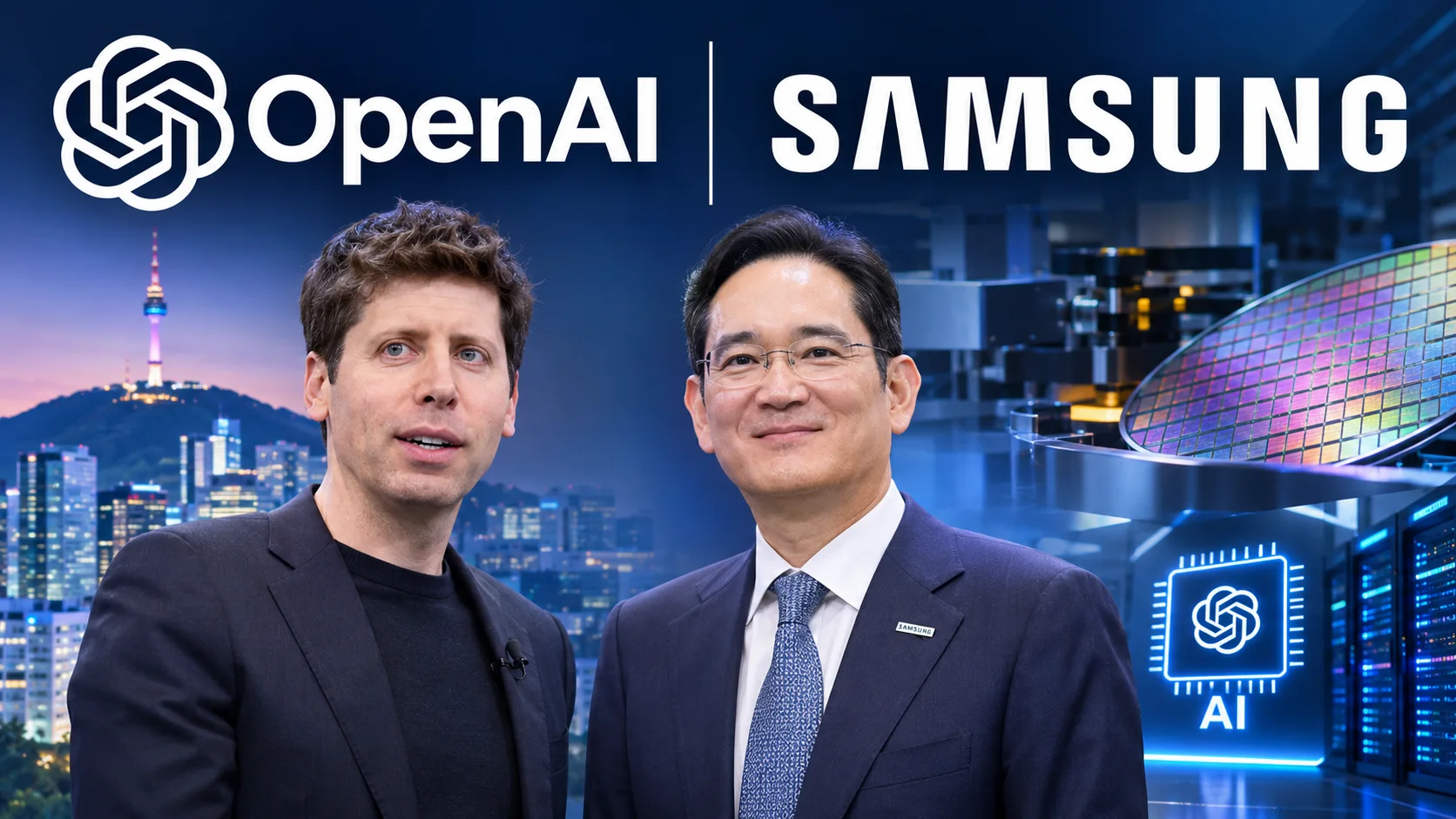
The OpenAI Samsung partnership has come into sharper focus after CEO Sam Altman returned to South Korea for meetings with executives from two of the country's largest technology groups. Altman met around 50 Samsung executives in Yongin and held a separate meeting with SK Group Chairman Chey Tae-won, alongside executives from SK hynix and SK Telecom.
The meetings took place as demand for high-bandwidth memory (HBM), a key component in AI accelerators, continues to exceed available supply. For OpenAI, which is expanding its computing infrastructure and developing custom AI accelerators with Broadcom, access to memory chips is becoming a strategic issue as well as a procurement challenge.
OpenAI Samsung Partnership Faces HBM Supply Pressure
Samsung and SK hynix are among the leading suppliers of HBM used in advanced AI systems. Their production capacity has become increasingly important as technology companies compete for the components needed to train and run AI models.
Samsung said its HBM supply for 2027 was sold out, while SK hynix said its production through 2029 was effectively accounted for through firm contracts and volumes under customer negotiations. SK hynix's head of HBM sales and marketing also said customer requests were more than twice the volume the company could supply.
The pressure is reflected in market forecasts. TrendForce forecasts a 121% increase in HBM's blended average selling price in 2027, partly reflecting a larger share of higher-priced HBM4 products. This does not mean every HBM product will see the same price increase.
Existing OpenAI Partnerships Face a Supply Test
OpenAI's relationship with the Korean groups predates Altman's latest visit. In October 2025, the company signed preliminary Stargate agreements with Samsung and SK that outlined projected memory demand equivalent to 900,000 DRAM wafer starts per month. The figure was a production target, not a binding purchase order.
The companies have also explored cooperation on AI data centres in South Korea. Samsung affiliates and SK Telecom agreed to examine potential developments, but investment budgets and construction schedules remain unsettled. OpenAI Korea chief Kim Kyoung-hoon previously said data-centre development involved more technical considerations than initially expected.
The latest meetings did not produce publicly announced new agreements. Neither OpenAI nor the Korean groups confirmed any new commitments on chip pricing or investment after Altman's visit. The discussions therefore signal the importance of existing relationships, but do not establish that additional supply has been secured.
Funding Pressures Add to OpenAI's Infrastructure Challenge
Memory availability is only one part of OpenAI's infrastructure challenge. The Korea Herald reported that the company had secured about $11 billion in commitments against an initial $30 billion fundraising target, citing industry sources. It also reported that the proposed valuation and fundraising target were under review. Those figures have not been independently confirmed and should be treated as reported estimates, not completed financing.
For Samsung, cooperation with OpenAI could extend beyond memory sales into enterprise AI and data-centre services. SK Group could bring together SK hynix's memory capabilities and SK Telecom's infrastructure operations.
The OpenAI Samsung partnership highlights how critical suppliers are becoming to the AI industry's expansion. But turning strategic discussions into firm chip orders and funded infrastructure projects will depend on supply capacity, financing and the terms of future agreements.