Rocket Lab Electron Launch Marks 99th Flight With iQPS Satellite
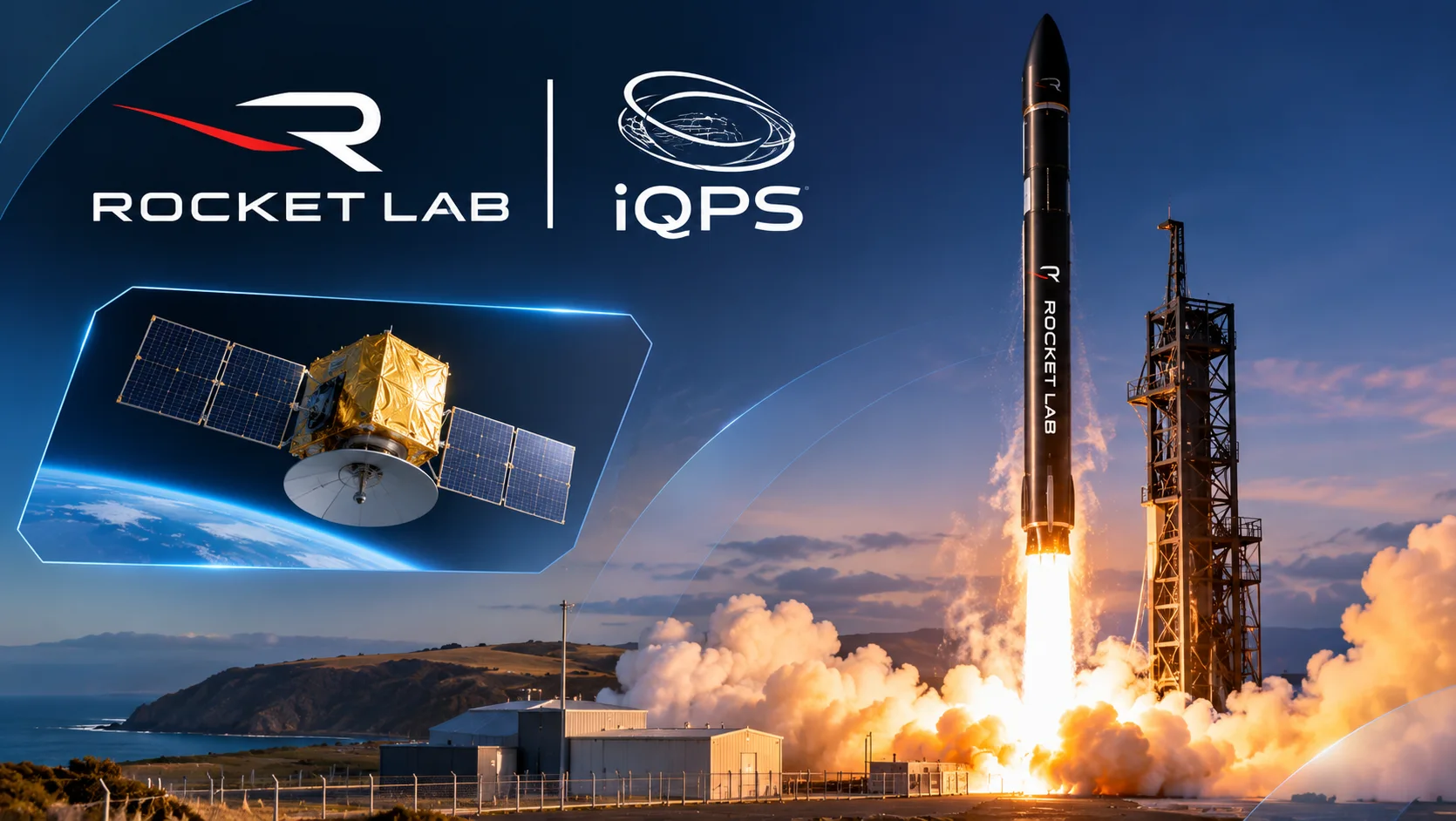
The latest Electron launch marked Rocket Lab’s 99th flight, deploying a Japanese synthetic aperture radar satellite for Earth-imaging company iQPS. The mission, named “The Sea God Surveys”, placed QPS-SAR-20, also known as WADATSUMI-II, into a planned low Earth orbit at an altitude of 575 kilometres.
The launch took place from Rocket Lab’s Launch Complex 1 on New Zealand’s Māhia Peninsula at 5:41 a.m. local time on November 3. It was Rocket Lab’s 20th mission of 2026 and its tenth consecutive successful launch for iQPS. The satellite was deployed around 50 minutes after liftoff, and iQPS established its first communication with the spacecraft about 30 minutes later.
Electron Launch Adds Another Satellite to iQPS’s SAR Network
WADATSUMI-II is the QPS-SAR programme’s 20th satellite by its assigned number, although the numbering reflects launch-contract order rather than the sequence in which satellites reach orbit. It is designed to join iQPS’s growing constellation of small synthetic aperture radar spacecraft.
Unlike optical Earth-observation satellites, SAR spacecraft transmit radar signals and measure their reflections from the surface. This allows them to collect imagery at night and through cloud cover, making the technology useful for monitoring land, infrastructure and maritime activity in a range of weather conditions.
Rocket Lab said the Electron launch placed the satellite in an orbit with an inclination selected to improve revisit rates over the Asia-Pacific region. The company is iQPS’s primary launch provider and has eight more dedicated Electron missions booked for the customer, supporting the planned expansion of its constellation through 2030.
WADATSUMI-II Makes First Contact After Deployment
iQPS confirmed that the satellite separated from Electron about 50 minutes after launch and made its first contact roughly half an hour later. The company said telemetry showed that the spacecraft’s equipment was operating normally and that the satellite was in good health.
The mission has not yet reached the imaging stage. iQPS said it would continue spacecraft adjustments and deploy the satellite’s large antenna before attempting to acquire its first images. The first communication confirms that the spacecraft is responding, but it does not by itself demonstrate that the radar payload is fully operational.
Rocket Lab Nears Electron’s 100th Flight
The latest mission brings Electron to 99 flights since its first orbital launch in 2018. Rocket Lab has described it as the most frequently launched commercial small rocket, reflecting its role in dedicated satellite deployments rather than relying only on rideshare launches.
For iQPS, the successful Electron launch marks its tenth consecutive mission with Rocket Lab, with all ten missions achieving success. The company is developing a commercial SAR constellation intended to provide high-resolution, near-real-time Earth imagery. Its next planned Electron mission for iQPS is expected to carry QPS-SAR-19, named YAMATSUMI-II, with a launch window scheduled to open no earlier than November 14, 2026.