
Ukraine's Battlefield Robots Reshape Warfare as Unmanned Ground Vehicles Expand
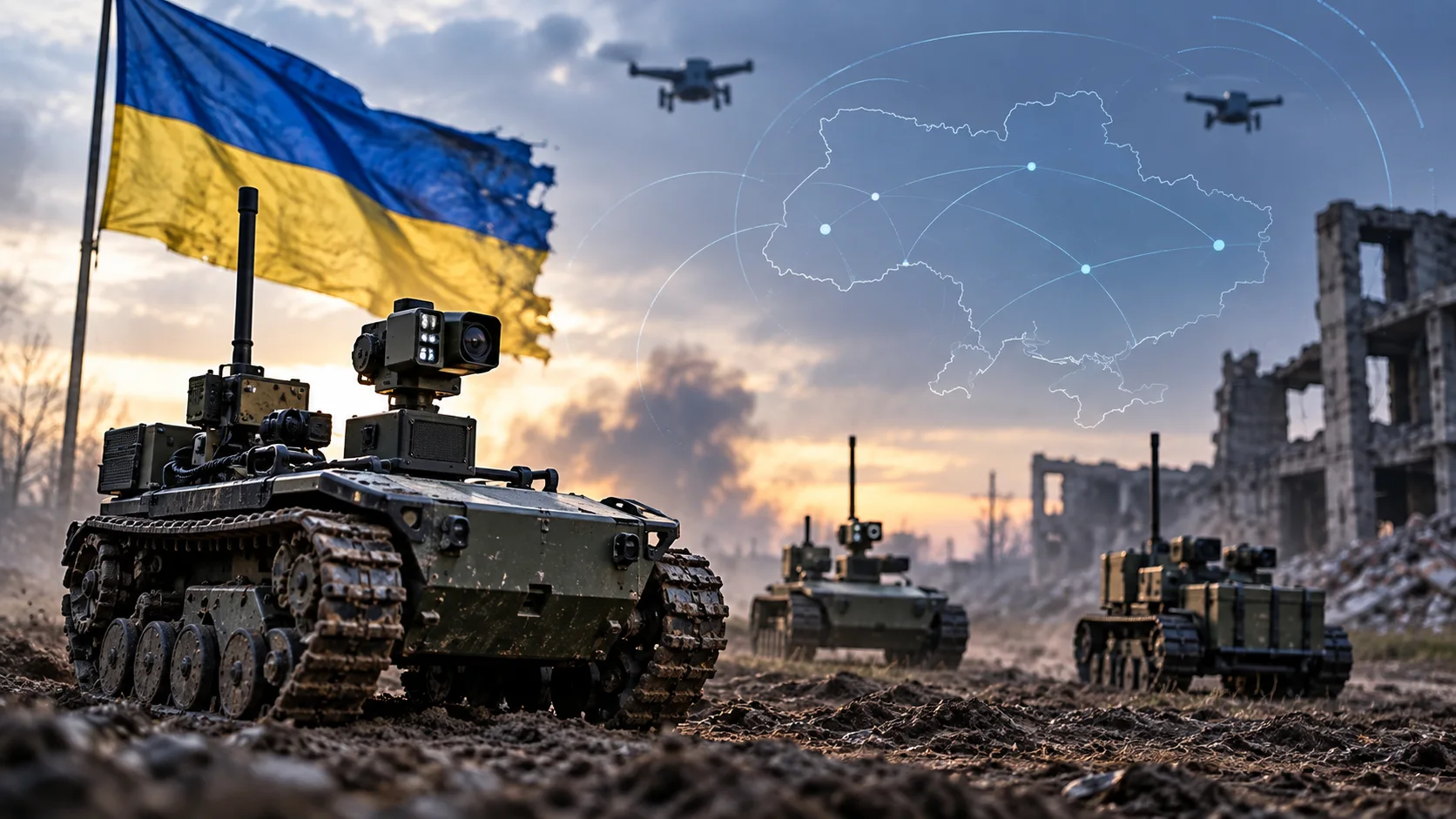
Ukraine is increasingly turning to unmanned ground vehicles (UGVs) as the war enters a new phase of technology-driven combat. Military units are deploying remotely operated and autonomous machines for tasks ranging from carrying supplies and reconnaissance to mine-related operations and combat support, reducing the need to send soldiers directly into some of the most dangerous areas.
The shift is being driven partly by Ukraine's shortage of manpower, but it also reflects a broader transformation in battlefield technology. Robots can operate in areas exposed to artillery, drones and mines, allowing military commanders to keep personnel farther away from immediate threats while using machines to handle repetitive or hazardous missions.
Robots Take On More Battlefield Roles
Unmanned ground vehicles are being used for a growing range of missions. Some transport ammunition, food and other supplies to positions close to the front line, while others are designed for reconnaissance or to support operations in areas where sending troops would carry significant risks.
Their roles are also expanding into combat-related tasks. Some robotic vehicles can carry weapons or support fire missions, while others are being developed for mine clearance and evacuation operations. The variety of applications shows how robots are moving beyond experimental projects and becoming part of routine military operations.
Manpower Shortage Accelerates Robot Deployment
Ukraine's shortage of soldiers has become an important factor behind the rapid adoption of battlefield robotics. Every mission carried out by a machine can potentially reduce the number of personnel exposed to enemy fire, allowing limited manpower to be concentrated where human judgment and direct intervention remain necessary.
Commanders increasingly view this as a way to change how military units operate. Instead of replacing soldiers entirely, robots can take over dangerous or repetitive tasks while people remain responsible for planning, decision-making and controlling the systems.
Drone Warfare Is Expanding to the Ground
Ukraine has already become known for its extensive use of drones in the air, but the growing deployment of ground robots is creating another layer of unmanned warfare. UGVs can travel through terrain that is difficult or dangerous for conventional vehicles and can be controlled remotely from safer positions.
The combination of aerial drones and ground robots could also allow military units to coordinate different unmanned systems during operations. This creates the possibility of using machines to locate threats, deliver supplies and support attacks while reducing the exposure of human personnel.
Ukraine Develops a Domestic Robotics Industry
The growing demand for battlefield robots is also encouraging Ukrainian manufacturers and technology companies to develop new systems. Local engineers are adapting commercial technologies and military designs to meet the specific conditions of the war, where electronic warfare, drones, mines and difficult terrain can quickly expose weaknesses in equipment.
The rapid development cycle means some systems can be tested, modified and returned to the battlefield relatively quickly. This has created an environment in which military needs and private-sector engineering are increasingly connected, accelerating the development of new robotic capabilities.
Humans Still Remain at the Center
Despite the growing role of machines, battlefield robots are not replacing human soldiers. Many systems still require operators to control their movements, identify targets or make important decisions during missions. Communication links can also be disrupted by electronic warfare, creating limitations for remotely operated vehicles.
That means the immediate goal is less about creating completely autonomous armies and more about extending what human soldiers can do without putting them directly in harm's way. Robots can carry out specific missions, but commanders and operators remain responsible for determining when and how they should be used.
A New Model of Battlefield Warfare
Ukraine's experience is providing an important real-world test for military robotics. The rapid expansion of UGVs demonstrates how quickly warfare can adapt when technology, battlefield pressure and manpower shortages converge.
As robotic systems become more capable, their role is likely to expand beyond individual support missions. For Ukraine, the priority is using them to preserve soldiers' lives and compensate for limited manpower. For militaries around the world, the developments offer an early look at how future conflicts could increasingly combine human decision-making with fleets of machines operating across the battlefield.