US Industrial Robot Imports Face Tariff Risk After National Security Review
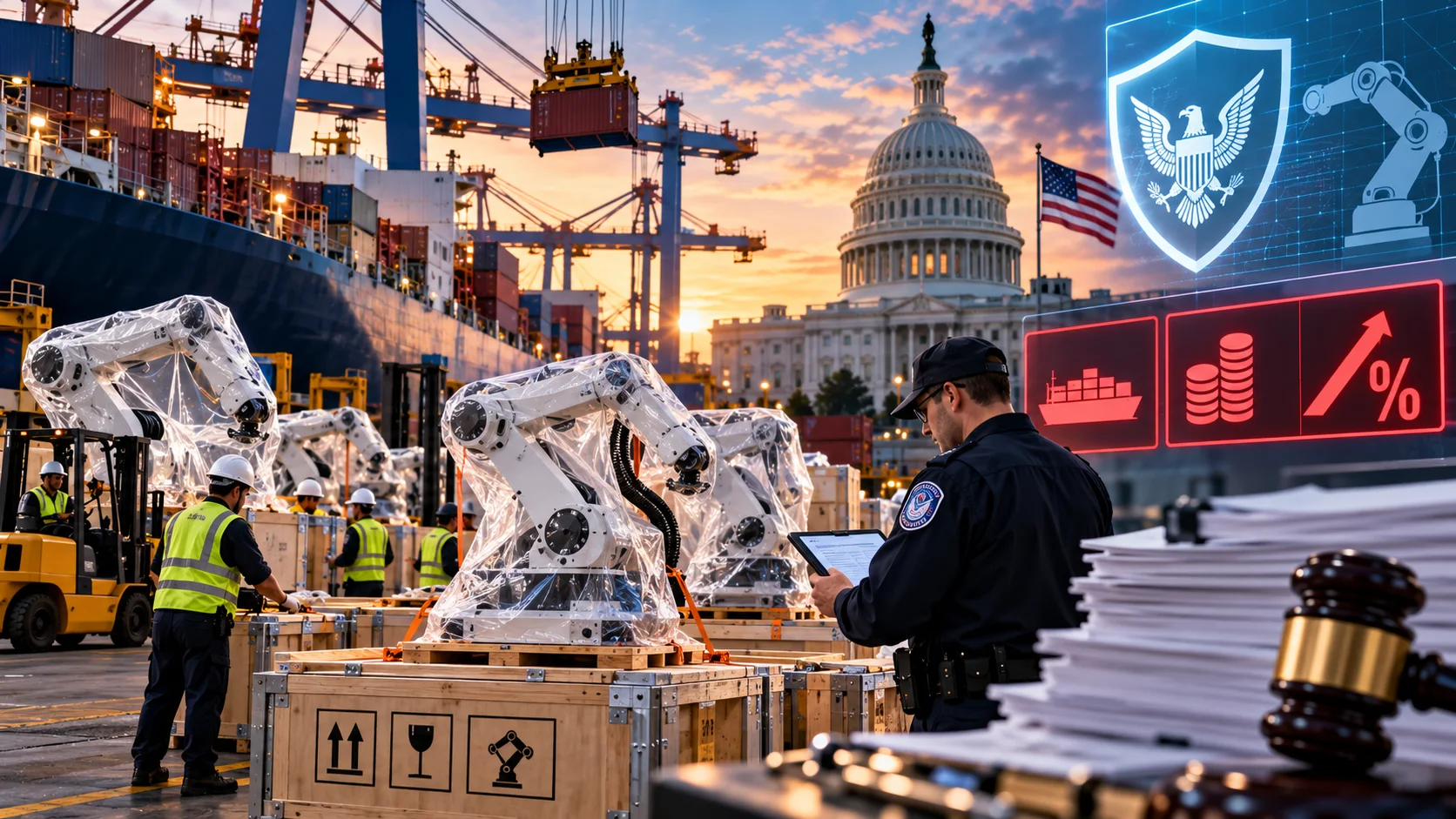
The United States has opened the door to potential trade restrictions on foreign-made industrial robots and machinery, citing national security concerns and dependence on overseas suppliers. President Donald Trump signed a proclamation on October 28 directing officials to negotiate with trading partners over imports of robotics, industrial machinery and their components. The order does not impose tariffs immediately, but leaves them among the measures the administration could consider later.
The decision could affect manufacturers across the automotive, aerospace, electronics and logistics industries, many of which depend on imported automation equipment. It also creates uncertainty for international robotics suppliers that serve US factories.
Why US industrial robot imports are under scrutiny
The proclamation follows a Commerce Department investigation under Section 232 of the Trade Expansion Act of 1962, a US trade law that allows the government to examine whether certain imports threaten national security. The administration concluded that foreign imports of robotics, industrial machinery and related components threaten to impair US national security.
The government argues that these technologies are essential to defence production and critical infrastructure. Industrial robots are used to manufacture vehicles, electronics, aircraft and military equipment, while some advanced systems also perform surveillance and other defence-related tasks.
The proclamation also identifies cybersecurity concerns. Foreign-made machinery can be integrated into manufacturing systems and may process or store sensitive operational data. The administration argues that vulnerabilities in such equipment could create risks for industrial facilities and critical infrastructure.
These are the government's stated findings and security concerns; the proclamation does not establish that all imported industrial robots pose a direct threat.
Tariffs remain possible, but negotiations come first
Trump has instructed the Commerce Secretary and the US Trade Representative to pursue or continue negotiations with foreign trading partners. They must report progress to the president within 180 days of the proclamation.
The order leaves several options open if negotiations fail to address the administration's concerns. These include tariffs, duties, quotas and fees on imported robotics, industrial machinery and their components. The government could also consider incentives to encourage more domestic production.
For now, there is no new tariff rate or immediate import ban under this proclamation. The outcome will depend on negotiations and any subsequent action taken by the administration.
Manufacturers could face higher equipment costs
The policy presents a challenge for US manufacturers because domestic suppliers cannot currently meet demand for many types of industrial robots and machinery. The proclamation itself acknowledges that the country relies on foreign imports for most categories of this equipment.
Major industrial robotics suppliers include Japan's FANUC and Yaskawa, Switzerland-based ABB and Germany's KUKA. Their equipment is used in automotive plants, warehouses and other manufacturing operations. Replacing these systems with domestic alternatives may be difficult in areas where US production capacity remains limited.
The International Federation of Robotics recorded nearly 38,500 new industrial robot installations in the United States in 2025, reflecting the scale of factory automation in the country. If tariffs are introduced, companies importing equipment could face higher costs, potentially affecting investment plans and production expenses.
The administration's next 180 days of negotiations will help determine whether the policy leads to new trade agreements, import restrictions or incentives for domestic manufacturing. Until then, manufacturers and robotics suppliers must prepare for the possibility of changes without knowing what form they will take.