US Military AI Accountability Faces New Questions as Pentagon Expands Use
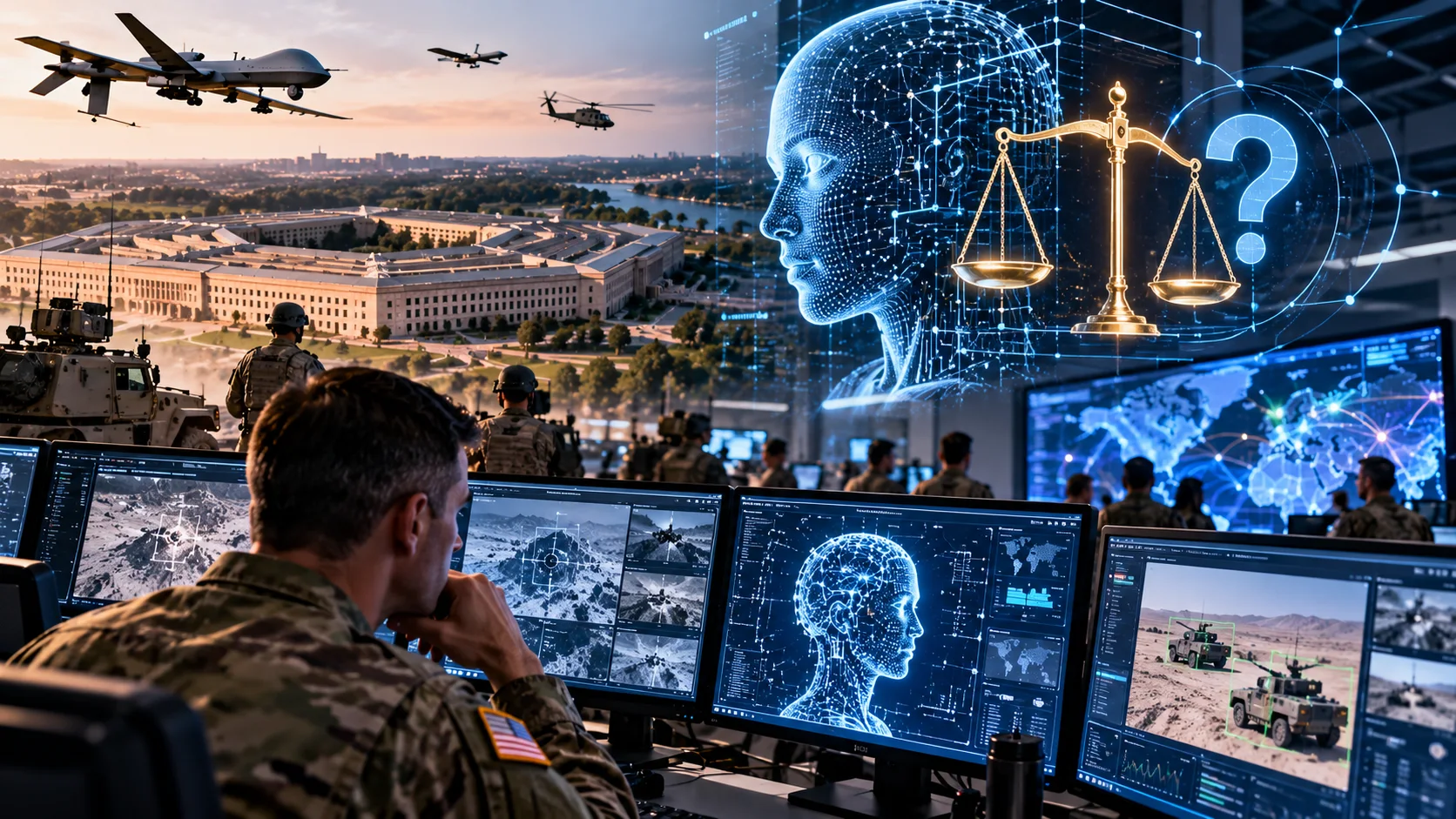
US military AI accountability is facing renewed scrutiny as the Pentagon expands artificial intelligence across intelligence analysis, military planning and targeting support. The technology is helping American forces process battlefield information more quickly, but reported errors and growing dependence on private technology companies have raised questions about human oversight and responsibility when AI-assisted decisions contribute to military action.
In a commentary published on October 30, Reuters examined how AI has moved from an experimental military tool to a central part of US operations. The shift became particularly visible during the Iran war, when the Pentagon deployed its Maven system at unprecedented scale to combine intelligence feeds and AI models for battlefield analysis.
AI Becomes Central to US Military Operations
The Pentagon's Maven system brings together information from sources including satellites, drones, radar, sensors and intelligence reports. Palantir provides the underlying data integration technology, while AI models from companies including Anthropic, OpenAI, Google, Microsoft and Elon Musk's SpaceX have been made available for classified military work.
Pentagon Chief Digital and Artificial Intelligence Officer Cameron Stanley said the Iran conflict marked the first full-scale deployment of Maven's AI targeting and analysis capabilities. The demand was so high that it quickly exhausted the available classified computing capacity, according to his account.
Military officials argue that these systems help analysts process large volumes of information and make decisions faster. The same speed, however, creates risks when the information is incomplete or incorrect. CNN previously reported that US forces nearly boarded a Chinese merchant vessel after an AI assessment wrongly suggested it was carrying nuclear weapons components.
Faulty Intelligence Raises Civilian Harm Concerns
Questions about military AI accountability have become more serious following incidents involving inaccurate intelligence and targeting information. Reports suggested that AI may have been involved in the US bombing of a girls' school in Iran, which reportedly killed more than 170 people. US officials attributed the incident to outdated maps and data rather than the AI analysis itself.
The distinction is important because AI involvement does not automatically establish that a system caused an operational failure. But it raises questions about how military personnel verify information before acting on it, particularly when decisions are made under time pressure.
The debate also extends to Israel's use of AI-assisted targeting systems, including Lavender, during its war in Gaza. The Israeli military has acknowledged using AI targeting programmes but has maintained that humans remain responsible for key decisions. The use of these systems has prompted wider scrutiny among US and allied military officials over reliability, civilian protection and the limits of human supervision.
Private Technology Companies Complicate Military Control
The Pentagon's growing reliance on commercial AI providers introduces another accountability challenge. Companies supply models and infrastructure that support military operations, but their involvement can change because of corporate policies, contractual disputes or government decisions.
The dispute between Anthropic and the Pentagon illustrates this tension. Anthropic had sought to retain restrictions on the military use of its Claude models, while US officials argued that technology supplied to the government should be available for lawful purposes. The disagreement raises questions about how much control private developers should retain once their products become part of military systems.
US allies have also expressed concern about depending on American-controlled platforms that could potentially be withdrawn or restricted. The issue is not limited to AI accuracy; it also concerns the continuity of critical military services.
Human Oversight Remains a Central Question
The expansion of military AI does not remove the need for human judgment. Systems can help identify potential targets and organise intelligence, but commanders must still assess the reliability of information, the consequences of an operation and the resources required to carry it out.
The US and China have agreed that AI systems should not directly control decisions involving nuclear weapons. Wider military applications, however, remain an area of rapid development and debate.
The challenge for US military AI accountability is to establish clear responsibility when automated analysis influences decisions that can cause civilian harm or trigger wider conflict. Faster processing may improve military operations, but it does not guarantee accurate intelligence, sound judgment or responsible outcomes.