Vietnam’s First Semiconductor Plant Faces Delays, Threatening 2027 Target
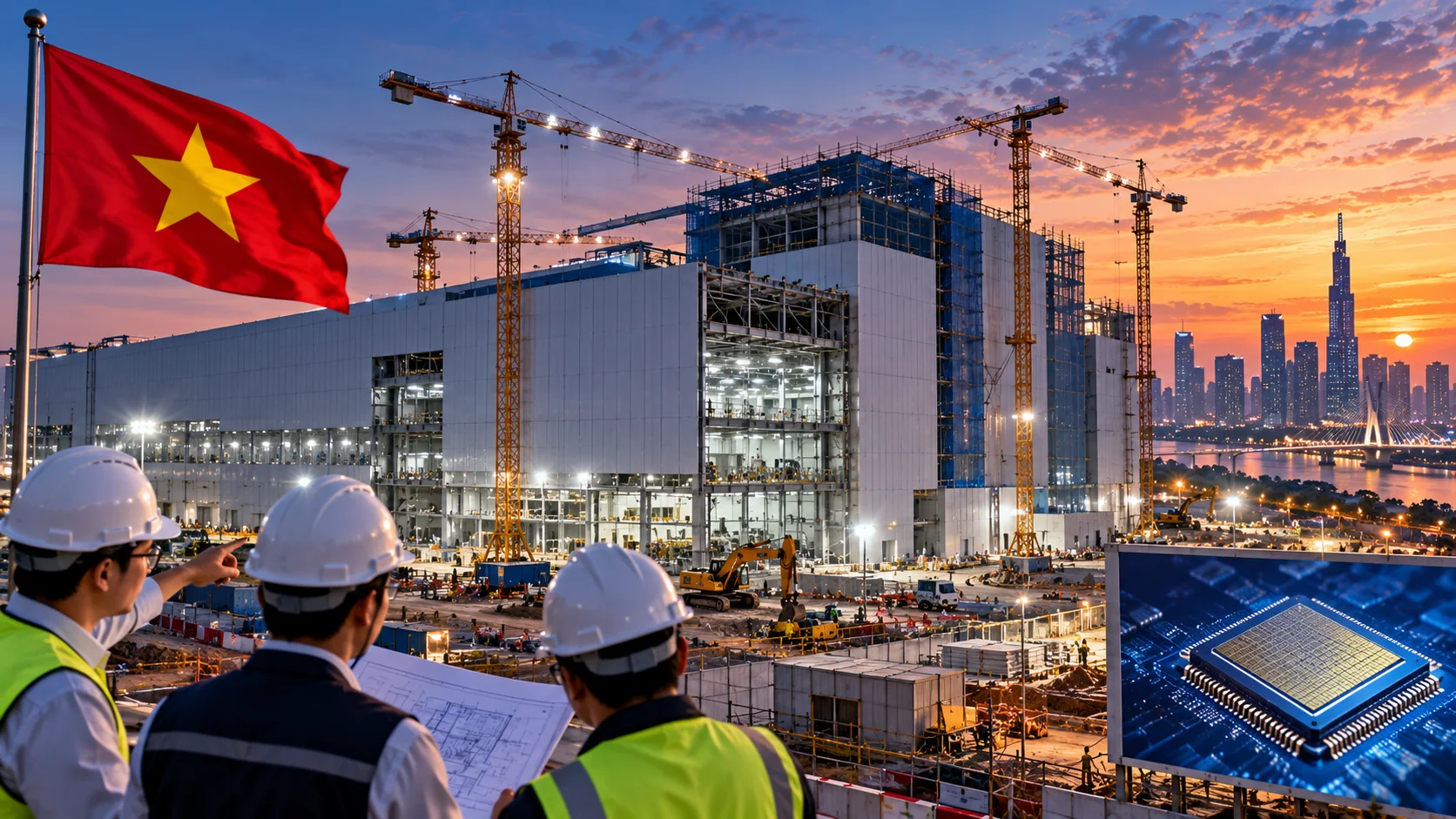
Vietnam semiconductor plant delays could push back the country’s first chip fabrication facility, with trial production in 2027 now considered unlikely, Reuters reported on October 26. The project, developed by military-run telecommunications and defence group Viettel, has yet to progress to visible construction at its site near Hanoi, while negotiations to purchase chipmaking equipment from Dutch supplier ASML remain unresolved.
The proposed facility is estimated to cost $1.3 billion and was intended to become fully operational by 2030. The delays highlight the technical, financial and administrative challenges Vietnam faces as it attempts to move beyond semiconductor assembly into chip manufacturing.
Vietnam Semiconductor Plant Delays Put 2027 Target at Risk
People familiar with the project told Reuters that Viettel’s limited experience in building semiconductor fabrication facilities and administrative hurdles in securing government funding have contributed to the delays. A Reuters visit to the site near Hanoi in October found no buildings under construction, a finding also supported by satellite imagery.
Viettel, however, told Reuters that the project was progressing according to its established plan and schedule. The company said implementation was being carried out in phases in line with technical and project requirements. It did not provide a revised timeline.
The conflicting assessments leave uncertainty over when construction will advance and whether the plant can begin trial production in 2027. The government-mandated project remains part of Vietnam’s broader strategy to develop a domestic semiconductor manufacturing industry.
Viettel Has Yet to Finalise an Equipment Deal With ASML
Viettel has reportedly been in talks with ASML for months over the purchase of a deep ultraviolet (DUV) lithography machine. The equipment is used to print circuit patterns onto silicon wafers and is a key component of semiconductor manufacturing.
Three people familiar with the discussions told Reuters that negotiations were continuing, but no agreement had been reached. The reasons for the delay and the specific machine under consideration were not clear. ASML declined to comment on the talks.
The type of equipment being considered could affect the purchase cost and whether the sale would be subject to Dutch export controls. ASML is a major supplier of DUV lithography systems and holds a monopoly on the most advanced extreme ultraviolet (EUV) lithography machines.
Securing specialised equipment is only one part of establishing a chip fabrication facility. The project also requires construction, manufacturing expertise, reliable funding and the technical infrastructure needed to operate production processes.
Vietnam Targets 32-Nanometre Chip Manufacturing
Viettel said in a January presentation that it planned to manufacture chips using 32-nanometre technology. That would be an ambitious starting point for a company entering semiconductor fabrication without an established track record in building chip plants.
The reference to 32-nanometre production was later removed from Viettel’s website, Reuters reported. The company has not publicly disclosed whether it is partnering with an established chip manufacturer to provide technical expertise and production support.
Vietnam has attracted significant investment in semiconductor assembly, testing and packaging, which generally requires less capital than building a fabrication plant. Intel, Amkor Technology and Hana Micron operate major facilities in the country, while Samsung Electronics is planning a chip-testing facility.
However, efforts to attract foreign investors to establish semiconductor fabrication operations in Vietnam have faced difficulties, according to industry sources cited by Reuters.
Chip Manufacturing Is Central to Vietnam’s Technology Ambitions
Vietnam wants to move further up the semiconductor value chain as part of its long-term economic development strategy. The government aims to become a high-income economy by 2045 and has set ambitious growth targets for the years leading up to 2030.
A domestic fabrication plant could support local demand for chips used in telecommunications, aerospace and automotive applications. But the project’s progress will depend on resolving equipment negotiations, securing funding and developing the expertise needed to operate the facility.
For now, Viettel has not announced a revised timeline, and the company maintains that the project is proceeding as planned. Whether Vietnam can meet its original manufacturing milestones will become clearer as construction and equipment procurement advance.