Anthropic Prices $81.3 Billion IPO at $83 Ahead of Nasdaq Debut
Anthropic Prices $81.3 Billion IPO at $83 Ahead of Nasdaq Debut
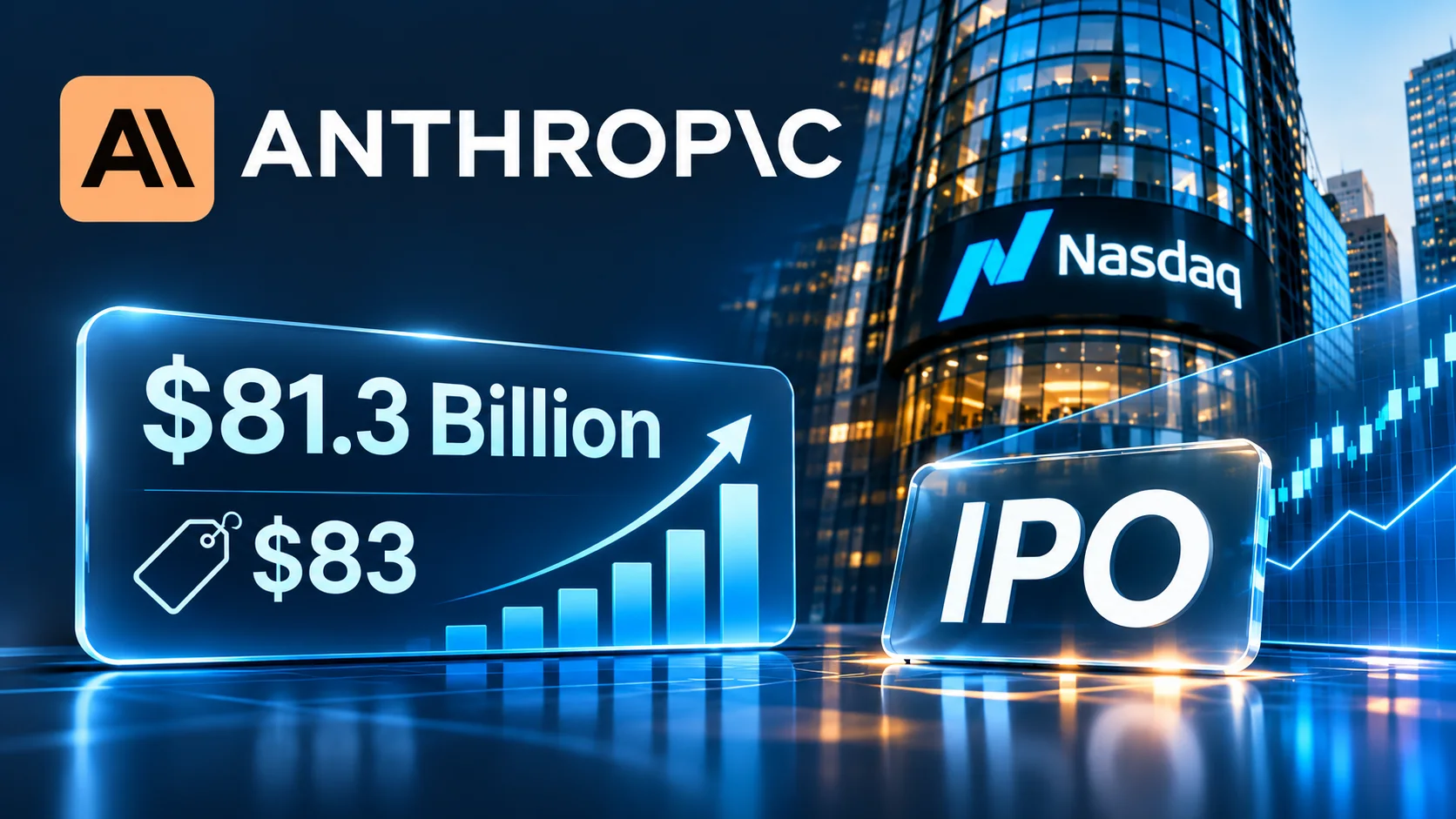
Anthropic has priced its initial public offering at $83 per share, raising approximately $81.3 billion as the largest stock-market debut on record. The Claude developer is valued at around $1.5 trillion on a fully diluted basis, placing one of the world's leading artificial intelligence companies directly in public markets.
The company increased the size of its offering to approximately 980 million shares, around 19% more than its original plan. The shares are scheduled to begin trading on the Nasdaq on November 19 under the ticker symbol ANT. The IPO price also exceeded the initial range of $70 to $78 per share, reflecting strong investor demand.
Anthropic IPO Sets a New Record for Public Listings
The Anthropic IPO has become a landmark event for the technology sector and the wider financial market. Its $81.3 billion share offering surpasses the previous record set by SpaceX earlier in 2026.
The total transaction is larger still. Anthropic is also raising another $26 billion through a private placement of shares at the IPO price, taking the combined deal size to approximately $107.3 billion, according to the reported filings.
The distinction matters because the private placement is separate from the public share offering. The company's approximately $1.5 trillion valuation is calculated on a fully diluted basis, which includes securities such as stock options and restricted shares.
The listing makes Anthropic the first major frontier AI model developer to enter public markets, giving investors a direct opportunity to hold shares in a company developing advanced AI systems.
Heavy AI Infrastructure Spending Remains a Concern
Despite the strong demand for its shares, Anthropic faces questions about the cost of developing and operating advanced AI models. Building frontier systems requires substantial computing capacity, data-centre infrastructure and access to specialised processors.
Reuters reported that Anthropic spent nearly $9 billion on computing infrastructure during the first half of 2026, followed by another $5 billion in the third quarter. The company has also made substantial long-term commitments to secure future computing capacity.
These expenses highlight the financial demands behind the rapid expansion of generative AI. Even companies experiencing strong revenue growth must manage the cost of training models, serving customers and maintaining the infrastructure needed to compete.
Anthropic's operating performance and ability to manage these commitments will therefore remain important considerations for public-market investors.
Public Investors Get Direct Exposure to Frontier AI
The Anthropic IPO offers a significant new investment opportunity in the artificial intelligence sector. Until now, much of the financial exposure to private frontier AI developers has been available indirectly through venture capital funds, private investments and their corporate partners.
A public listing changes that access, while also bringing greater scrutiny of the company's financial performance, business strategy and long-term spending.
The debut could influence how investors assess other major AI companies considering public listings. OpenAI, Anthropic's closest major competitor, is also expected to explore a public-market debut.
A Major Test for the Economics of AI
Anthropic's market entry comes at a time when investors are questioning whether the enormous spending behind artificial intelligence can produce sustainable returns. Its valuation reflects confidence in the company's growth prospects, but maintaining that confidence will depend on financial performance after the listing.
The company's public-market journey will put its business model under closer examination. Revenue growth, infrastructure expenses, competition and the ability to convert AI adoption into lasting profitability will all shape investor expectations.
For the wider industry, the Anthropic IPO is more than a record-breaking funding event. It is an important test of how public markets value the companies building the next generation of artificial intelligence.