Microsoft Selects Intel EMIB Packaging for Azure Silicon
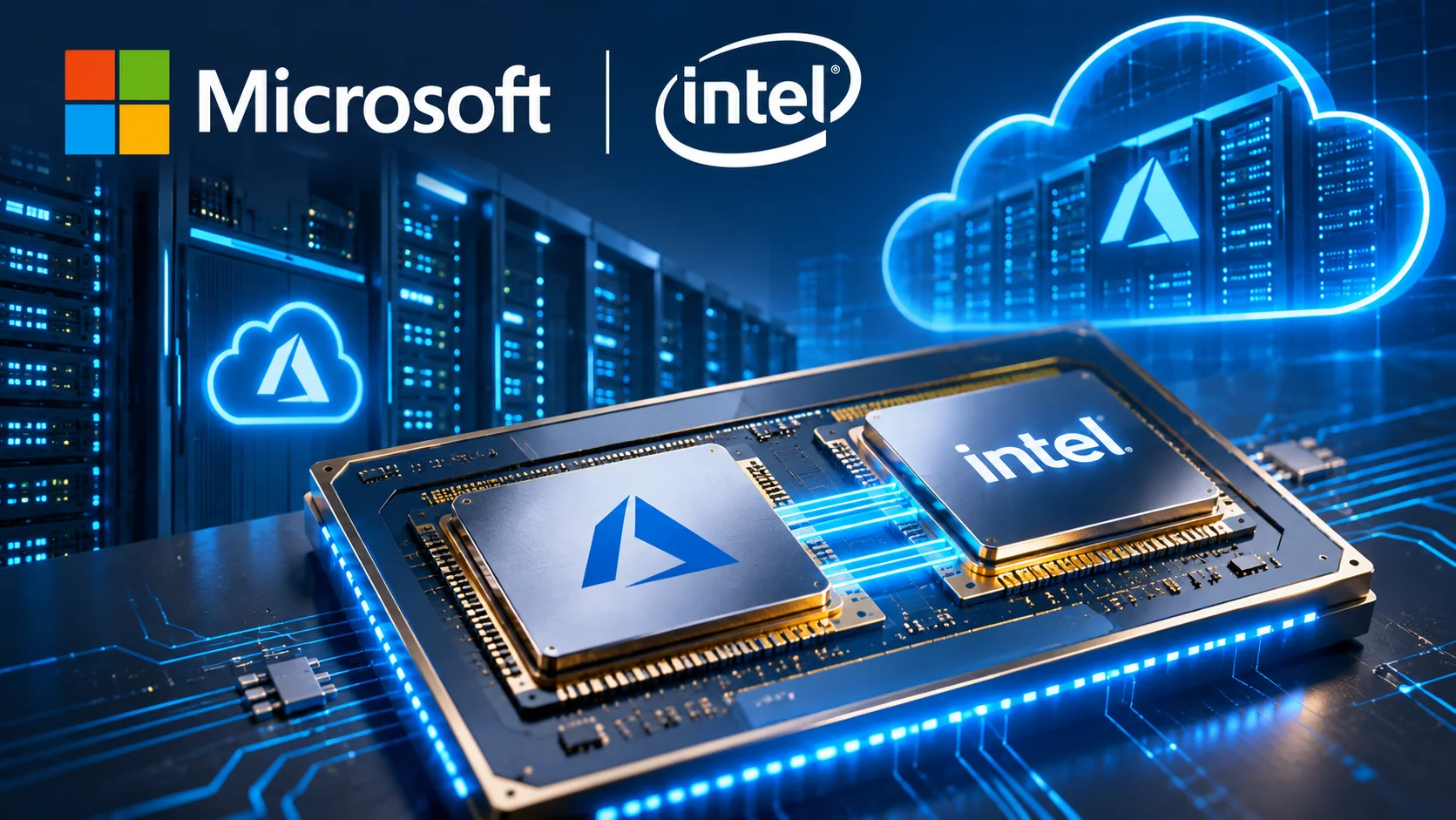
Microsoft has selected Intel Foundry's EMIB advanced packaging technology for its first-party Azure silicon, making it the first company to publicly announce using the technology for its own cloud infrastructure chips. The development forms part of an expanded, long-term agreement between the two companies, announced on November 18, 2026.
The agreement also confirms multi-year supply capacity for Intel Xeon processors, including next-generation server CPUs codenamed Diamond Rapids. The companies will expand their work across memory efficiency, system performance and confidential computing as Microsoft prepares its Azure infrastructure for growing cloud and artificial intelligence workloads.
Intel EMIB Packaging Enters Microsoft's Azure Roadmap
EMIB, or Embedded Multi-die Interconnect Bridge, is Intel's advanced semiconductor packaging technology. It connects multiple chiplets within a single package through small silicon bridges embedded in the package substrate.
This approach supports heterogeneous integration, allowing different chip components to work together within one semiconductor package. Rather than relying on a single, large silicon die, chiplet-based designs can combine separate components to build more complex processors.
Microsoft's announcement establishes Intel Foundry as a packaging partner for its Azure first-party silicon. However, neither company has identified the specific Azure chip that will use EMIB. The announcement also does not disclose packaging volumes, production timelines, manufacturing locations or the financial value of the agreement.
Multi-Year Xeon Supply and CXL Collaboration
The partnership extends beyond advanced packaging. Intel will provide Microsoft with multi-year Xeon processor supply capacity, including instances of Diamond Rapids, its next-generation server CPU family.
Microsoft will also work with Intel on Xeon processors using Compute Express Link (CXL), an interconnect technology designed to support communication between processors and memory devices. The companies aim to improve memory efficiency and system-level performance across Azure.
Their announcement cites up to 2.3 times greater performance and memory flexibility for demanding workloads on Azure M-series v4 virtual machines using CXL memory and Intel Flat Memory Mode with Xeon 6 processors. This is a company-reported result for a specific configuration, not a general performance improvement across Azure.
QuickAssist and Confidential Computing Expand the Deal
The companies are also extending collaboration on Intel QuickAssist Technology (QAT) and confidential computing.
QAT accelerates selected data-processing operations. Microsoft and Intel report up to 2.5 times faster SQL backups on Azure through virtual machines enabled with Intel QAT. The agreement also covers Intel Trust Domain Extensions (TDX), which protects virtual machine memory and CPU register states as confidential virtual machines move between hosts.
These technologies address different parts of data centre infrastructure, from database operations to workload security. Their inclusion shows that the partnership is intended to cover broader system-level optimisation rather than chip packaging alone.
A Strategic Customer for Intel Foundry
Microsoft's decision gives Intel Foundry a publicly identified external customer for EMIB packaging in first-party cloud silicon. It also strengthens an existing relationship at a time when cloud providers are investing in specialised processors and more integrated data centre systems.
For Microsoft, the agreement combines access to Intel's packaging capabilities with continued Xeon supply and engineering support. The companies have not yet disclosed when the EMIB-based Azure silicon will enter production or become available to customers.
The partnership therefore marks an important expansion of their infrastructure collaboration, although its commercial and performance impact will become clearer as Microsoft reveals the chips and systems built under the agreement.