Trump and Xi Agree on Human Oversight of Military AI, Bessent Says
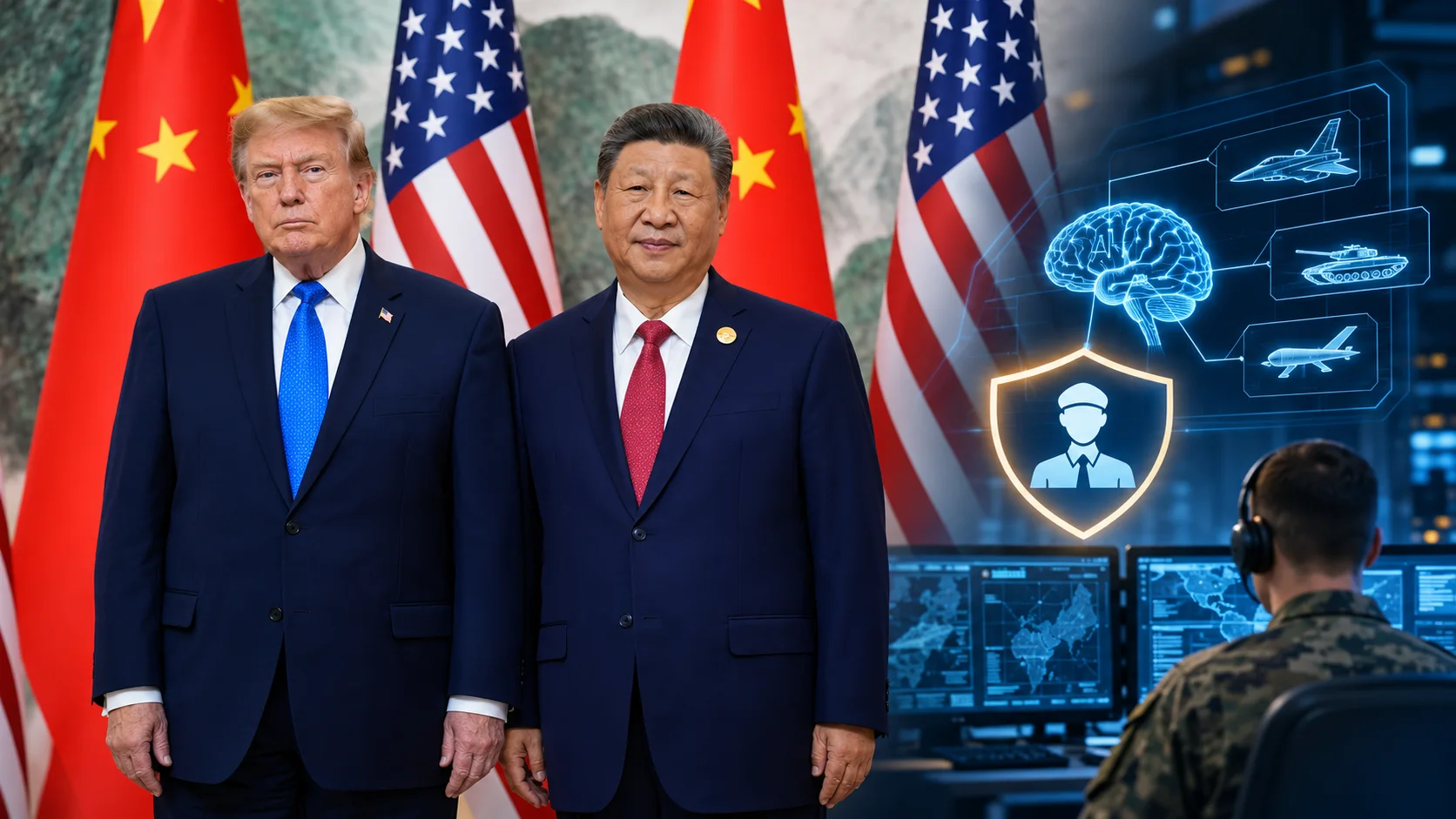
US President Donald Trump and Chinese President Xi Jinping agreed that humans should remain involved in military decisions involving artificial intelligence, US Treasury Secretary Scott Bessent said on November 20. The reported understanding addresses the use of increasingly capable AI systems in major military operations, as Washington and Beijing continue competing for technological leadership.
Bessent described the understanding as one of the significant outcomes of Trump's Asia trip. Speaking to CNBC after the leaders' meeting in Shenzhen, China, he said AI systems should not be allowed to act autonomously in major military operations.
The comments bring military AI human oversight into focus at a time when governments are examining how advanced systems could influence defence planning, targeting and operational decisions.
Trump and Xi discuss limits on autonomous military AI
According to Bessent, both leaders agreed that humans should always be involved in military decisions made using AI. He also said major military operations should not be launched without human involvement.
Bessent referred to the technology using the Trump administration's preferred term, "super intelligence". His remarks indicate that the understanding concerns human participation in high-stakes military decisions rather than a general restriction on the use of AI across defence systems.
However, neither government released a detailed agreement text alongside Bessent's comments. No specific enforcement mechanism, monitoring arrangement or implementation timeline was disclosed.
The distinction is important. A reported political understanding does not automatically establish a legally binding commitment or a common operational standard for both countries' armed forces.
AI competition continues despite reported understanding
The comments come amid an intensifying US-China contest over advanced AI capabilities, semiconductor technology and computing infrastructure.
Bessent said the reported understanding on military AI would remain separate from the two countries' competition for AI leadership. He argued that maintaining the technological advantage of US AI companies was important for national security.
He also raised concerns about Chinese AI models being used in cyberattacks. These were claims made by the US Treasury secretary, rather than independently established findings presented as part of the announcement.
The technology competition is also linked to access to advanced chips. Bessent said Nvidia's H200 remained the most advanced AI chip available to Chinese buyers through licensed channels, while describing Chinese demand as limited. He added that Washington was tightening restrictions on China's access to advanced chips and remote computing through overseas data centres.
Human control remains a central question for military AI
AI systems are increasingly relevant to military applications, including intelligence analysis, surveillance, logistics and decision support. Their ability to process large amounts of information quickly can support military operations, but delegating decisions involving the use of force raises questions about accountability and human responsibility.
The reported Trump-Xi understanding addresses one part of that debate: whether an AI system should be able to initiate major military action without human involvement.
The practical significance will depend on how the two governments define human oversight and apply it to their military systems. The leaders' reported position does not yet explain what level of human approval would be required or how compliance would be assessed.
For now, Bessent's November 20 remarks signal a shared position claimed by the US Treasury secretary, but the absence of published terms leaves the scope and practical effect of the understanding unclear.