South African Developer Derick Payne Builds Impossible OS with Windows and Linux App Support Planned
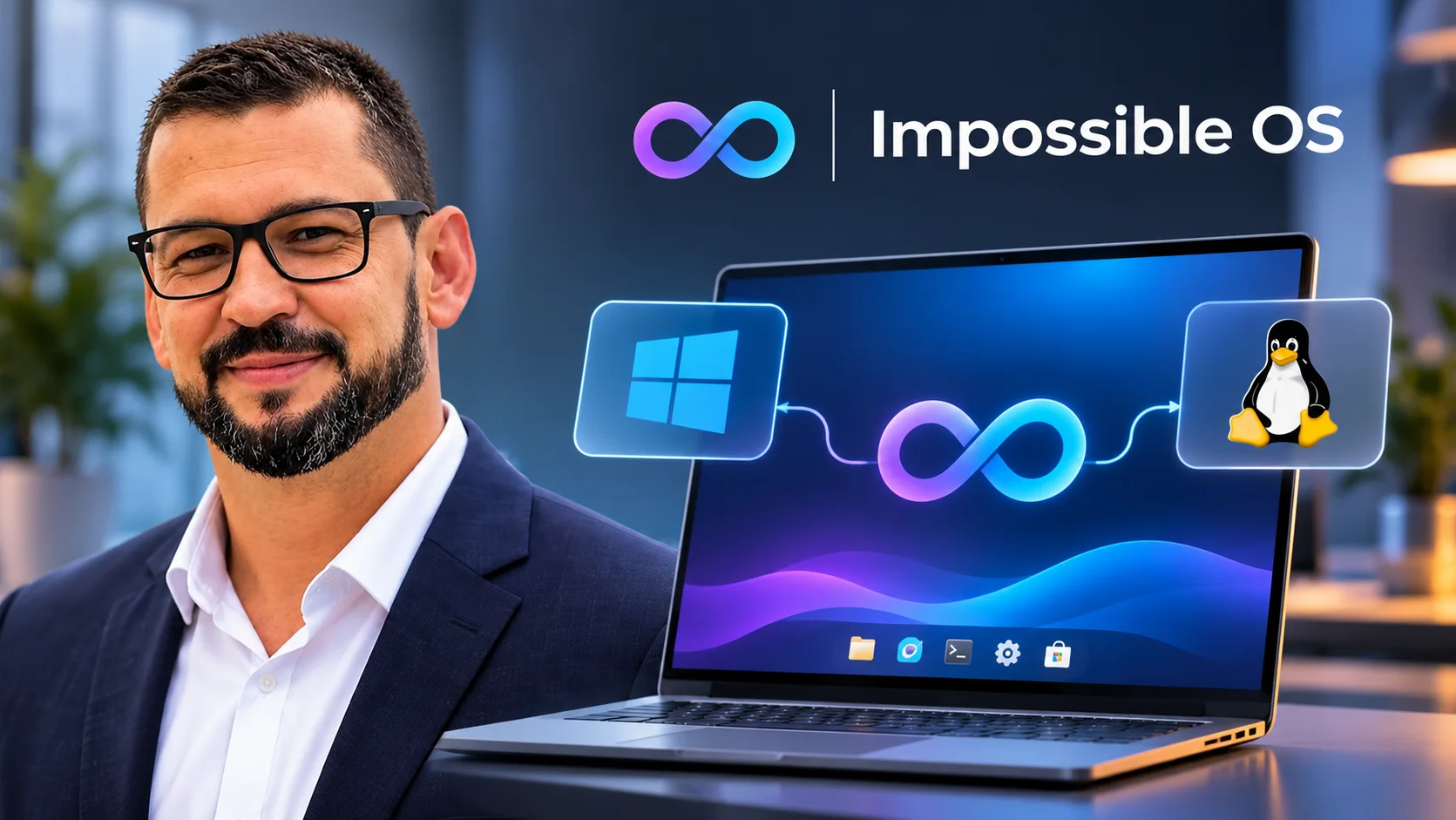
South African developer Derick Payne is building a new PC operating system called Impossible OS, with the goal of running applications designed for both Windows and Linux. The open-source project is being developed from scratch for x86-64 computers and includes its own kernel, UEFI bootloader and graphical desktop environment.
Payne is developing the system independently, using C and x86-64 assembly for its core components. The first public alpha is scheduled for 8 August 2028. Although Impossible OS can already boot on physical hardware and display a desktop, it remains in the pre-alpha stage and is not ready for everyday use.
Impossible OS Uses Its Own Kernel and Bootloader
Impossible OS is not based on the Linux kernel and is not a modified version of Windows. Its developer is building the core operating system independently, including a ring-0 kernel, a UEFI bootloader and a graphical user interface.
The desktop takes design inspiration from Windows 11, with familiar elements such as a taskbar, Start menu and translucent visual effects. However, the underlying system is designed around its own architecture rather than Microsoft's Windows platform.
The project uses established open-source libraries where rewriting existing components would be impractical. Its stated approach is to develop the main operating system components independently while making use of existing software where appropriate.
The project's website lists more than 1.4 million lines of code. It also describes existing functionality such as support for multiple CPU cores, virtual memory, storage drivers and a custom filesystem.
Windows and Linux Application Compatibility Are Key Goals
One of Impossible OS's main objectives is to support software from two major desktop operating system ecosystems.
For Windows applications, the project is developing compatibility through the Win32 API, which provides the programming interfaces used by many traditional Windows programs. Unlike solutions that rely on a virtual machine, Impossible OS intends to make Win32 its native application interface.
Linux application support is planned through a separate compatibility layer. This would allow Linux ELF binaries to run by translating their system calls into operations supported by the Impossible OS kernel.
However, these goals should not be confused with completed compatibility. The full Win32 subsystem is still being developed, while the Linux binary compatibility layer has not yet been implemented. The project therefore cannot currently be considered a ready replacement for Windows or Linux.
Public Alpha Is Scheduled for August 2028
Payne has set 8 August 2028 as the target date for the first public alpha release. The project is already capable of starting on real hardware and displaying its desktop, but several important areas of development remain.
The work ahead includes expanding application compatibility, improving hardware support and completing the components needed for a practical desktop operating system. These tasks will determine how much of the planned Windows and Linux functionality can be delivered in the public release.
The project is published under the GPL-3.0-only open-source licence, allowing developers to examine its code and contribute to its development.
Impossible OS remains an early-stage independent project rather than an established alternative to existing desktop platforms. Its progress towards the 2028 alpha will show whether one developer can turn its ambitious cross-platform compatibility goals into a usable operating system.