ASML’s High-NA Push Accelerates as Chipmakers Prepare for Next-Gen EUV
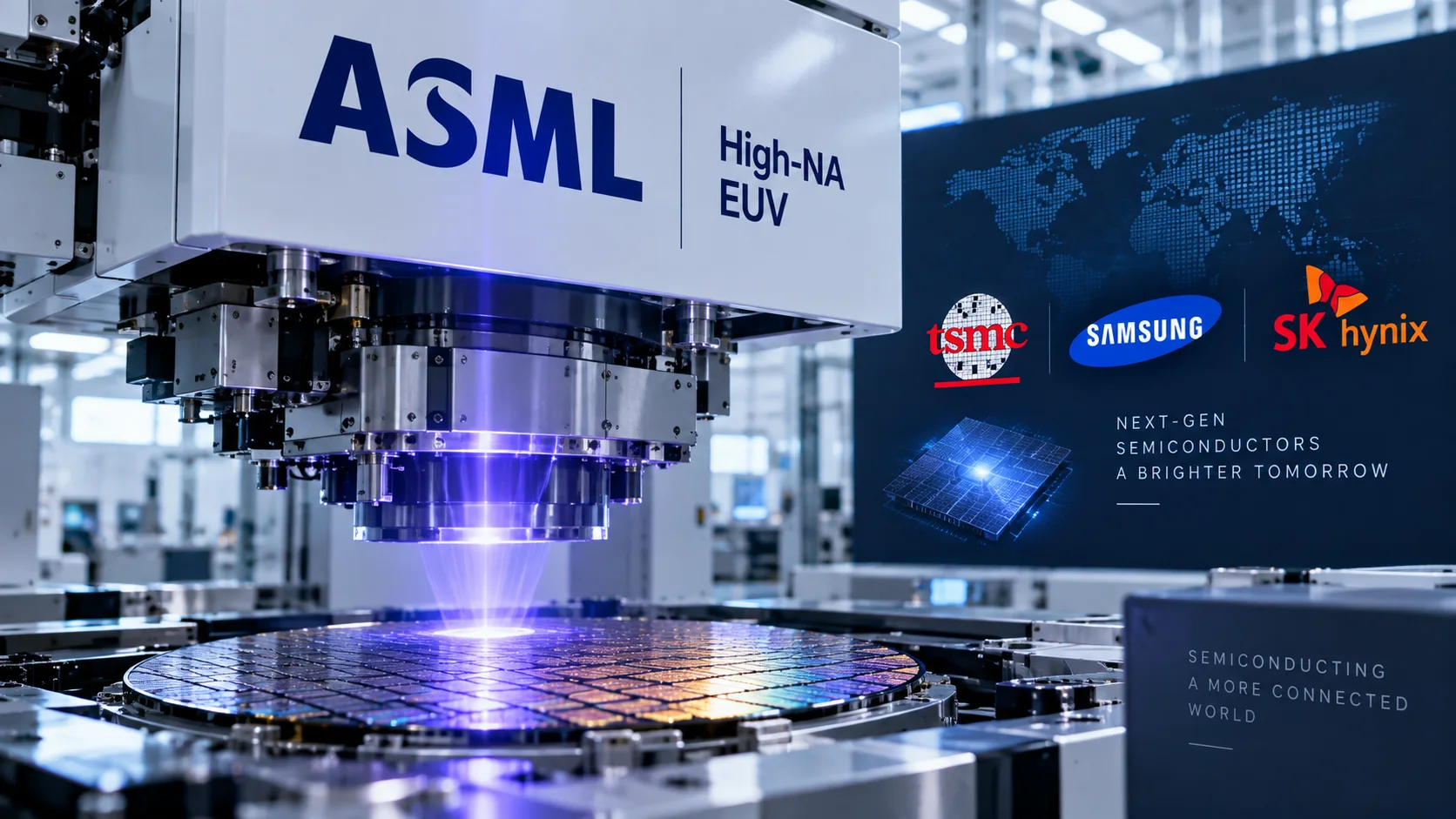
ASML is gaining momentum for its next-generation High-NA extreme ultraviolet (EUV) lithography machines as leading chipmakers prepare to use the technology in advanced semiconductor production. TSMC, Samsung and SK Hynix have all outlined plans to introduce High-NA systems into manufacturing, while Intel is already testing the machines.
The shift gives ASML another advantage in the semiconductor equipment market as chipmakers race to build increasingly powerful processors for artificial intelligence and other demanding workloads. The machines cost around $400 million each, making them among the most expensive pieces of equipment used in semiconductor manufacturing.
Chipmakers Commit to High-NA EUV
High-NA EUV is designed to produce smaller and more complex features on semiconductor wafers than existing EUV systems. The technology increases the numerical aperture of the optical system, allowing manufacturers to print finer patterns without relying as heavily on additional patterning steps.
TSMC, Samsung and SK Hynix are preparing for production applications, with Samsung targeting High-NA EUV for DRAM manufacturing in 2028. Intel, meanwhile, has been testing ASML’s High-NA equipment as it works toward using the technology in its manufacturing operations.
ASML’s EUV Lead Faces New Demand
ASML remains the only company capable of producing the EUV lithography systems used by the world's leading chip manufacturers for their most advanced processes. Its existing EUV machines are effectively sold out through 2027 as semiconductor companies expand capacity to meet demand linked to AI computing.
The company is also examining ways to increase production beyond 110 EUV systems in 2028. Any increase would help address strong demand from chipmakers while giving ASML more capacity to supply both current-generation EUV systems and the newer High-NA machines.
High-NA Machines Carry a $400 Million Price Tag
The cost of High-NA equipment illustrates the scale of investment required to manufacture leading-edge chips. A single machine can cost roughly $400 million, before accounting for the additional infrastructure and manufacturing changes required to operate it.
Despite the price, chipmakers are evaluating the systems because improvements in lithography can affect both transistor density and manufacturing efficiency. For companies producing processors and memory for AI systems, even small improvements in semiconductor manufacturing can have a substantial impact when deployed at high volumes.
AI Demand Drives Semiconductor Investment
The growing demand for AI accelerators and high-performance memory is pushing chip manufacturers to expand and upgrade production capacity. That spending is benefiting equipment suppliers such as ASML, whose lithography systems are essential to the production of many advanced chips.
The move toward High-NA also gives manufacturers a path to continue shrinking semiconductor features as conventional scaling becomes more difficult and expensive. However, bringing the technology into high-volume manufacturing will require further testing, process optimisation and investment.
ASML's High-NA machines are therefore moving from an emerging technology toward a more concrete part of future semiconductor manufacturing plans. With major chipmakers preparing production deployments and ASML working to expand its equipment output, the next phase of the EUV race is beginning to take shape.