
Axiom Space and Exobiosphere Team Up on Drug Discovery in Orbit
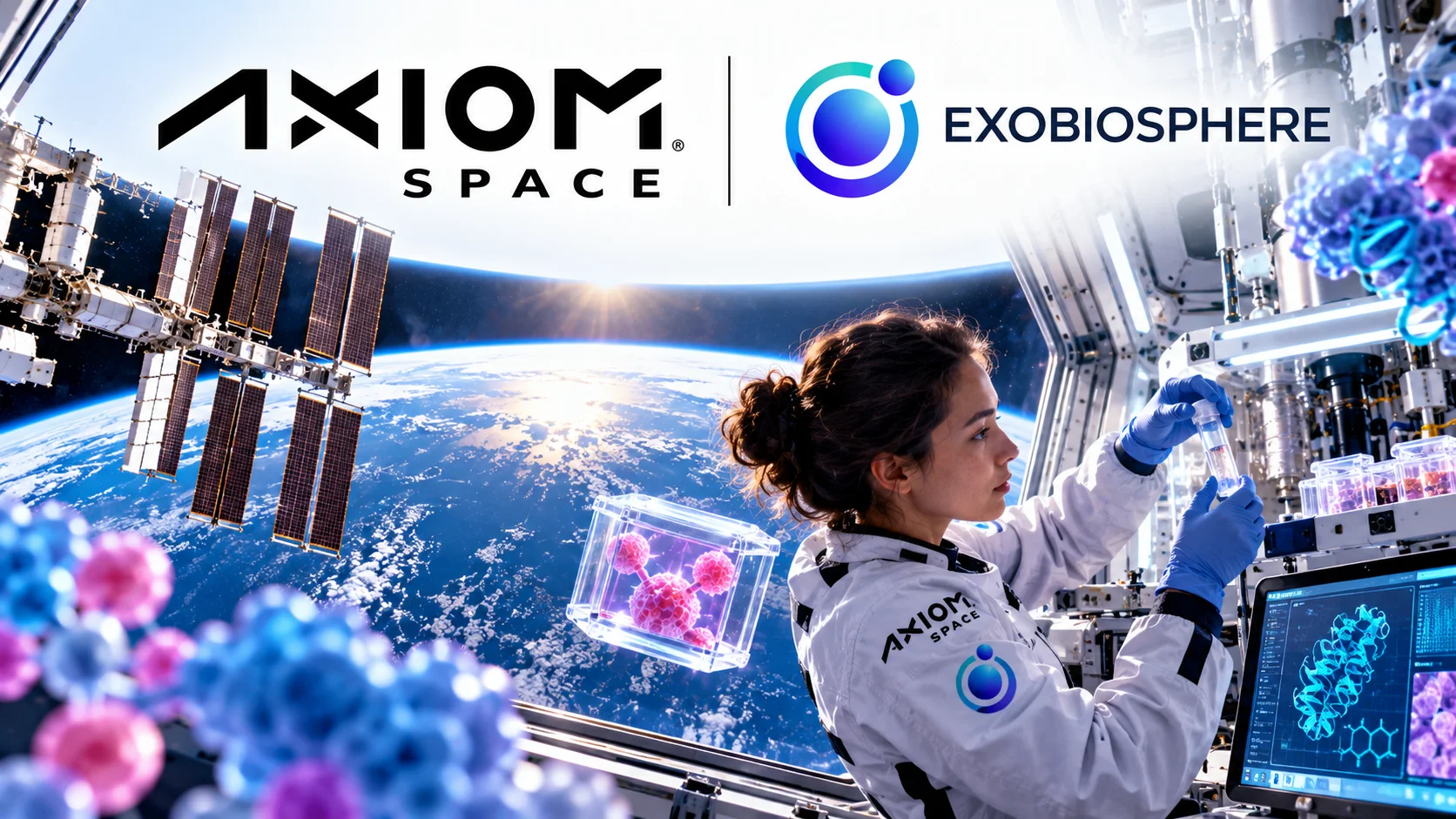
Axiom Space and space biotechnology company Exobiosphere have signed a Memorandum of Understanding to explore autonomous, high-throughput drug discovery and disease modelling in microgravity.
The collaboration will focus on bringing Exobiosphere’s automated Orbital High-Throughput Screening platform to Axiom Space private astronaut missions and, eventually, its planned commercial space station in low Earth orbit. The companies also intend to identify opportunities for developing research infrastructure and in-space manufacturing capabilities.
The agreement was announced on October 7 as commercial interest in using microgravity for biomedical research continues to grow.
Thousands of Experiments in Microgravity
Exobiosphere's platform is designed to automate large numbers of biological experiments in orbit. The company says its system can conduct thousands of experiments alongside matched ground controls, allowing researchers to compare biological behaviour in microgravity with conditions on Earth.
The objective is to use microgravity as an additional research environment for studying disease processes and identifying potential drug candidates. Exobiosphere is developing applications across areas including oncology, ageing, neurodegeneration, inflammation and cardiovascular research.
Private Astronaut Missions Provide an Early Path
Axiom Space plans to make the technology available through its commercial human-spaceflight missions before potentially integrating it into Axiom Station.
The partnership will give Exobiosphere access to Axiom Space's crew and cargo services, creating a route for automated research hardware and experiments to reach orbit. The companies will also explore how future orbital infrastructure could support larger-scale biomedical research.
This approach could allow pharmaceutical and biotechnology companies to incorporate orbital experiments into existing research programmes without having to develop an entire spaceflight operation themselves.
Why Microgravity Matters for Drug Research
Microgravity can alter how cells, tissues and biological structures behave. Researchers are increasingly studying these changes to create disease models and investigate biological mechanisms that can be difficult to reproduce under conventional laboratory conditions.
Exobiosphere aims to combine these microgravity effects with automation and high-throughput testing. The company says this could help researchers identify molecular targets, study disease phenotypes and evaluate potential treatments in biological environments that differ from those available on Earth.
The partnership does not mean new drugs are already being discovered or manufactured aboard Axiom Station. Instead, it establishes a framework for future orbital experiments and infrastructure that could make space-based biomedical research more routine.
Building a Commercial Space Research Market
For Axiom Space, the agreement expands the potential use of its future station beyond traditional human spaceflight and research missions. Biomedical research is expected to be one of the applications supporting commercial demand for microgravity facilities.
For Exobiosphere, access to Axiom's missions and planned station provides a potential path toward making automated orbital drug screening part of the broader pharmaceutical R&D ecosystem.
As commercial space stations move closer to replacing the International Space Station, partnerships like this could help establish new markets for research conducted in orbit.